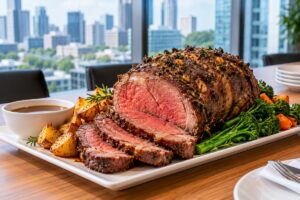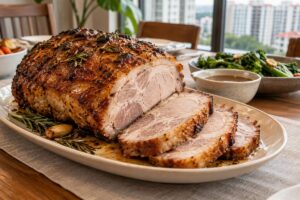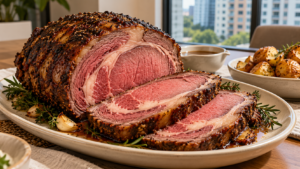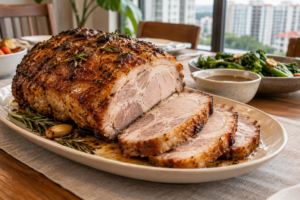
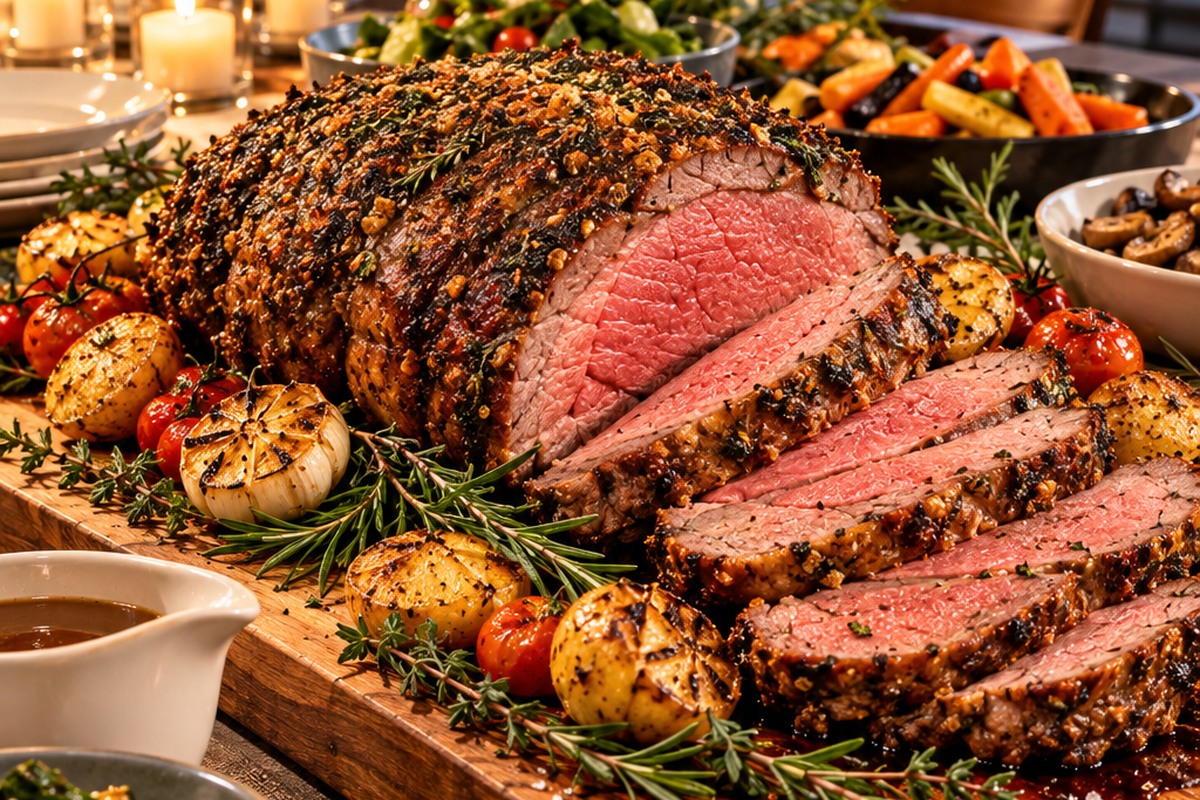
A good beef roast deserves two things at the table: tender slices and a browned exterior that tastes as though it has actually been roasted. Yet one well-meaning habit can undo that work. Pour a jug of gravy over the platter before guests arrive, and those savoury edges may soften long before anyone takes a serving.
For Singapore hosts, the challenge is familiar. A roast may travel from a kitchen to an HDB dining table, condominium function room or office pantry. Guests arrive in waves, and the person serving wants to finish the setup early. The solution is not to abandon gravy. It is to plan when the roast is sliced, where the sauce goes and how guests collect their portions. Here is how to keep cooked ribeye or striploin roast enjoyable without making service complicated.
Why the browned crust matters on roast beef
Dry heat gives the outside of a beef roast its deeper colour, aroma and savoury flavour. The exterior of a large roast is not necessarily brittle like a cracker; it may be a thin, seasoned layer with a little chew. It still provides contrast with the tender interior and helps a premium cut taste properly finished.
Liquid changes that surface. A spoonful of jus on one slice is pleasant, but sauce pooling beneath an entire platter can soften the crust and wash seasoning into the gravy. That is why sauce service belongs in the same plan as carving and presentation.
Gravy, jus and resting juices: what is the difference?
Gravy is generally thicker and clings to the meat. Jus is usually a thinner, meat-forward liquid. Resting juices are released while a cooked roast settles before carving and may be incorporated into a properly handled sauce. Each has its place, but none needs to cover every slice before serving.
Thicker gravy suits guests who want a comforting roast dinner; lighter jus can complement marbled ribeye without dominating its flavour. Offering sauce separately gives everyone control. For quantity planning, see De’Vour’s guide to gravy and sauce portions.
Use a dry platter and serve the gravy at the plate
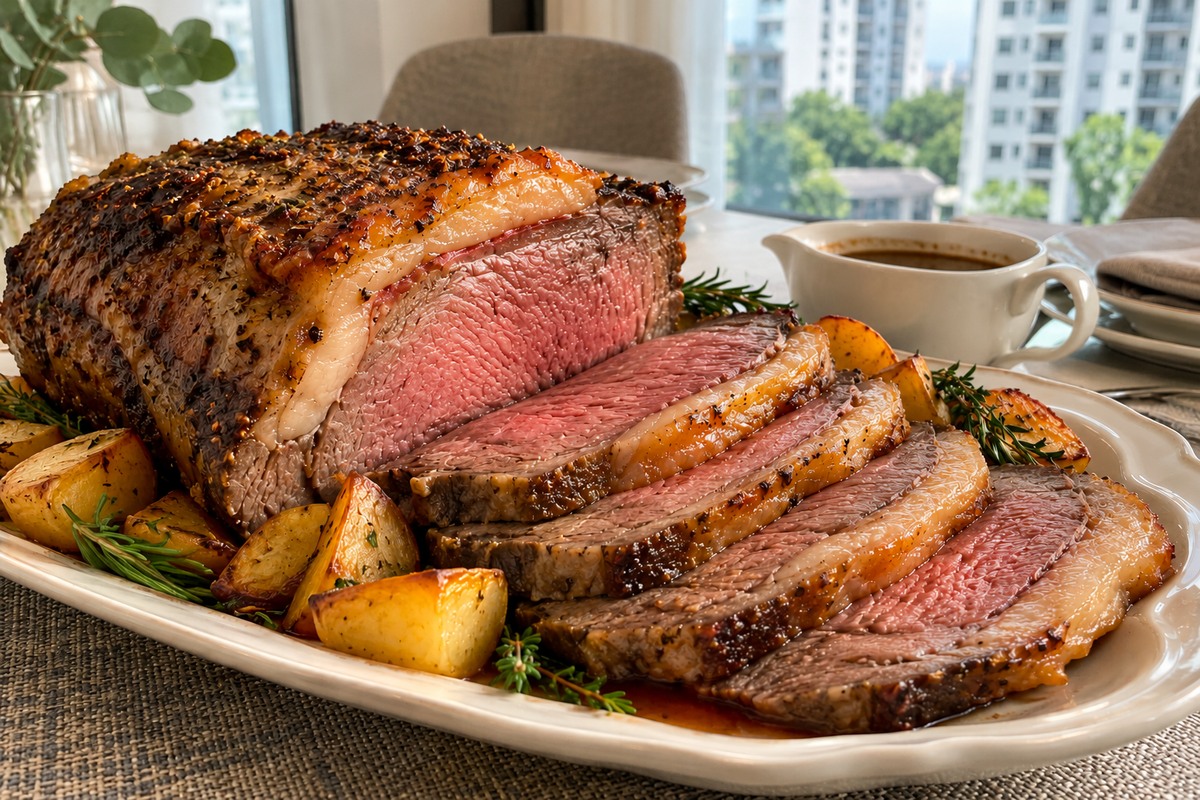
Present roast beef on a clean serving platter, with gravy in a separate jug or covered container. Arrange slices in a shallow overlap so their browned edges remain visible. Avoid filling the base of the platter with sauce just to make the meat look glossy. A small amount of collected meat juices is different from a deep pool that soaks the bottom slices.
For an HDB family meal, one jug beside the roast may suffice. At an office lunch, put the gravy after the meat along the serving route. Guests collect beef first, then choose their own sauce. This keeps the shared platter neater and makes seconds easier.
Carve close to serving time when practical
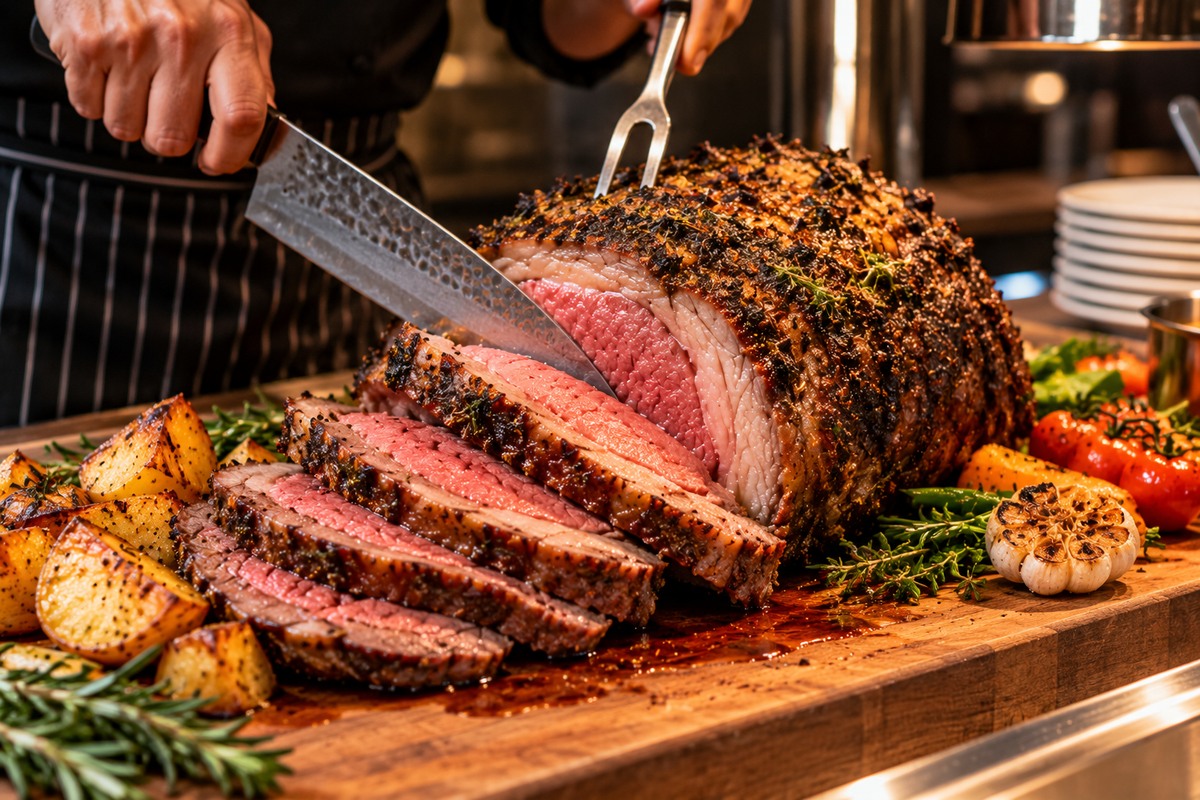
A whole cooked roast has less exposed surface area than dozens of pre-cut slices. Leaving it intact until close to service can help preserve moisture and presentation. If the event has a clear starting time and someone can carve safely, cut an initial batch and replenish as guests arrive instead of slicing everything at once.
Carving need not become a performance. A stable board, suitable knife and clear workspace are more important than theatrical flourishes. De’Vour’s beef roast carving guide covers the knife work. Here the principle is timing: slice for the people ready to eat, not everyone expected later.
When pre-sliced roast beef is the better choice
Pre-sliced beef is practical when a function room has no carving surface, an office lunch has a short window or the host wants to sit with guests. The trade-off is that exposed slices cool and lose moisture more readily. They also absorb sauce quickly if stacked in a deep, wet tray.
Use shallow batches rather than one compressed pile. Keep gravy separate and open the platter near serving time. For events with queues, De’Vour’s live carving versus pre-sliced roast comparison helps explain the service trade-offs.
Ribeye and striploin need slightly different treatment
Ribeye generally has generous marbling, so a little warm jus may be enough. Striploin often has a leaner centre and a distinctive outer fat edge. Some guests enjoy that edge while others trim it on their plate. Heavy gravy can conceal these differences and make two cuts seem unnecessarily similar.
Offer one well-matched sauce and let guests taste the beef before adding it. That respects the cut and gives diners a choice. If you are deciding what to order, start with De’Vour’s ribeye, striploin and tenderloin comparison.
Arrange the sauce station for a Singapore home or office
Space is often the real constraint. A large jug at the front of a narrow HDB table forces people to reach across the roast. In an office pantry, sauce placed beside the plates creates a queue before anyone gets to the meat. Set the sequence as plates, roast, then gravy.
Give the jug a stable surface and place a saucer beneath it to catch drips. If children are serving themselves, a manageable spoon may be easier than a heavy container of hot liquid. Keep carving knives away from the guest route, especially in busy condominium function rooms.
Warm the sauce separately, not over the roast
Pouring very hot gravy over cooler beef may warm the surface briefly, but it does not reliably heat the whole portion. It can also soften the crust immediately. Warm sauce in its own suitable container and handle the meat according to the supplier’s storage and reheating instructions.
If the roast requires reheating, make that a separate controlled step rather than using gravy as a shortcut. De’Vour’s Christmas roast reheating guide explains the moisture challenge. Avoid repeated warming and cooling merely to accommodate guests arriving late.
Humidity and transport: protect the crust without compromising safety
Singapore’s humid weather and air-conditioned interiors create changing conditions. Packaging can collect condensation, while steam trapped beneath a tight cover may soften browned surfaces. Neither is a reason to leave cooked beef uncovered for long periods. Appearance should never take priority over food safety.
Agree on a realistic delivery-to-service window, follow the supplier’s handling instructions and uncover the roast only when the table is ready. For longer functions, use appropriate temperature-controlled holding rather than leaving meat at room temperature. The Singapore Food Agency’s food-safety guidance takes precedence over cosmetic concerns.
Choose accompaniments that keep the roast centre stage
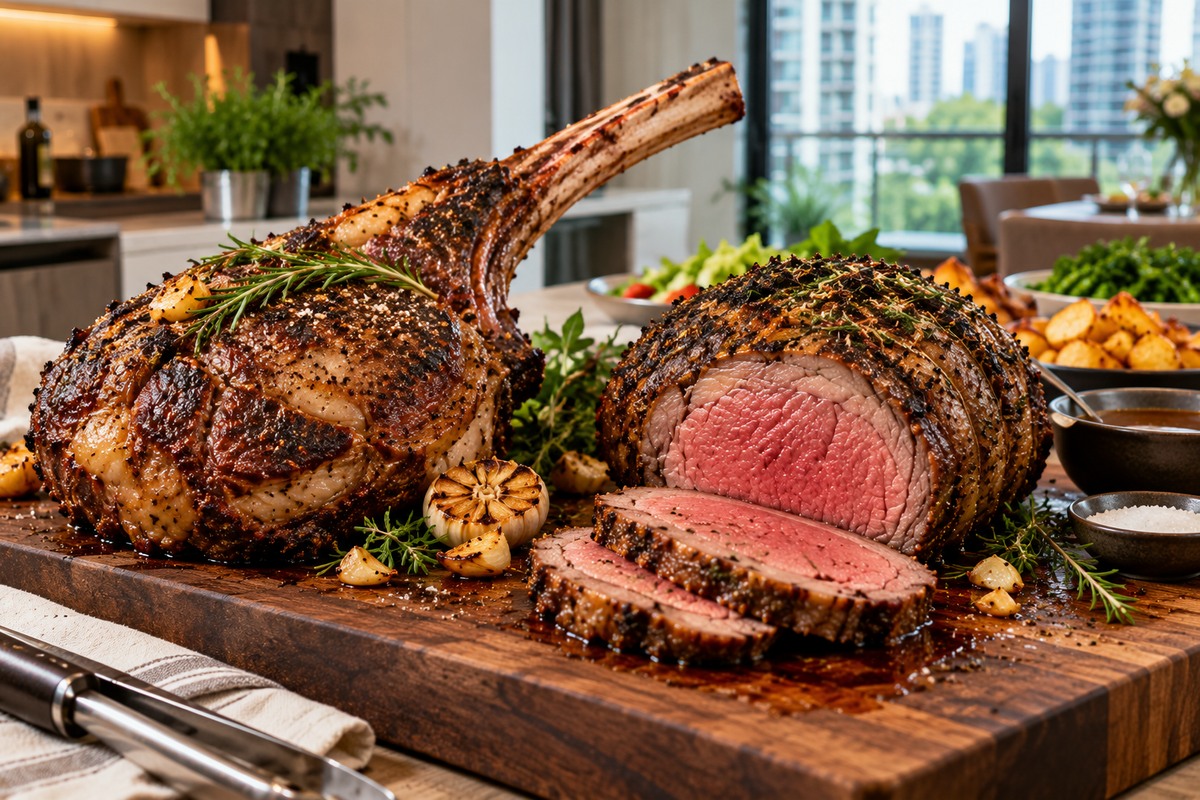
Roast potatoes, roasted vegetables and a simple salad can make beef feel like a complete meal. Serve them on separate dishes so their steam or dressing does not wet the meat. Potatoes are useful because guests who enjoy gravy can add it to their own plates without soaking the communal roast platter.
For a festive meal, mustard or horseradish-style condiments may sit beside the gravy, depending on preferences. These are supporting choices, not competing main dishes. Browse De’Vour’s Singapore cooked roasts overview for the broader roast selection.
What changes for a corporate roast lunch?
At an office lunch, efficiency matters. Guests may have only half an hour to eat, with no dedicated carver. Shallow platters of pre-sliced beef can be more practical than one large roast requiring constant attention. Sauce should still be separate, clearly positioned and easy to dispense.
For a formal corporate dinner, carving at the station creates a sense of occasion. Guests see the roast before it is sliced and can request portions. In either format, plan for the last person in the queue. A beautiful first platter means little if the remaining beef has been exposed on a warm table for too long.
A practical 30-minute serving plan
Thirty minutes before service: confirm the roast’s delivery or safe holding arrangements, clear the carving area and position clean utensils. Follow the supplier’s food-safety instructions rather than assuming a fixed room-temperature resting period.
Fifteen minutes before: set out plates, accompaniments and the separate gravy station. Check that guests can move past the table without reaching over hot containers.
At serving time: carve the first manageable batch or open the first pre-sliced platter. Keep remaining portions protected and appropriately temperature-controlled.
During seconds: replenish smaller batches and replace messy utensils. Keep sauce off the shared beef platter. This is an event-planning sequence, not a food-safety holding timetable.
Three mistakes that make a good roast less enjoyable
First, coating the entire platter for a glossy photograph removes guests’ choice and can soften the crust. Second, slicing everything hours ahead creates more exposed meat than necessary. Third, stacking slices in a deep tray lets steam and juices collect around the bottom pieces.
A fourth, less obvious mistake is forgetting who will serve. If the host must greet relatives, supervise children and organise seating, elaborate carving may not be realistic. Choose a service style that suits the actual gathering rather than one that only looks impressive online.
Frequently asked questions
Should gravy be poured over roast beef before serving?
Usually not if preserving the browned exterior matters. Keep it separate and let guests add it to their own portions.
Can roast beef be served without gravy?
Yes. Well-seasoned ribeye or striploin can stand on its own. A small jug of gravy or jus is still a considerate option for guests who prefer extra moisture.
Is carving at home better than ordering pre-sliced roast beef?
Carve at home if you have a safe surface, suitable knife and clear serving time. Pre-slicing is often easier for quick office lunches or venues without carving space.
How do I handle roast beef at a long open house?
Arrange suitable hot or cold holding, follow the supplier’s instructions and avoid leaving cooked meat at ambient temperature for extended periods. Replenish in smaller batches where practical.
The takeaway: keep the roast separate and let guests choose
The best roast beef service is straightforward: protect the browned meat from excess sauce, carve or replenish in sensible batches and organise the table so people can serve themselves comfortably. That works for a family dinner in Tampines, a condo celebration or a corporate gathering in the CBD.
Start with the right roast, plan how it will reach the table and offer gravy on the side. Let the beef’s own flavour and crust do the talking.