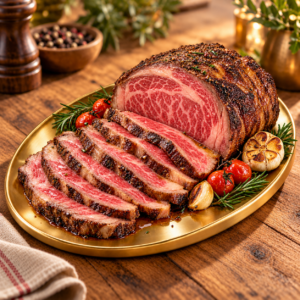
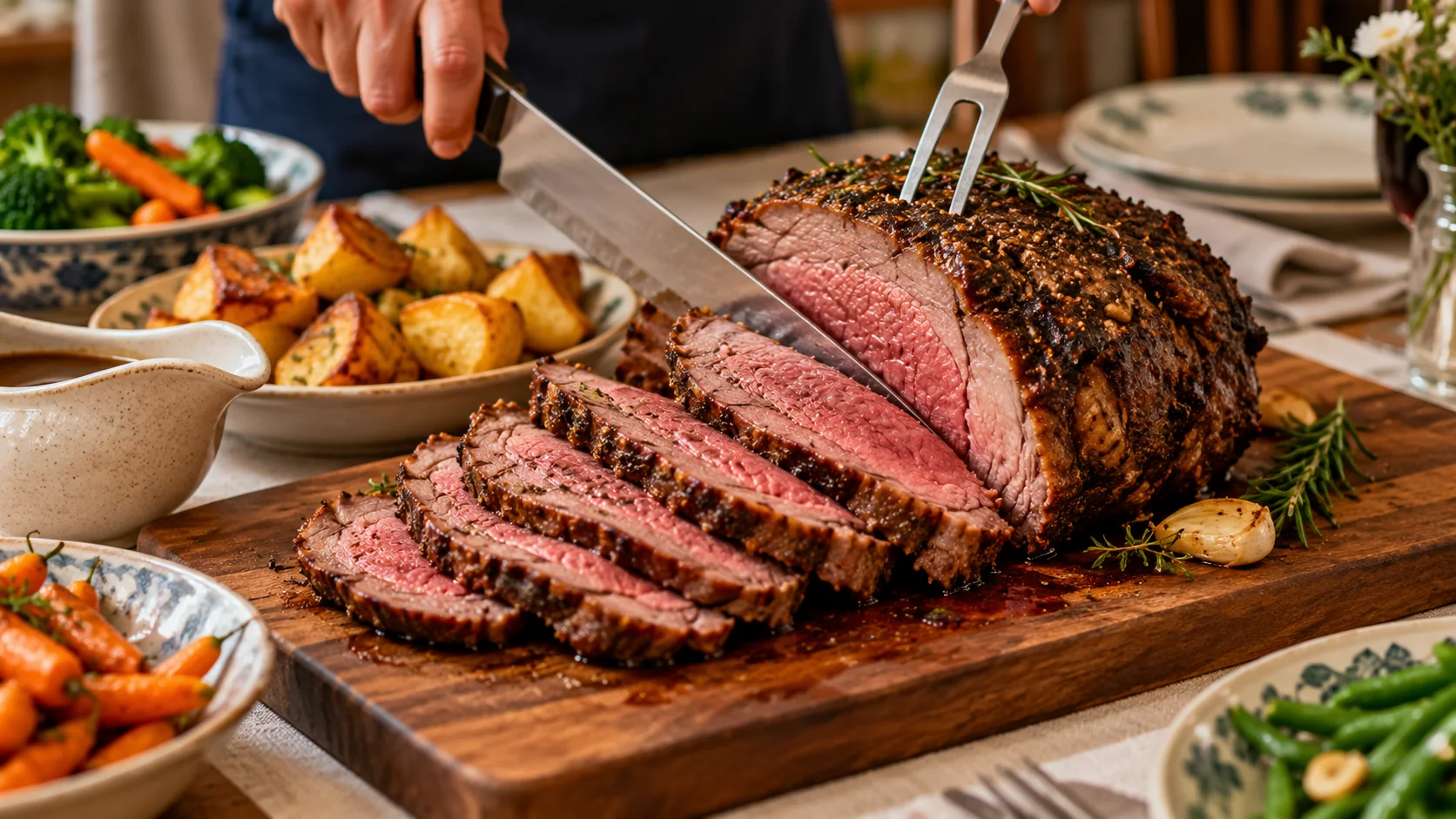
A whole beef roast looks impressive on the dining table. But once the guests are ready to eat, someone still has to turn that centrepiece into neat, juicy portions. For a Christmas dinner, birthday meal or weekend gathering in Singapore, the carving plan matters almost as much as the cooking.
The good news is that carving does not require restaurant equipment. A stable board, a sharp knife, a little patience and a sensible serving sequence can make a roast easier to share without drying it out.
Before the first slice: identify the roast
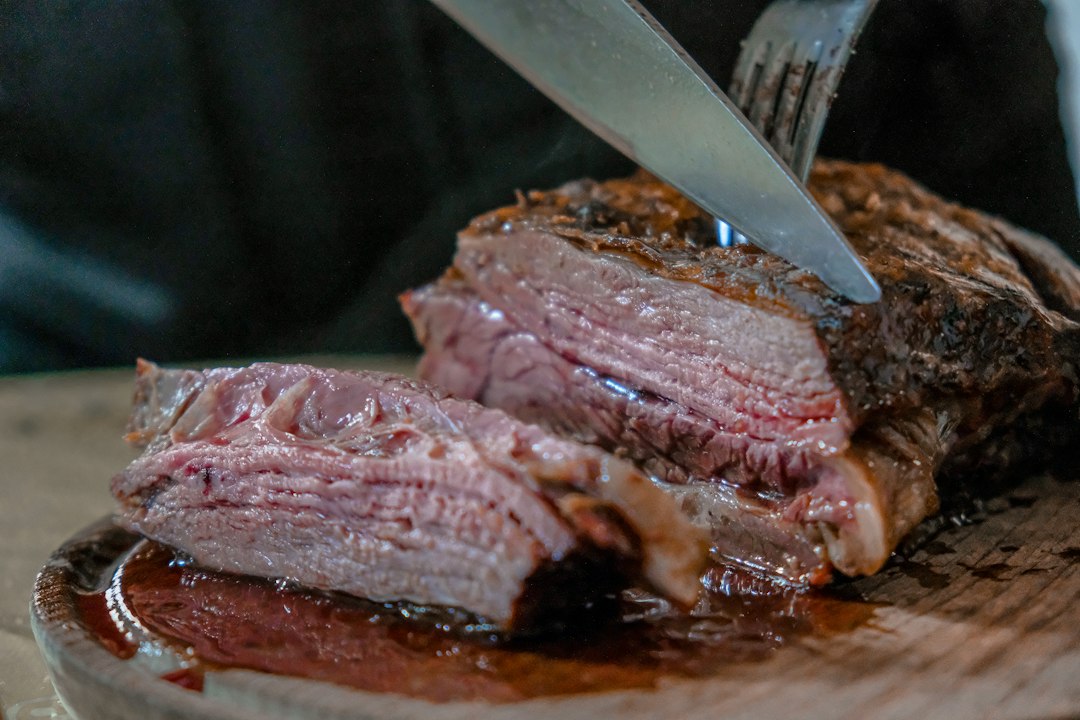
Different cuts behave differently. A boneless ribeye roast has a rich fat cap and is relatively straightforward to slice. Striploin has a firmer shape that can produce tidy portions. A bone-in tomahawk makes a dramatic presentation, but the bone needs to be worked around before guests can receive even slices. If you are still choosing a cut, read our guide to ribeye, striploin and tenderloin.
For a large gathering, ask your roast supplier whether the meat arrives whole, pre-sliced or ready to carve. Also confirm whether it will arrive hot or chilled and what handling instructions apply. Those details affect your serving timeline.
Let a freshly cooked roast rest before carving
Cutting immediately after cooking can send more juices onto the board instead of keeping them in the meat. Resting allows the roast to settle. The ideal time depends on its size, shape and cooking method; for many substantial roasts, a rest of roughly 15–30 minutes is a useful planning allowance rather than a universal rule.
Rest the roast on a clean board or tray in a safe location. Do not confuse resting with leaving food out indefinitely: manage the time carefully, especially in Singapore’s warm climate. If the roast was delivered rather than freshly cooked, follow the supplier’s specific holding and serving guidance instead of assuming it needs another long rest.
Set up a carving station that actually works
A cramped table is one of the easiest ways to turn a relaxed dinner into a messy exercise. Before guests arrive, prepare:
- A large, stable cutting board with a groove or tray to catch juices.
- A long, sharp carving knife and a sturdy carving fork or suitable tongs.
- A clean platter for finished slices and a separate space for the unsliced roast.
- Warm serving plates where appropriate, plus gravy or sauce served separately.
- Enough room for the carver to work without guests reaching across the knife.
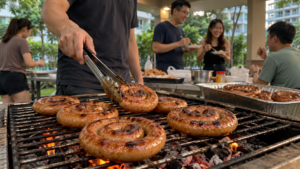
Keep raw-food utensils away from the cooked roast. If the gathering also includes a live BBQ, assign separate preparation and serving zones.
Find the grain and slice across it
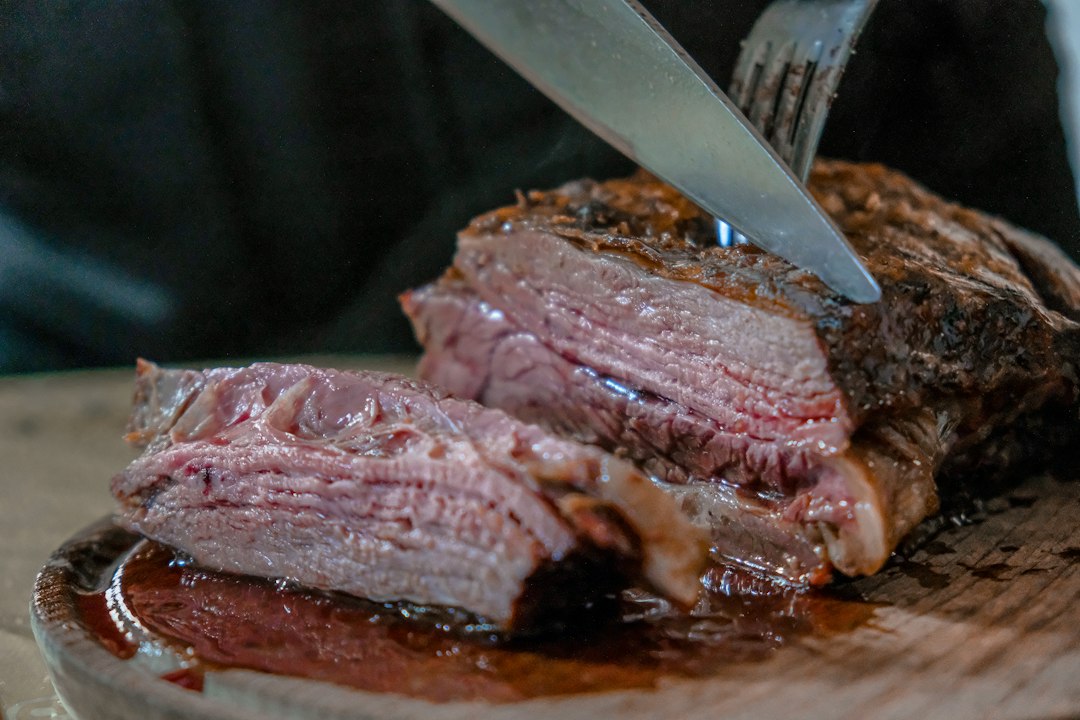
The grain is the direction of the muscle fibres. Slicing across those fibres shortens them, helping each bite feel more tender. Before carving, look at the exposed end or surface of the roast to work out which way the fibres run. Turn the roast or adjust your knife angle as needed.
Use smooth, deliberate strokes rather than pressing down or sawing aggressively. Aim for reasonably consistent slices so guests receive similar portions. Thinner slices often suit a buffet or sharing platter; slightly thicker slices can work for a plated roast dinner. There is no single perfect thickness for every cut.
What if the roast has a bone?
With a bone-in roast, it is often easier to remove or work around the bone first, then slice the boneless portion against the grain. Use a stable board and a sharp knife, and never force the blade through hard bone. If the bone is awkward, ask the butcher or roast supplier to advise on carving before the event.
Carve in batches, not all at once
At a Singapore home gathering, guests may arrive at different times or spend a while chatting before eating. Instead of slicing the entire roast early, consider carving the first platter when the meal begins and preparing more portions as required. That can help preserve the appearance and texture of the remaining meat.
For a larger buffet, balance that approach against queue times. One carver may become a bottleneck if everyone arrives together. Prepare a first platter ahead of service, then replenish it safely as guests eat. Keep serving times and temperatures within appropriate food-safety guidance; sliced meat should not sit unprotected on a warm table for extended periods.
Use the resting juices and sauce thoughtfully
Any clean, food-safe juices collected during resting can contribute flavour to a sauce or gravy, provided they are handled and heated appropriately. Avoid drowning every slice before serving: guests may prefer to add their own gravy, mustard or other accompaniments. For portion planning, see our article on how much gravy and sauce to prepare for a roast dinner.
Plan the sides around the carving moment
A roast dinner feels coordinated when potatoes, vegetables and other sides are ready at roughly the same time as the first slices. Assign someone to plate the sides while another person carves. For a Christmas menu, you can also explore De’Vour’s Feast’Mas gathering guide for ideas on combining roasts with complementary dishes.
Frequently asked questions about carving beef roasts
Should I slice roast beef before guests arrive?
For best presentation, keep at least some of the roast whole until close to service when practical. If you must pre-slice, follow safe holding or chilling instructions and avoid leaving the platter at room temperature for a prolonged period.
How thin should I carve ribeye or striploin roast?
Choose a thickness that suits the service style. Thin, even slices are convenient for a buffet; thicker slices may suit plated portions. The more important rule is to use a sharp knife and slice against the grain.
Can I reheat leftover sliced roast?
Yes, if it was cooled and stored safely. Gentle reheating helps avoid overcooking, but food safety comes first. Read our separate guide on reheating Christmas roasts without drying them out.
Is carving service necessary for a small dinner?
Not usually. A confident home host can carve a modest roast with the right tools. For larger celebrations, discuss carving and serving arrangements with your caterer so everyone knows what is included.
A better roast dinner starts with a simple plan
Choose the right cut, allow appropriate resting time, prepare a safe carving space and slice against the grain. Then serve in manageable batches with the sides ready. Whether it is a family dinner or a festive gathering in Singapore, these small details help a premium roast feel like a complete meal.
Explore more practical hosting ideas in From the Kitchen, or browse De’Vour’s roasts and catering options for your next gathering.