Why roast potatoes deserve a place in the plan
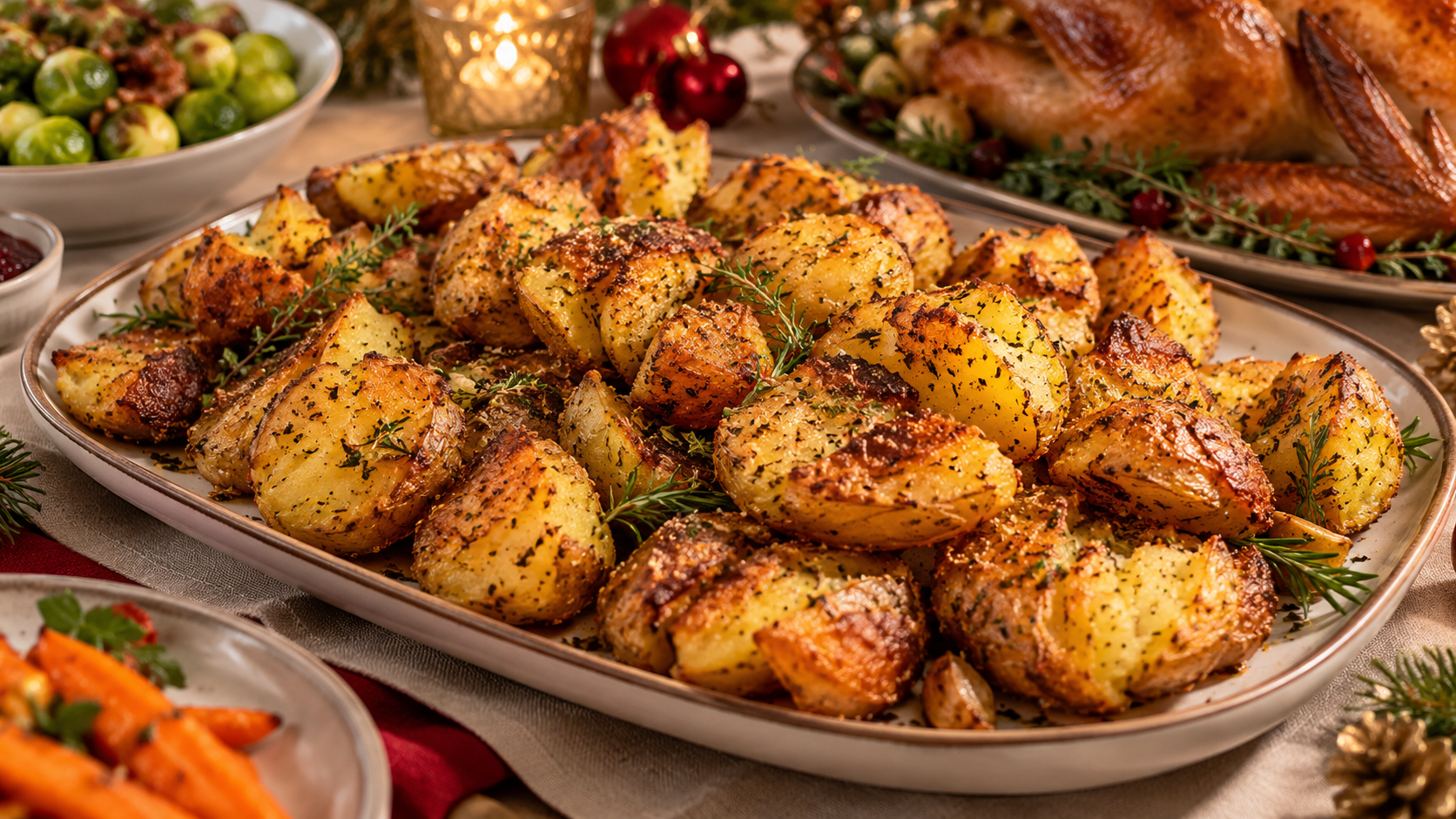
A Christmas roast dinner in Singapore often begins with one big decision: turkey, chicken, beef or another centrepiece. Potatoes come later, as though they are a minor detail. Yet guests often remember the side dishes just as clearly as the main roast. Smashed roast potatoes add crisp edges, soft centres and a satisfying contrast to sliced meat and gravy, but they need the right preparation and serving plan to arrive in good condition.
They are especially useful for a gathering where people help themselves from shared trays. They do not require carving, they pair with a range of roast proteins and they make the table feel generous without adding another complicated main dish. The challenge is to keep the texture pleasant and the portions sensible in Singapore’s warm, sometimes humid conditions.
What makes smashed roast potatoes different?
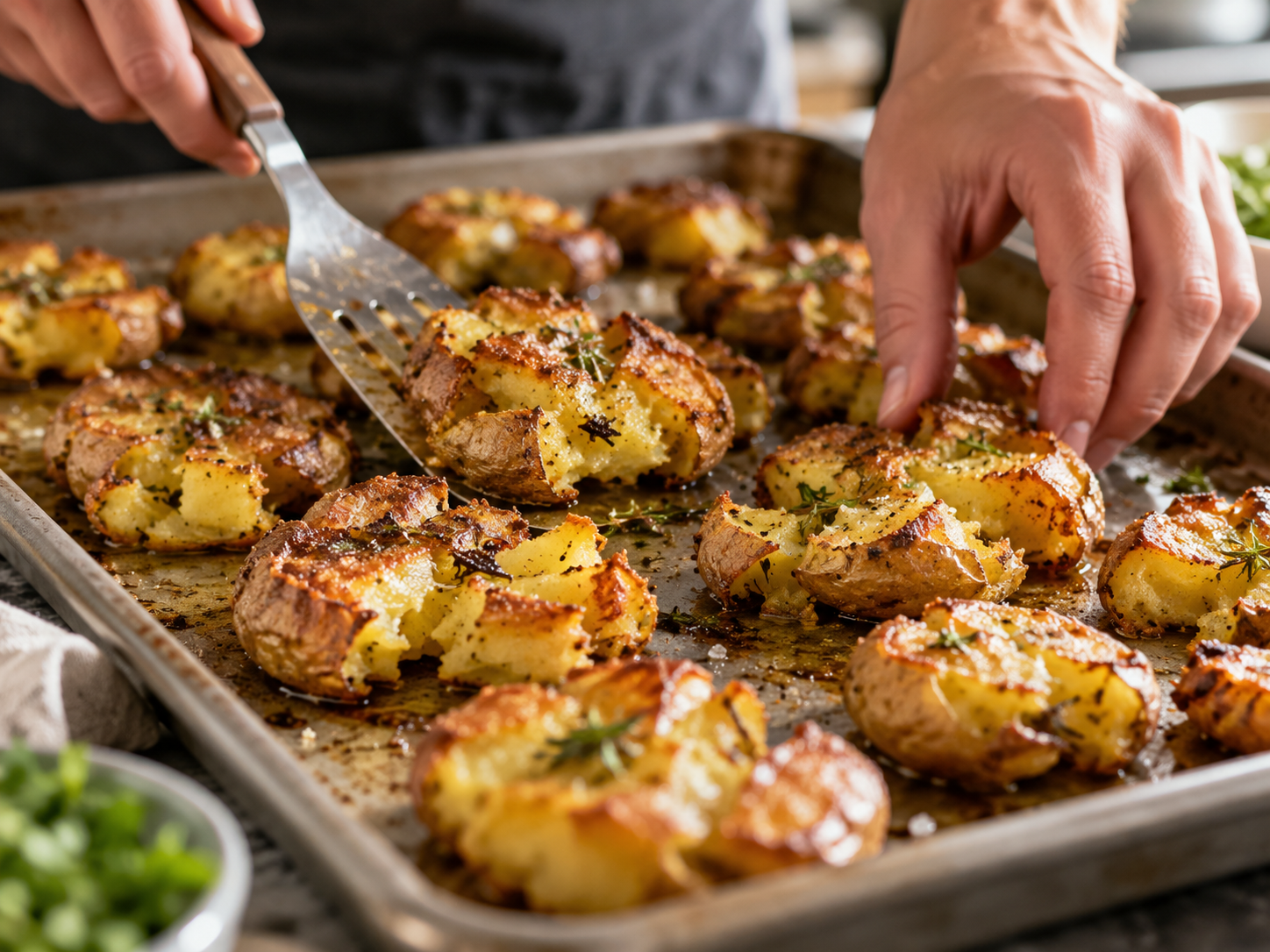
Ordinary roasted potatoes are cut and cooked until golden. Smashed roast potatoes are usually partially cooked before being gently flattened and roasted so more surface area can crisp. The shape creates irregular edges that collect seasoning and develop crunch. Exact results depend on the potato variety, cooking method, oil and finishing time, rather than simply the word ‘smashed’ in the product name.
For hosts, the distinction matters at serving time. Those exposed edges are one of the reasons guests choose the dish, and trapping them under condensation can undo some of the appeal. The goal should be to present the potatoes where steam can dissipate appropriately while the food is kept and served safely.
Choose the side dishes around the centrepiece
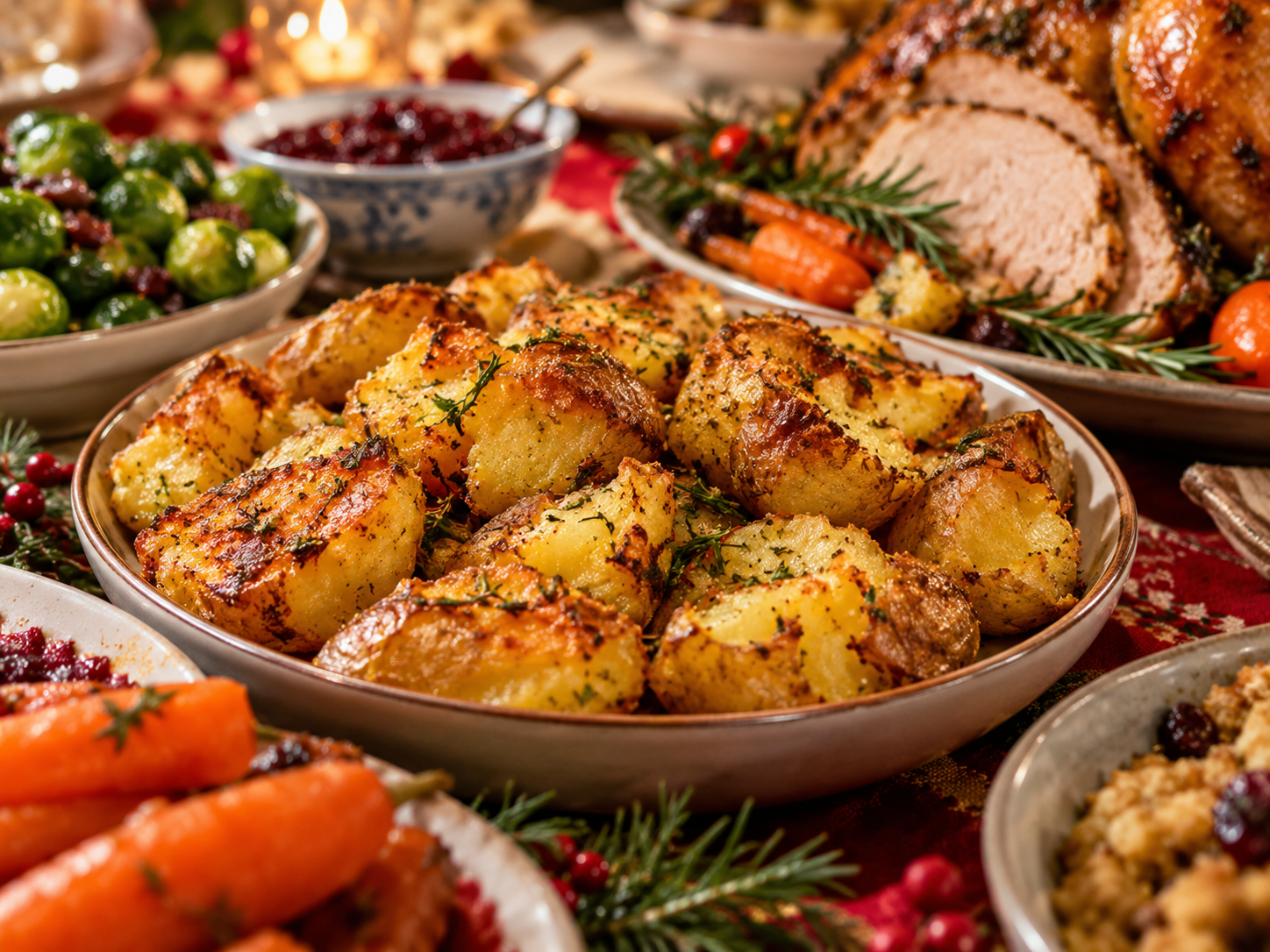
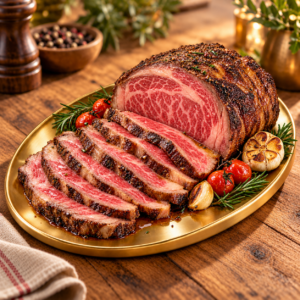
Beef roast with rich gravy, an herbed chicken and a festive turkey all have different flavours, but roast potatoes can complement each of them. With a strongly seasoned meat, simple potatoes may be best. With a milder roast, herbs, garlic or an appropriate dipping sauce can provide contrast. Avoid making every dish on the table equally rich and heavy.
A balanced roast menu usually benefits from something green, something bright or acidic and an accessible carbohydrate. Vegetables, salad or a light slaw can keep the meal from feeling monotonous. If the table already has pasta or rice, reconsider how much potato you need so that the carbohydrate dishes do not dominate the meal.
Portions depend on everything else being served
A one-kilogram tray means little without knowing the guest count and the rest of the menu. Potatoes are a primary side for some diners but only a small extra serving for others. A meal with several meat dishes, salads, bread and pasta will not need the same amount per person as a simpler roast-and-two-sides dinner.
Rather than guessing an absolute portion rule, list the courses and consider how guests tend to eat. Children, elderly relatives and guests avoiding certain foods may build very different plates. Ask the caterer for portion guidance based on the full order. It is better to make a considered estimate than to buy trays solely because their listed weight looks generous.
The timing challenge in a delivered roast dinner
Potatoes that are crisp straight from the oven will change during transport and covered holding. A delivery schedule needs to account for travel, lift access, handover and the time between receipt and eating. At an HDB home or condominium function room, even a short delay while guests arrive can affect the finish of the dish.
Choose a realistic eating time and let the provider know when the potatoes will actually be served. If they need finishing or reheating, ask for instructions suited to that preparation. Do not assume a method used for raw potatoes will be right for an already cooked catered side.
Why ventilation affects crispness
Condensation collects when hot food is enclosed in a way that traps moisture. For crispy potatoes, that moisture can soften the browned surface. The practical response is to manage service and finishing according to the caterer’s instructions instead of keeping the dish sealed indefinitely. Equally, leaving cooked food uncovered at room temperature for too long is not a sensible alternative.
Use serving containers appropriate for the food and follow safe holding guidance. If an oven is available and the provider recommends a short finish, coordinate it close to mealtime. A tray that is arranged well just before eating will often be more appealing than one prepared for display much earlier.
Make the serving setup easy
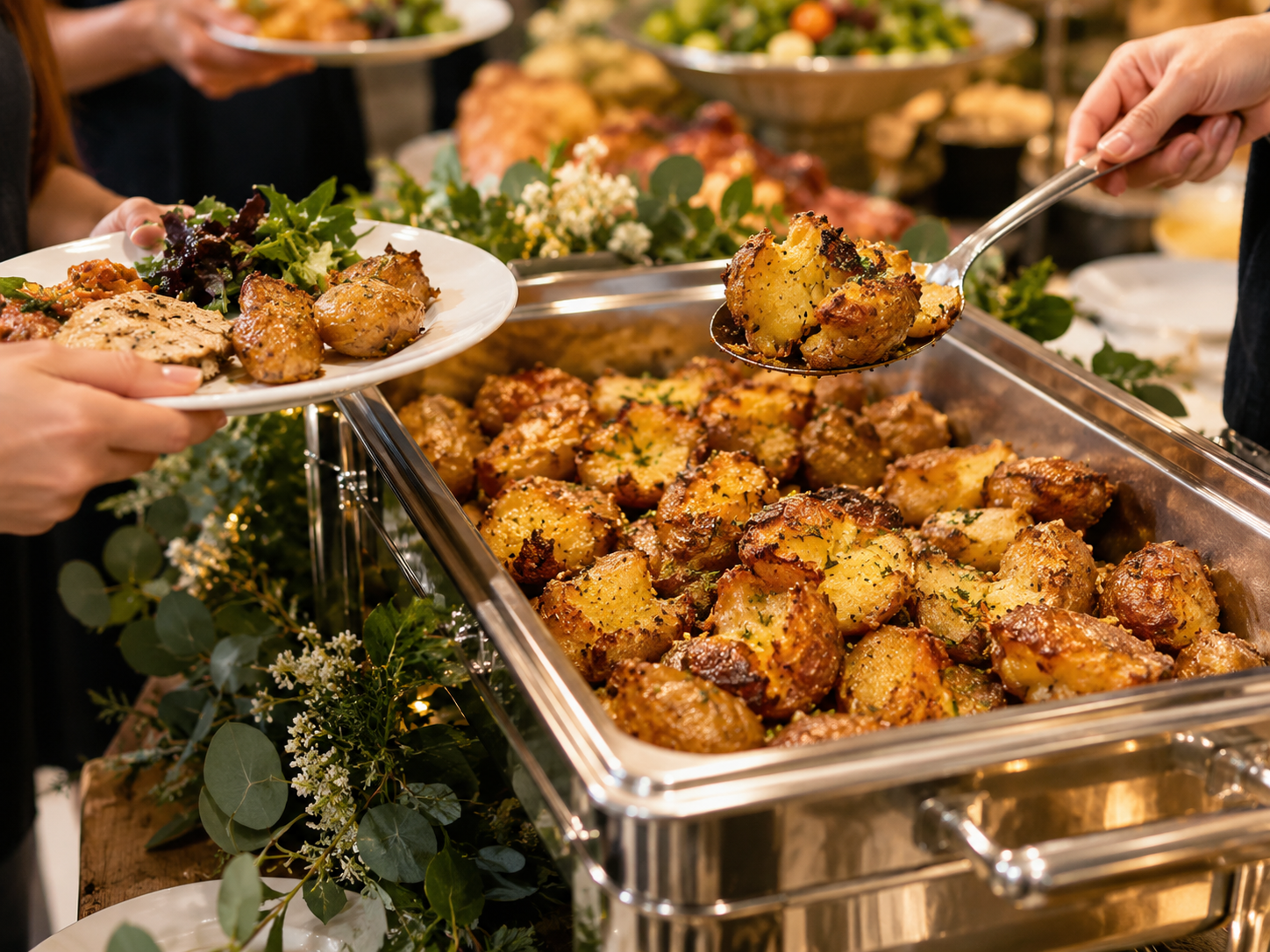
At a home party, guests may be balancing a plate while trying to reach the last few potatoes in a deep container. A suitable serving spoon or tong and an accessible tray placement can make the experience noticeably easier. Put the potatoes near the main roast or meat carving point if the flow allows, but do not force people to queue through a narrow corner.
For a small buffet, avoid piling every side dish onto one crowded tabletop. Allow guests to approach, serve and move away. A modest arrangement with clear utensils can feel tidier than an elaborate display that is difficult to use. Smashed potatoes are at their best when guests can take a portion without breaking apart the entire tray.
Sauce on the side or over the top?
Gravy pairs naturally with a roast and potatoes, but pouring it over the entire tray before guests eat can soften the crisp surface. Offer gravy separately where practical so everyone can decide how much to use. A guest who wants crunchy potatoes can keep them dry; someone else can add more sauce at the table.
Similarly, creamy dressings or toppings are best considered as service choices, not automatic additions. Check the guest mix and the main roast before offering extra richness. If dietary or allergy requirements are involved, clearly identify ingredients and confirm suitable options with the caterer instead of assuming a side dish is universally appropriate.
Consider children and older guests
The crisp edges of smashed potatoes may appeal to adults, while some children or older guests prefer a softer texture. That does not mean changing the entire dish. It means pairing it with sides that give guests a choice. Roasted vegetables, rice, bread or another uncomplicated carbohydrate can help if the meal is intended for a wide age range.
At a family celebration, a serving arrangement should not require everyone to cut large pieces while balancing a plate. Bite-sized or easily portioned sides reduce mess and help guests move through the buffet comfortably. It is a small operational detail, but small details are often what make home catering feel easy.
How to handle leftovers responsibly
Do not plan to keep a catered potato tray sitting out for hours simply because there is food remaining. Singapore’s warm climate makes proper handling important. Follow relevant safe food-storage advice and the provider’s recommendations, refrigerating suitable leftovers promptly rather than waiting until the end of a long gathering.
If you intend to reheat potatoes later, use a method appropriate for the product and avoid repeatedly warming and cooling the same portion. Texture will rarely be identical to the first serving; manage expectations accordingly. A sensible plan for leftovers begins with ordering an appropriate amount in the first place.
Choosing between a hot side and a cold side
Roast potatoes contribute warmth and substance, while salads and chilled vegetables offer freshness. A Christmas menu can benefit from both rather than treating every side as another hot dish. This is particularly helpful when beef or poultry is served with rich sauces. The contrast encourages a complete plate rather than a collection of heavy items.
Think about transport and storage when making the selection. Hot and chilled components may need different arrangements. Ask what equipment will be available at the location and whether the provider offers delivery or collection options suited to the intended serving time.
An example family-table arrangement
Imagine eight to twelve people gathering for a Christmas meal at home. The table features a roast chicken or beef centrepiece, smashed roast potatoes, a vegetable side, a bright salad and sauces. Guests can serve themselves without needing a professional carving station, and the plate has contrasting textures and flavours.
Now imagine the same menu scaled up for a busy event. The dish choices might still work, but transport, tray replenishment, food holding and guest flow become more demanding. The more important question is not whether the potatoes look festive. It is whether they can be served comfortably at the correct point in the event.
What to confirm when ordering sides
Before ordering, check the tray quantity or weight, the ingredients and seasonings, whether the potatoes arrive ready to serve, any recommended reheating or finishing method, and the suggested portion yield in the context of your menu. If you are using a delivery slot, confirm the expected handover arrangements and any restrictions at the destination.
Ask separately about dietary requirements and ingredient declarations. A potato dish may contain butter, dairy or other ingredients depending on preparation. A description such as ‘roast potatoes’ is not enough to guarantee suitability for a particular diet. Clear information allows you to plan alternatives rather than improvising when guests arrive.
A side dish that supports the whole feast
The strongest Christmas table is not necessarily the one with the most dishes. It is the one where the mains and sides make sense together, portions are comfortable and the food reaches the guests in good condition. Smashed roast potatoes can play a valuable supporting role because they are familiar, satisfying and flexible across different roasts.
De’Vour offers smashed roast potatoes alongside its roast and festive selections. If you are comparing main dishes, see our turkey versus roast chicken guide. For decisions about sauces and portions, read how much gravy to prepare for a roast dinner. Planning the supporting dishes properly is often what turns a good roast into a complete gathering.