Two ways to serve one centrepiece
A beautifully cooked beef roast makes a satisfying centrepiece at a Singapore celebration, but the moment of serving deserves as much thought as the cooking. Should the roast arrive already sliced and arranged on platters, or should a carving station serve portions in front of guests? The answer influences everything from service pace and portion control to equipment, venue layout and who gets to enjoy the event.
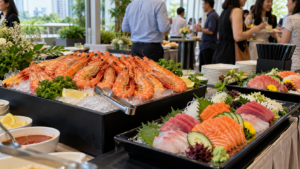
Neither approach is automatically more premium. A live carving station creates a little theatre and can make a meal feel special. Pre-sliced roast beef can be more practical when guests need food quickly or the room cannot accommodate a station. Choosing well means understanding how the event actually runs, rather than copying a photograph of a hotel buffet.
What a live carving station adds
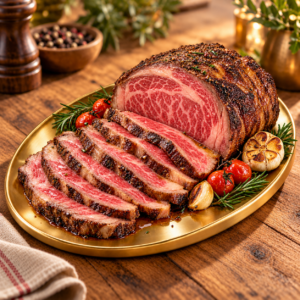
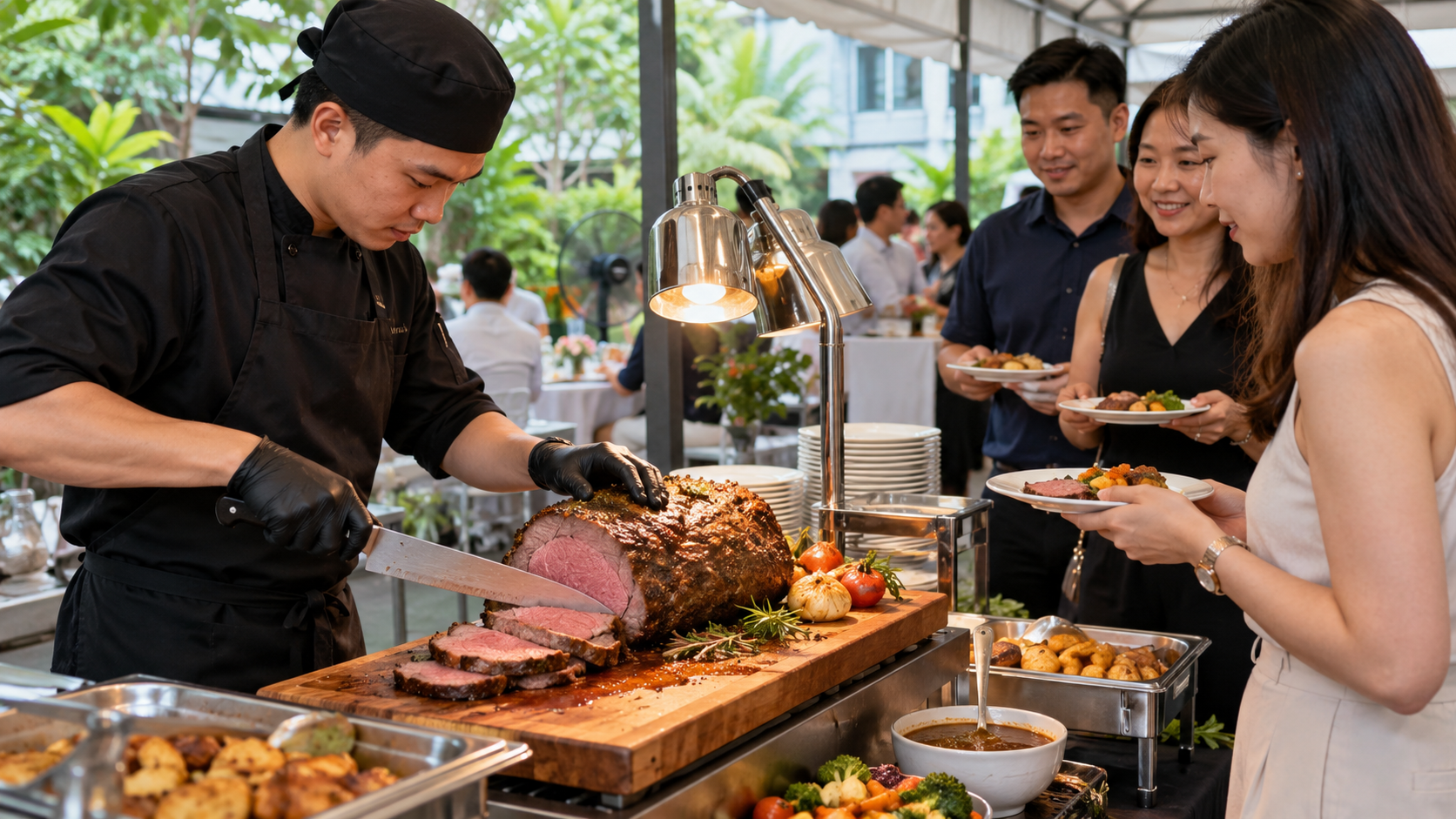
A carving station makes the beef preparation visible. Guests can see the roast, watch portions being cut and ask the server about the available accompaniments. At a wedding, celebration dinner or corporate gathering, that moment can give the meal a focal point, particularly when the rest of the menu consists of self-service sides.
Live carving also brings an experienced person into the service sequence. Instead of leaving guests to cut their own slices, a dedicated cook or carver can manage portion sizes and replenish a serving platter as needed. A station only improves the occasion, however, if the queue stays manageable and the venue provides enough room to work safely.
When pre-sliced roast beef is the smarter choice
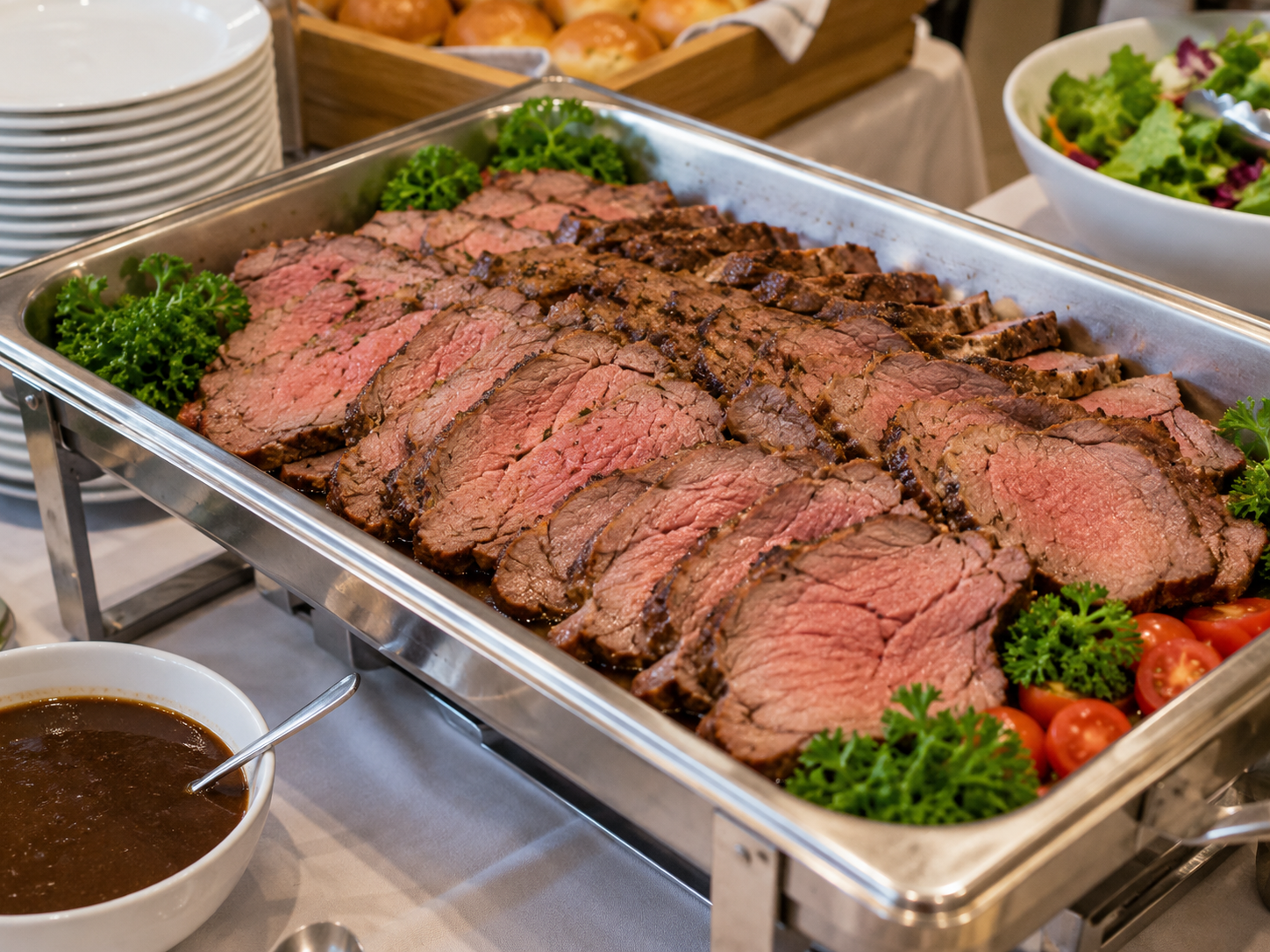
Pre-sliced roast beef is effective when the priority is convenient service rather than spectacle. For an office lunch with a fixed meal break, a packed event schedule or a venue with limited floor space, ready-to-serve platters can avoid the time guests spend waiting for individual portions.
It can also help when a roast accompanies several other dishes rather than acting as the sole attraction. The food can be positioned as one item in a balanced spread alongside vegetables, carbohydrates and sauces. The key is not simply slicing earlier; it is planning the cut, resting, transport and service conditions so that the meat stays appealing.
A station needs a footprint, not just a table
A live station needs more space than the carving board itself. Allow room for the carver, safe knife handling, hot equipment where required, a guest approach path, serving plates and guests moving away with their portions. If the queue crosses a drinks station or blocks access to seating, the supposed attraction becomes an obstacle.
Confirm access with the venue before booking: loading areas, lift sizes, electrical supply if equipment requires it, service timing and whether food stations are permitted in the desired location. A modest, thoughtfully placed station can be more successful than an elaborate display that overwhelms a compact Singapore event space.
The carving queue is a predictable bottleneck
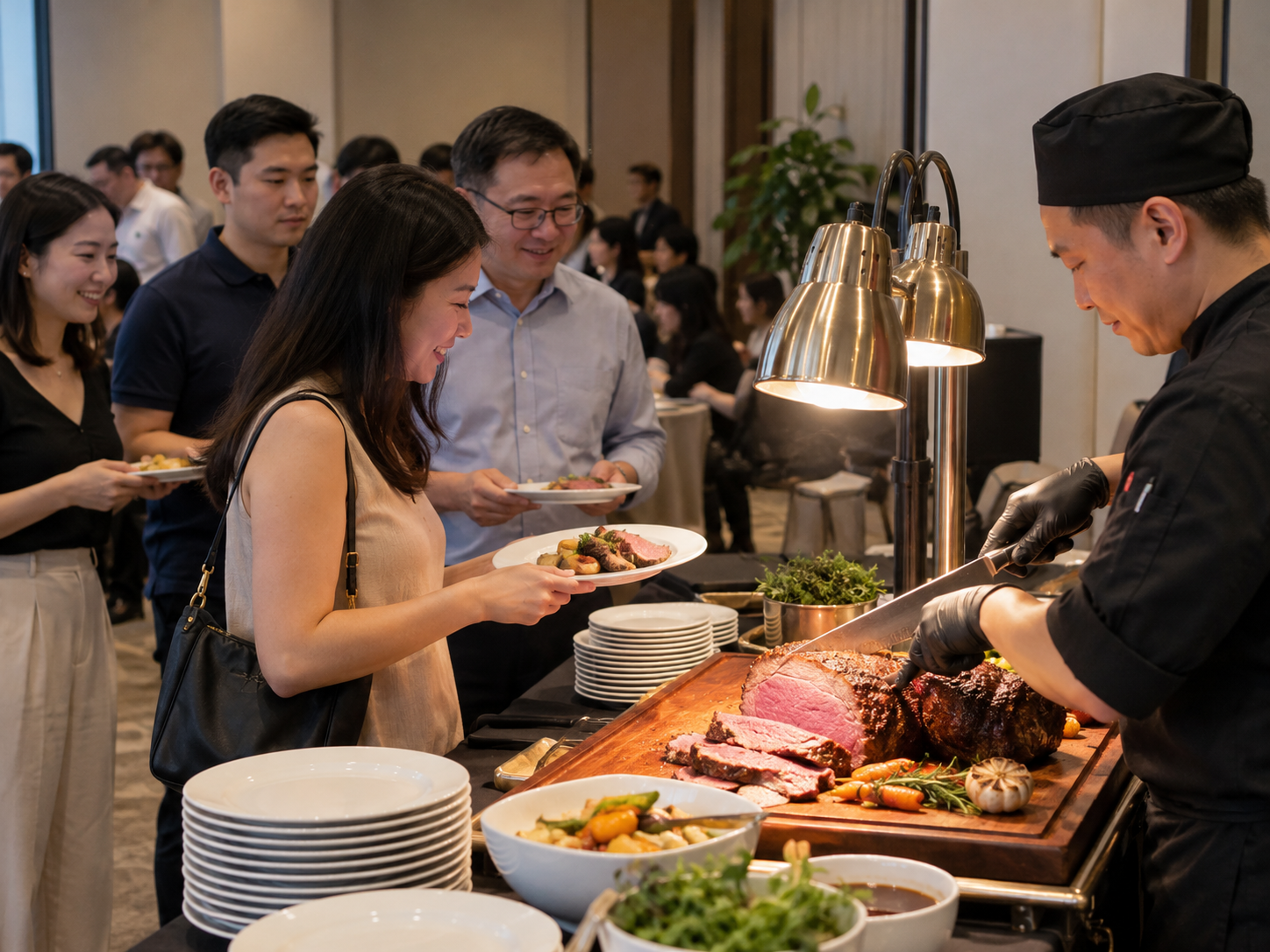
It takes longer to carve and plate an individual serving than for a guest to lift slices from a prepared tray. That is not necessarily a problem when guests arrive gradually. It is a problem when everyone expects dinner immediately after a speech or during a short programme break.
Plan the peak demand. You might arrange the buffet sides first, allow guests to approach the carving station in waves or serve smaller portions regularly. Discuss the likely serving rate with the provider rather than assuming one carver can handle every guest instantly. If the event has a strict time window, pre-sliced platters or a mixed approach may be more sensible.
Resting and slicing matter whichever format you choose
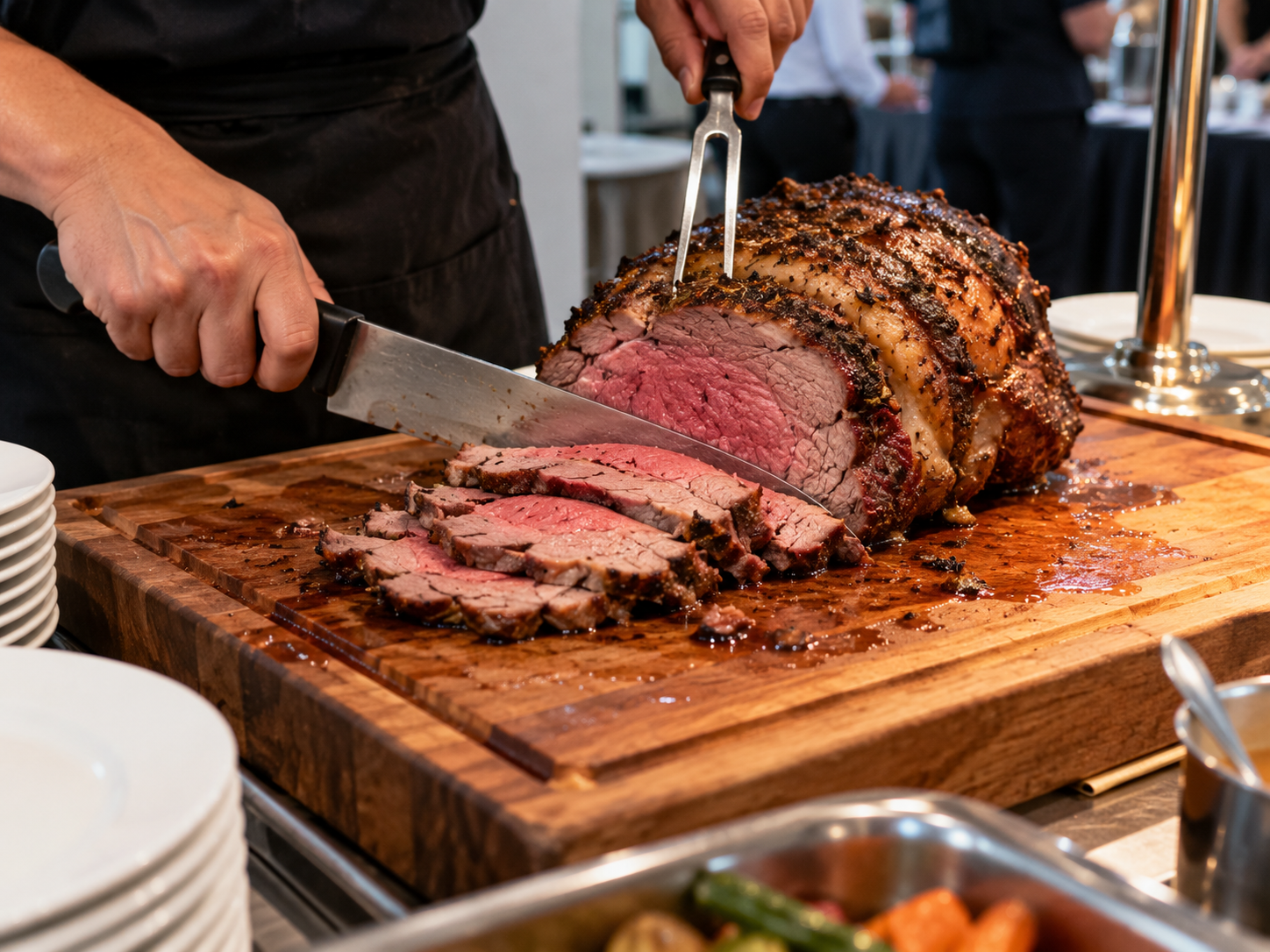
A roast should be allowed an appropriate rest after cooking so the juices settle before carving. The thickness and direction of slicing affect how tender the portions feel. Cutting across the grain where applicable makes an important difference. These principles apply whether a cook carves in front of guests or slices behind the scenes.
Plan when carving begins. Slicing too early can expose more surface area and reduce the quality of the final plate; waiting until the peak rush can create a queue. Good service coordinates roast completion, resting, slicing, plating and safe holding rather than treating these as disconnected jobs.
Portion expectations need to be explicit
At a buffet, some guests may take a generous helping while others prefer only a taste. A carver can distribute reasonably consistent portions, but that should be discussed in advance. For a shared platter, consider where the roast sits within the overall menu: a beef centrepiece served alongside chicken, rice and vegetables carries a different portion expectation from a standalone roast dinner.
Ask your caterer to help plan quantities around guest count, appetite, the number of other proteins and whether seconds are expected. Avoid promising an exact number of portions solely from a photographed roast size. Bones, fat trimming, the cut itself and serving size all affect the usable amount.
Sauces and sides are part of the service plan
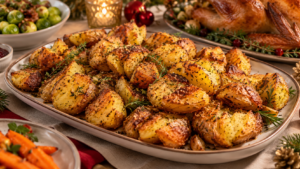
Beef may be the headline, but guests still need a complete plate. Roast potatoes, vegetables, salads, bread, pasta or rice can turn the roast into a more practical meal, particularly for mixed-age groups. Place sides where they do not force the same guest to queue twice through a narrow lane.
Sauces should also be easy to reach without crowding the carving board. Offer serving utensils and labels where appropriate. If your group includes guests who avoid beef or need a different meal, arrange suitable alternatives beforehand. A carving station should complement the broader gathering, not leave everyone else without a workable option.
Transport and holding in Singapore’s climate
Neither a live station nor pre-sliced platters eliminate food-safety responsibilities. Raw, cooked and ready-to-eat foods require appropriate handling. Hot foods must be served or held according to relevant safety guidance, and leftovers should not be left exposed for an extended period in Singapore’s heat.
Confirm who is responsible for transport, setup, holding equipment, carving utensils, service and clearing. If the roast arrives separately from the chef, coordinate arrival times and handover. If the event is outdoors, plan protection against rain, insects and excessive exposure. A handsome roast only makes sense if the operation behind it is sound.
What the service costs actually cover
A quotation for a whole roast may cover the cooked product alone. A staffed carving station can involve labour, extra equipment, setup, transport and a service duration. Comparing the two options requires an itemised scope, not just checking whether the beef weighs the same.
Ask whether the team supplies a carving board, knives, serving plates, table setup, fuel or electricity-dependent equipment, sauces and cleaning support. Find out how early staff need access and when they must leave. Avoid assuming that a visually impressive station includes a full catering setup; small-scale side catering and roast carving are services that can be arranged separately.
The hybrid option: live carving, ready-to-serve backup
For some gatherings, the best answer is a combination. A carving station can create the desired arrival or dinner experience while a separate platter supports guests who cannot wait in line, provided the provider can safely organise both. This keeps the showpiece without tying every guest’s meal to a single carving point.
Another option is to have the carver prepare batches onto a nearby service platter rather than individually plating every portion. The right arrangement depends on the event layout, food quality requirements and staffing. The central idea is to make the roast attractive without letting the station dictate the entire flow of dinner.
Three example events, three different decisions
At a small family gathering in a condominium function room, pre-sliced beef might be the simplest arrangement: guests can serve themselves from platters and move between tables comfortably. The emphasis is on eating together, not the service ritual.
At a milestone birthday with a comfortable outdoor or event venue, a live carving table may give guests a memorable focal point. At a company dinner with a very short serving break, a hybrid setup or ready portions can reduce waiting. The best choice changes even when the roast itself stays exactly the same.
Questions to settle with your provider
Ask what cut and approximate roast size are being supplied; how the roast will be cooked and transported; whether it arrives whole or sliced; what serving equipment is included; how long the team will carve; and how portions and queues will be managed. Also confirm the number of guests, serving time and any restrictions at the venue.
If accompaniments are supplied, specify which sauces and sides, and how they will be displayed or served. Ask what the host must provide—tables, access, electrical supply if needed, disposables or rubbish management. A clear brief is worth more than an elaborate mood board.
Make the roast work for your occasion
De’Vour’s roast and carving options are most useful when planned as part of the event rather than treated as an isolated food item. Start with your venue, headcount, meal window and whether you want a live experience or straightforward serving. Then choose the beef, portion approach and supporting dishes.
If you are preparing to serve the roast yourself, read our guide to carving beef for a Singapore family gathering. If you are considering an event with multiple food stations, our live oyster bar planning guide explores the guest-flow principles that apply to service stations of all kinds. Great roast service should feel effortless to guests—even though thoughtful planning makes it possible.