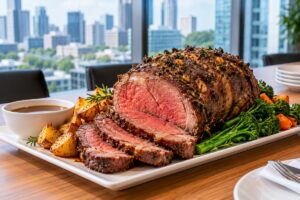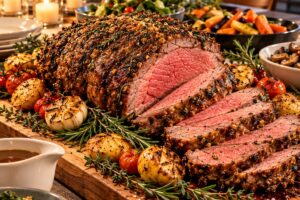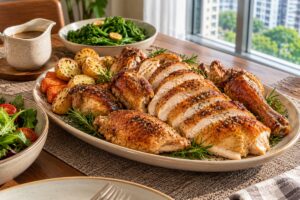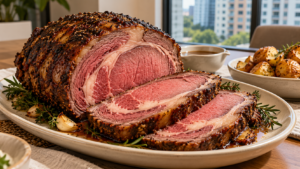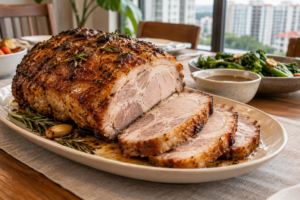
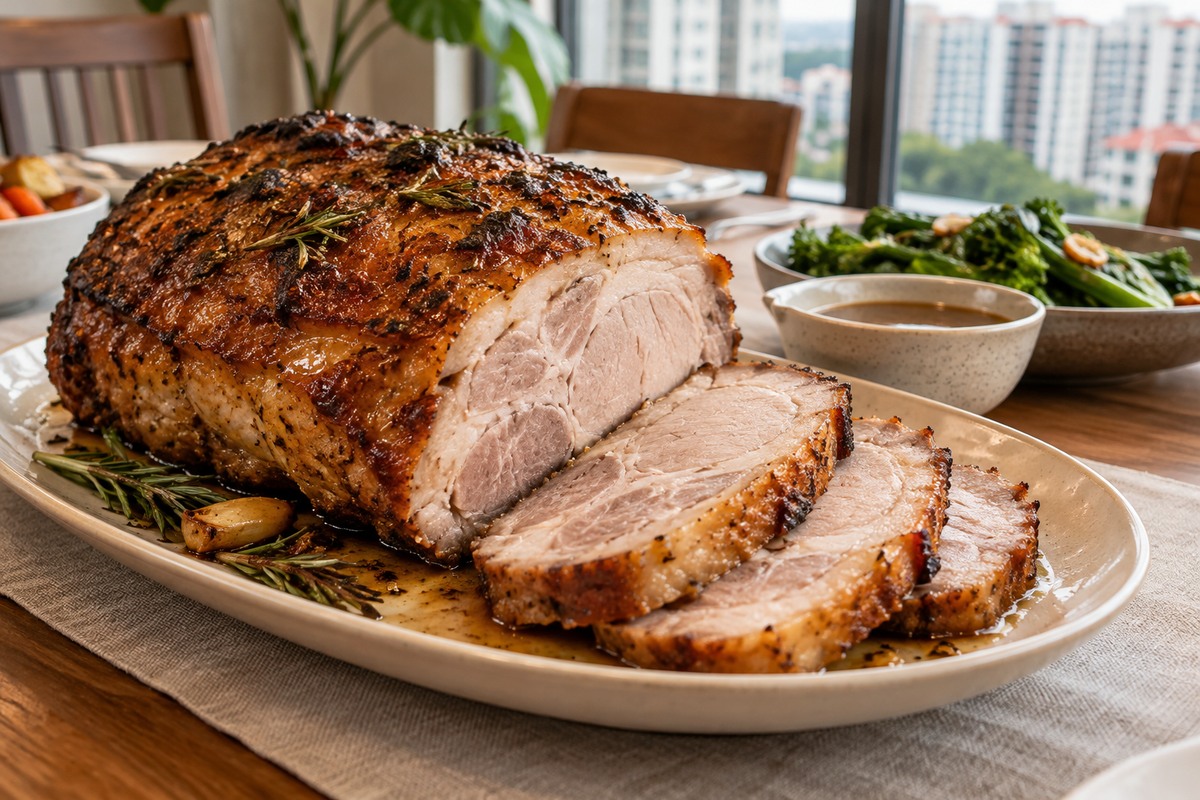
Planning a pork roast dinner in Singapore? Pork loin and pork collar can both make appealing centrepieces, but they are not interchangeable. One is relatively lean, mild and neat to carve. The other contains more fat between the muscles and offers a richer, more succulent bite when properly prepared. The best choice depends on your guests, the meal format and the way the roast will be served.
This guide compares whole cooked pork loin and pork collar roasts for HDB family dinners, condominium gatherings and office celebrations. We will look at texture, carving, portion planning, accompaniments, delivery and safe service. It is about roasts, not individual pork chops or grilled meat.
Pork loin versus pork collar: the quick answer
Choose pork loin roast for relatively lean, consistent slices and a straightforward plated presentation. Choose pork collar roast for a more marbled, richer cut that suits informal sharing. Some diners dislike visible fat; others find lean pork less satisfying. Neither preference is wrong.
Ask the supplier how the specific joint is cooked and whether it arrives whole or pre-carved. A cut name cannot guarantee tenderness, moisture or an exact number of servings. The preparation and handling matter just as much as the label.
What is pork loin roast?
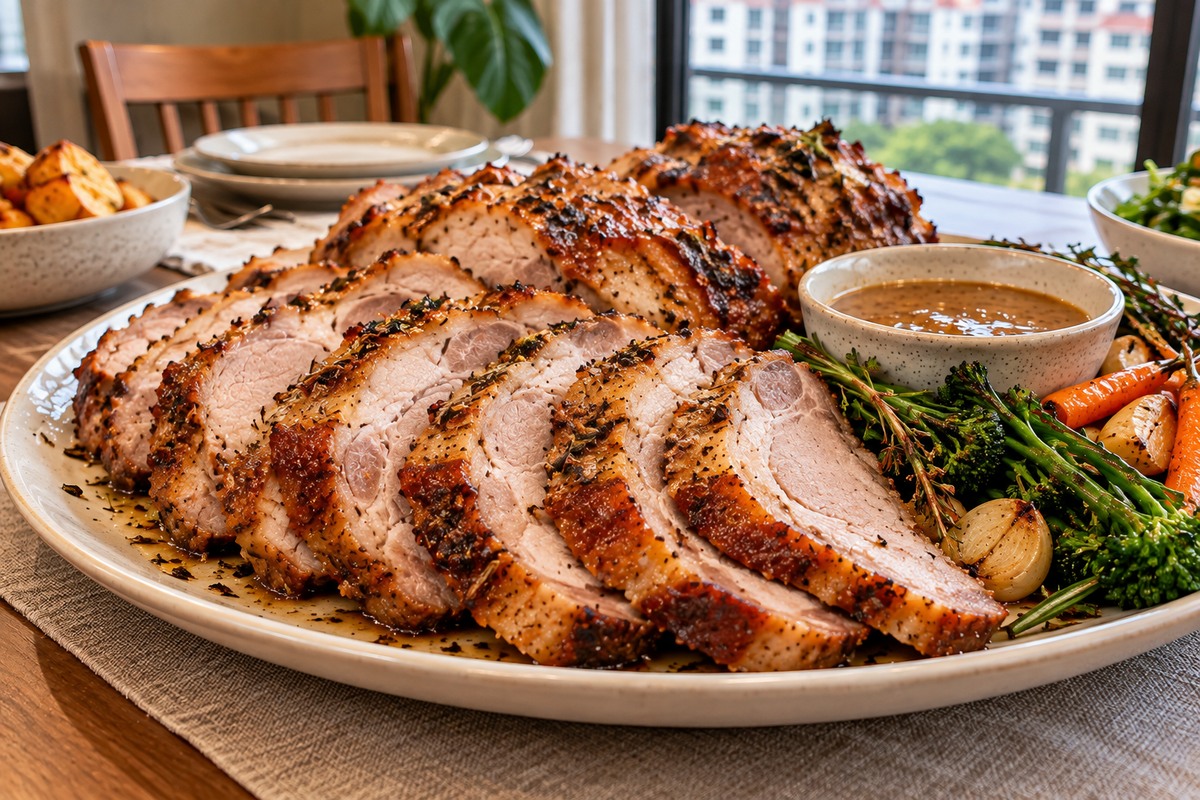
Pork loin comes from the back of the pig. A boneless loin roast typically has a relatively uniform, elongated shape that can be sliced into tidy portions. Its main muscle is leaner than collar, although an outer fat layer may remain on some joints. That fat cap should not be confused with marbling within the meat.
Loin has a mild flavour that works well with herbs, mustard and gravy. Its main drawback is that it can dry out if overcooked or reheated carelessly. Properly prepared loin should be moist and enjoyable, not tough simply because it is lean.
What makes pork collar roast different?
Pork collar comes from the shoulder-neck region. Its combination of muscles and seams of fat creates a richer texture and more varied appearance than loin. When cooked appropriately, the marbling contributes to a satisfying bite. The slices may not look perfectly identical, which is normal for this cut.
Collar can appeal to guests who enjoy fuller pork flavour and visible marbling. It still needs careful cooking and safe holding; extra fat is not a substitute for good technique. De’Vour has also written about Akabuta pork collar as a shared roast.
How do the cuts compare when carved?
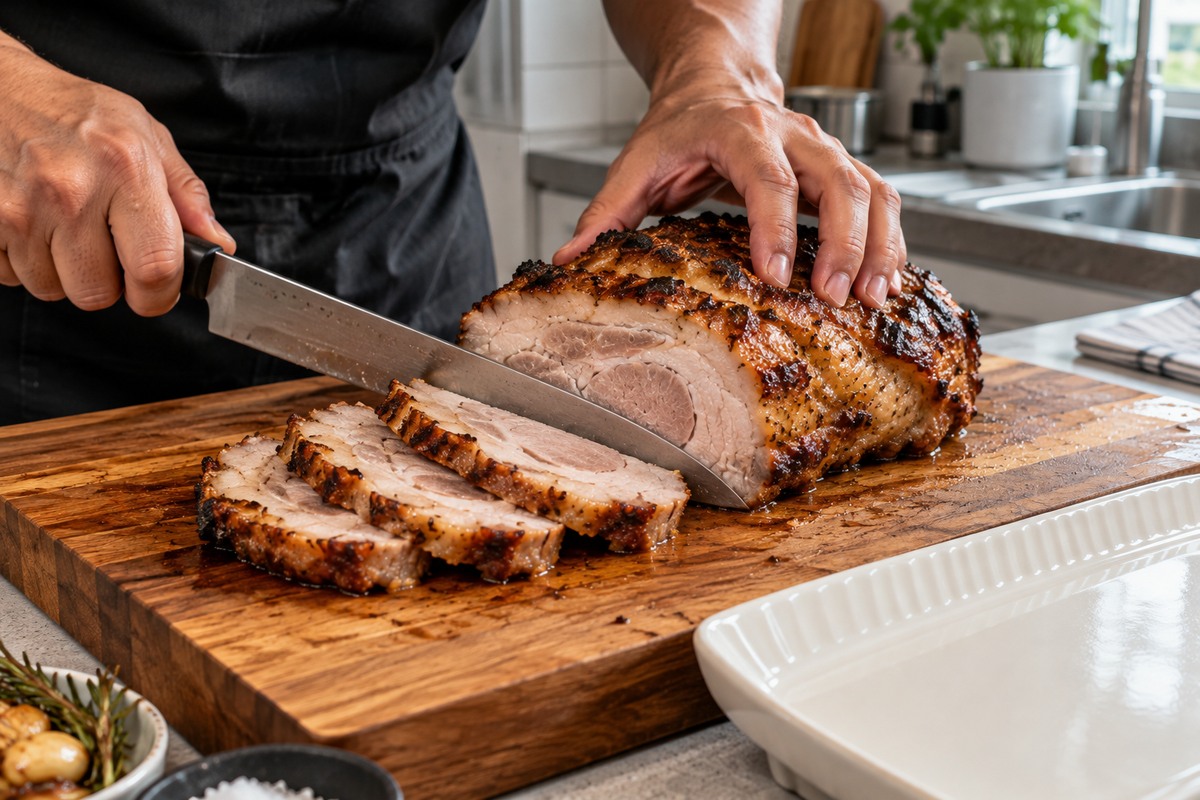
Boneless loin usually produces an orderly row of slices with a consistent centre. That helps when guests expect similar-looking portions on individual plates. Collar has more irregular muscle sections and fat seams, so two adjacent slices can look different even when carved with care.
Use a stable board and a sharp carving knife for either cut. Slice across the relevant muscle grain where practical. If the grain changes direction through a collar joint, adjust the knife angle rather than forcing every piece into the same pattern. Serve on a clean platter without overcrowding it.
Choosing a pork roast for an HDB family dinner
Space is often limited around a Singapore HDB dining table. Pork loin is convenient when you want to carve quickly in the kitchen and bring out neat slices for everyone. It may appeal to older relatives or children who prefer less visible fat, although individual preferences vary.
Pork collar is attractive when the family enjoys richer meat and a relaxed sharing style. Offer pieces with different amounts of marbling rather than assuming everyone wants the fattiest slice. Keep the carving board away from crowded place settings and serve sauces separately so the roast remains the focus.
Planning a roast for a condo function room or office lunch
For condominium gatherings and corporate lunches, serving speed can matter more than a dramatic presentation. Loin’s regular shape helps with consistent portions when guests have a short meal break. Collar can work equally well, but its variable structure may call for a more deliberate carving approach.
Ask whether the supplier provides carving or only delivers the cooked joint. A staffed station requires room for the carver, knives, plates and guests moving through the queue. De’Vour’s carving-station versus pre-sliced roast guide explains these logistical choices, which apply to pork as well as beef.
How much pork roast should you order?
Start with the guest count and the role of the roast. If pork is the main protein, diners may want more than when several other roasts are served. A meal with substantial potatoes, vegetables and bread differs from a buffet where everyone samples multiple mains. Consider children, smaller appetites and whether guests expect second helpings.
Do not assume that a one-kilogram roast yields one kilogram of edible slices. Cooking loss, fat trimming and the cut’s structure affect the final amount. Ask for a serving estimate for the exact product rather than applying a universal grams-per-person formula.
One large roast or two smaller joints?
One large joint looks impressive and simplifies the number of items to manage. Two smaller joints can be easier to handle in a compact kitchen and may support staggered service, provided the second is kept safely under the supplier’s instructions. The better choice depends on available product sizes and the timing of your event.
Do not assume every roast can be ordered in custom weights. Check the actual catalogue and ask whether multiple joints are available. If guests will arrive in waves, discuss delivery timing and safe holding before the day rather than improvising at the table.
Cooking, resting and reheating need different plans
Pork loin can lose moisture when overcooked, while collar needs a method suited to its fat and connective tissue. Roast size, cooking technique and internal temperature all matter. Home cooks should use a reliable food thermometer and current food-safety guidance instead of judging doneness by colour alone.
A fully cooked delivered roast may already have rested before packing. Do not automatically leave it on the counter for another half hour. Follow the provider’s specific instructions for immediate service, refrigeration or reheating. The best reheating method for texture is not useful if the food is held unsafely.
Which accompaniments work with pork loin?
Lean loin benefits from moisture and contrast. A little gravy, mustard or apple-based sauce can complement its mild flavour. Roast potatoes and lightly cooked greens turn it into a complete dinner without competing with the centrepiece. Serve sauces in separate jugs so guests can decide how much they want.
For a festive meal, resist covering the entire platter with gravy before anyone eats. That can soften the exterior and hide the neat slices. De’Vour’s roast-dinner sauce planning guide offers practical considerations for accompaniments.
Which accompaniments balance pork collar?
Collar’s richer fat seams pair well with lighter vegetables and sharper condiments. A tangy sauce or mustard can cut through the richness, while a moderate serving of roast potatoes keeps the plate familiar. The idea is not to make the roast taste leaner, but to balance each mouthful.
If the menu also contains ribeye, chicken or other roasts, avoid making every accompanying dish heavy. Guests often appreciate the chance to sample smaller portions of different meats. Keep pork collar clearly identified so people who avoid pork can make an informed choice.
Delivery and safe service in Singapore’s climate
Confirm whether the pork roast will arrive hot for prompt consumption or chilled for later reheating. Ask about packaging, the delivery window, carving and any consume-by instructions. A covered container is not a guarantee that the roast will remain safely hot for hours.
Singapore’s warm conditions make casual countertop holding risky. The Singapore Food Agency identifies 5°C–60°C as the temperature danger zone for cooked food. Follow appropriate hot-holding or refrigeration guidance and avoid leaving sliced meat on an open buffet for an extended period. Coordinate the roast’s arrival with the actual meal time.
Carving and serving without losing quality
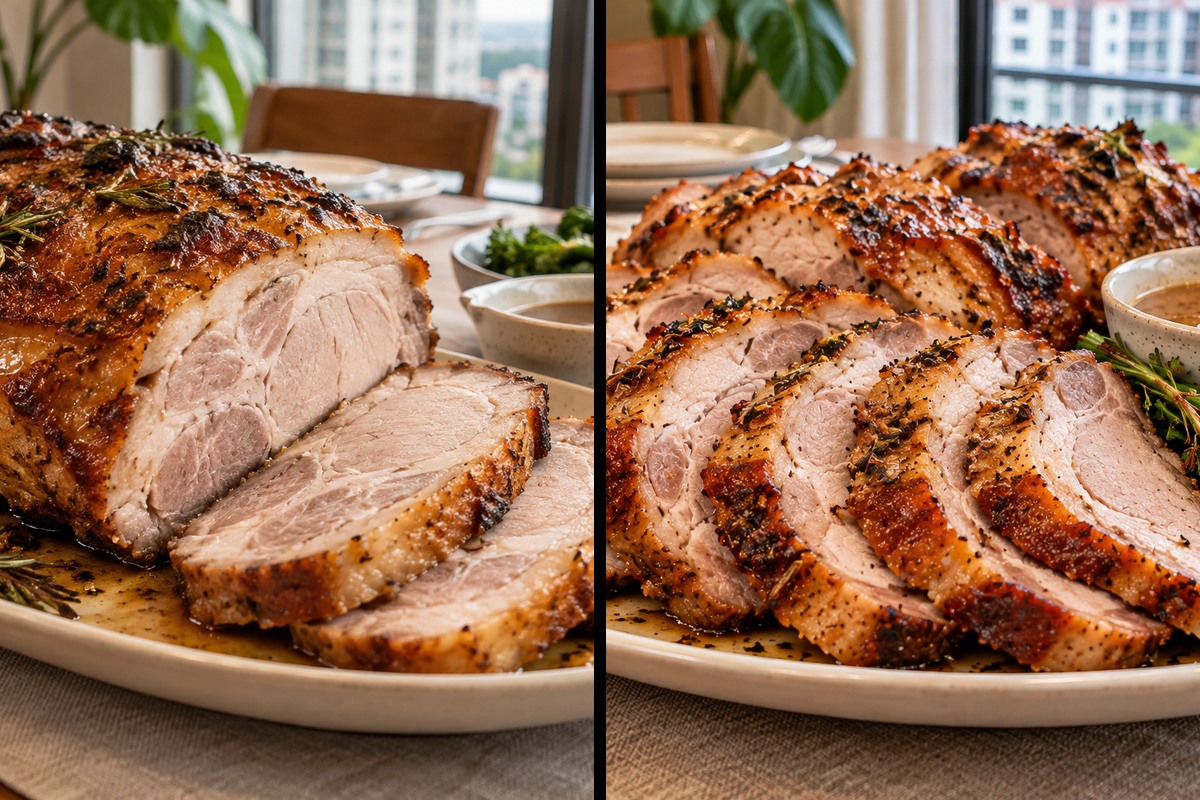
Carve near serving time when practical. Once sliced, meat exposes more surface area and may lose moisture and presentation quality. For loin, aim for even slices that hold together. For collar, work with the joint’s shape rather than tearing through the different muscle sections.
Use clean utensils reserved for cooked food. Replenish platters in manageable batches while maintaining safe holding conditions. If a guest wants less visible fat, offer a suitable slice instead of trimming pieces over the main platter. Small details make a roast dinner feel considered without adding much work.
Dietary needs at a mixed Singapore gathering
Pork is unsuitable for guests who avoid it for religious, cultural or personal reasons. Ask about dietary needs before ordering and provide a genuinely appropriate alternative. Clearly label the pork roast and use separate serving utensils to reduce confusion.
Do not describe a buffet containing pork as halal. Guests who require halal-certified food may need a separately sourced and appropriately handled meal; check those arrangements with the relevant supplier. A premium roast should make the gathering more welcoming, not leave some guests without food they can comfortably eat.
What De’Vour lists and what to confirm
De’Vour’s published cooked-roasts guide includes Canadian Akabuta Pork Loin Roast and Canadian Akabuta Pork Collar Roast in its October 2026 catalogue overview. That does not guarantee every size, delivery slot or preparation is currently available.
Check the current De’Vour roast ordering category for prices and availability. Confirm the weight, whether the joint arrives whole or sliced, the handling instructions and any carving service. For a corporate event, provide the venue, guest count and intended serving time before finalising the order.
Frequently asked questions
Is pork collar always more tender than loin?
No. Collar’s marbling can make it feel richer, but tenderness depends on the specific joint and cooking method. A well-prepared loin can be moist and pleasant.
Which roast is easier to slice neatly?
Boneless loin usually has a more uniform shape. Collar can also be carved attractively, but its muscle structure requires more attention.
Can I serve both pork roasts together?
Yes, subject to availability. Smaller portions of each can give guests a choice between leaner and richer pork. Confirm combined quantities and safe service arrangements.
Should I leave a delivered roast out to rest?
Not automatically. It may already have rested. Follow the supplier’s instructions rather than leaving cooked pork at room temperature.
Choose the pork roast that suits your table
Pork loin is a sensible choice for lean, consistent slices and a tidy presentation. Pork collar suits diners who prefer a richer, more marbled roast. Either can work for a Singapore family dinner or office gathering when portions, carving, accompaniments and delivery are planned together.
Browse De’Vour’s cooked-roast guide and confirm the current product details before ordering. A thoughtful choice makes the roast easier to serve and more enjoyable for the people around your table.