De’Vour roast guide · Singapore · 24 October 2026
A whole roast chicken looks effortless on the dining table: golden skin, aromatic seasoning and tender meat ready to share. The difficult part often happens between cooking and serving. In a Singapore HDB flat, condominium function room or office pantry, a roast may travel in protective packaging, wait while guests arrive and then sit beside other dishes. During that time, steam can soften the skin even when the chicken was beautifully roasted.
For anyone ordering roast chicken delivery in Singapore, the goal is not crispness at any cost. It is to protect the roast’s texture while keeping food safety, timing and a practical serving setup in view. Here is how to strike that balance.
Why roast chicken skin changes after delivery
Golden roast skin develops as its surface loses moisture and browns during cooking. Once a hot chicken is enclosed for transport, steam can collect. When vapour meets a cooler lid or wrapping, condensation may settle back onto the skin. A roast that left the kitchen with a satisfying exterior can therefore arrive softer without having been poorly prepared.
Singapore’s warm, humid weather adds a complication, but trapped steam is often more important than outdoor humidity alone. Hygienic packing and temperature control are essential; leaving a cooked chicken exposed for an extended time is not a safe shortcut. Think of crisp skin as a quality to enjoy close to serving time, not a guarantee throughout a long journey.
Start with the eating time, not the delivery slot
Work backwards from when guests will actually eat. A family gathering at 6pm but beginning dinner at 7.30pm needs a different delivery plan from one serving immediately. The roast should not arrive excessively early simply because the host wants every dish arranged before anyone comes.
Tell the supplier your serving time, building type and access requirements. Condominium visitor registration and function-room access can add minutes; an HDB kitchen with limited counter space can slow handover. Ask how the chicken is packed and what holding instructions apply. The Singapore Food Agency’s catered-event guidance recommends delivery close to mealtime, ideally no more than one hour beforehand.
Keep the chicken protected until service
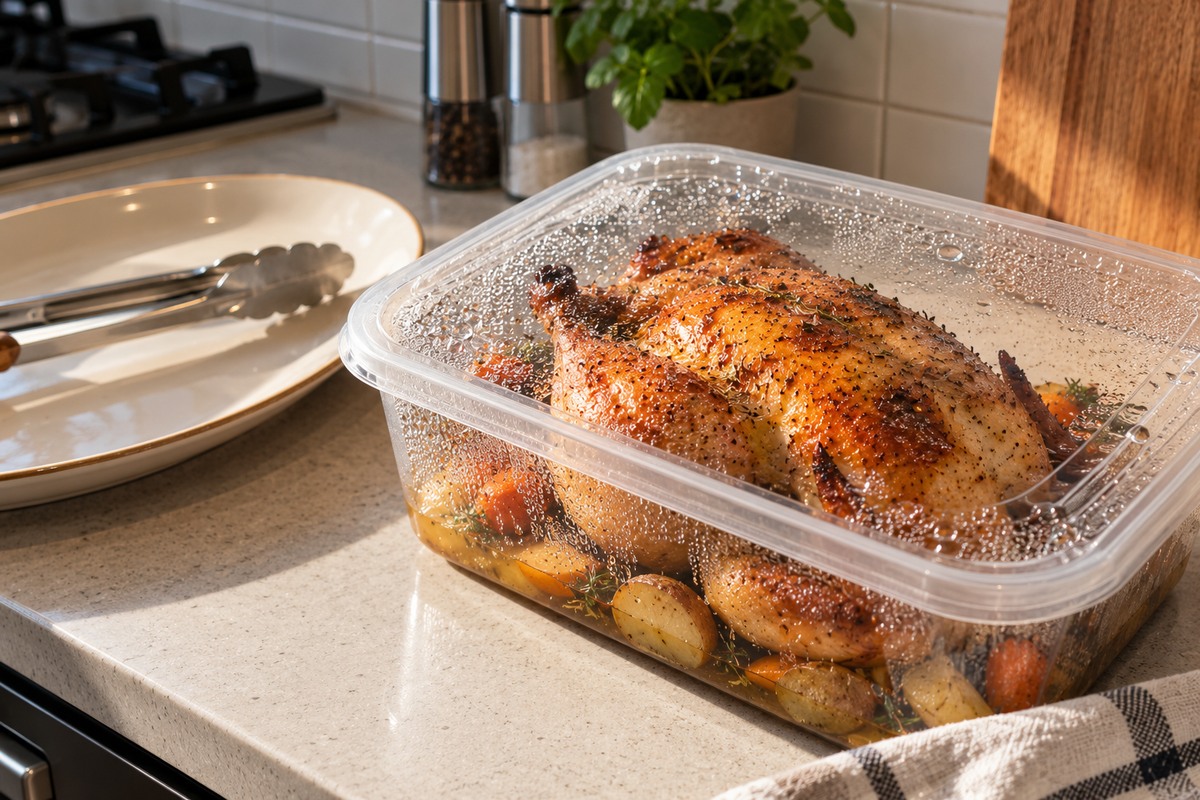
It is tempting to open the box immediately to admire the roast or let the skin “breathe”. Avoid turning the chicken into an early display piece. Removing protective packaging too soon can expose ready-to-eat food to handling and temperature loss. Follow the supplier’s instructions and use suitable hot-holding equipment where required.
For hot service, Singapore Food Agency guidance is to keep cooked food above 60°C. A decorative warming lamp or a container that merely feels warm is not a substitute for temperature control. When proper holding equipment is unavailable, shorten the time between delivery and eating instead of assuming the roast remains safe on the table.
Balance crisp skin against juicy breast meat
A chicken contains different muscles. Breast meat is leaner and can become dry when overhandled, while thighs and drumsticks have a different texture and generally tolerate serving better. Trying to make the skin dramatically crisp again after delivery may overcook the already-cooked breast.
The better plan is usually to order a properly prepared roast and serve it promptly, not schedule a second cooking session. Ask whether the supplier recommends any finishing step for the specific product. If no instructions are provided, do not improvise a high-heat blast solely for appearance. Juicy, safely served chicken with slightly softer skin is preferable to a dry roast with a striking photograph.
Whole roast presentation versus carving at the table
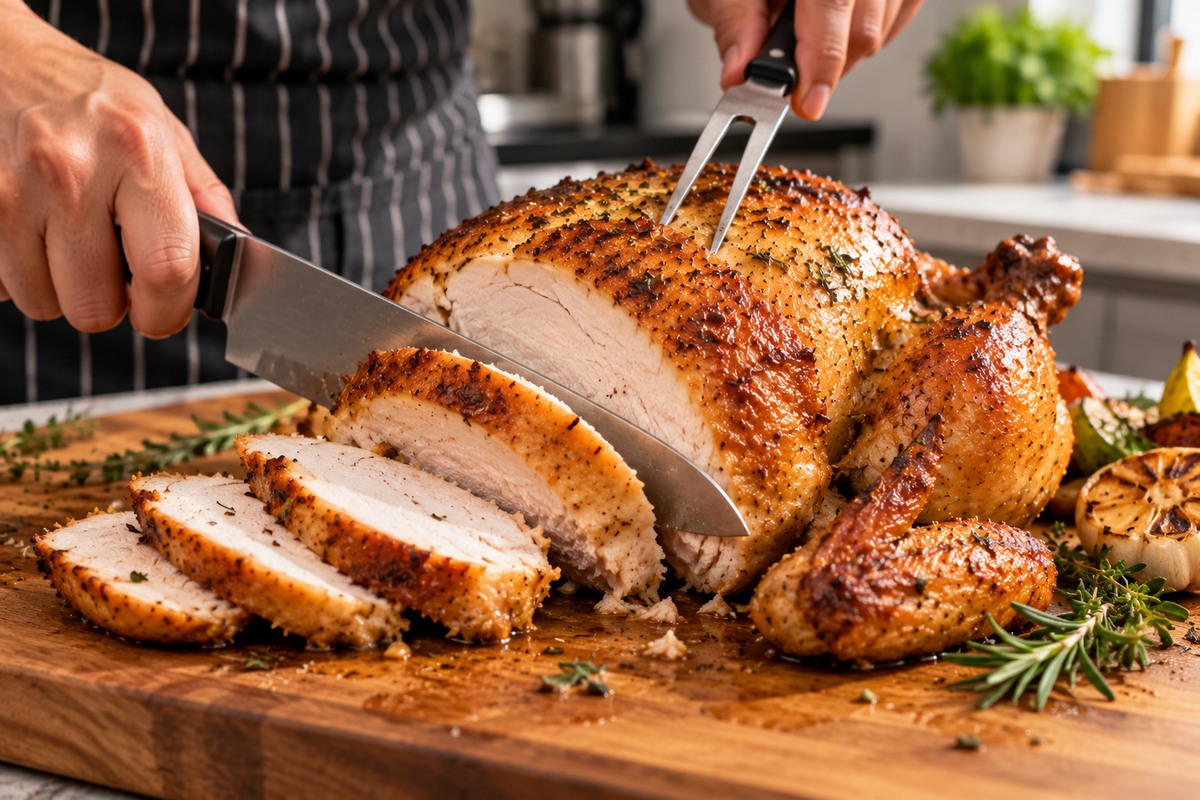
Presenting the chicken whole gives a small family the pleasure of seeing the centrepiece before it is carved. Keep that moment short. Set out a stable board, clean carving knife, tongs and platter beforehand, then move from presentation to portions when everyone is ready. Avoid repeatedly carrying the hot bird between kitchen and dining room.
Carving exposes more meat surface to air, so cutting everything far in advance can reduce its appeal. For a larger gathering, however, some advance portioning helps guests serve themselves efficiently. The decision is about service, not an absolute rule that whole birds always taste better. Discuss the intended format with the supplier.
Arrange the carved chicken so it stays appetising
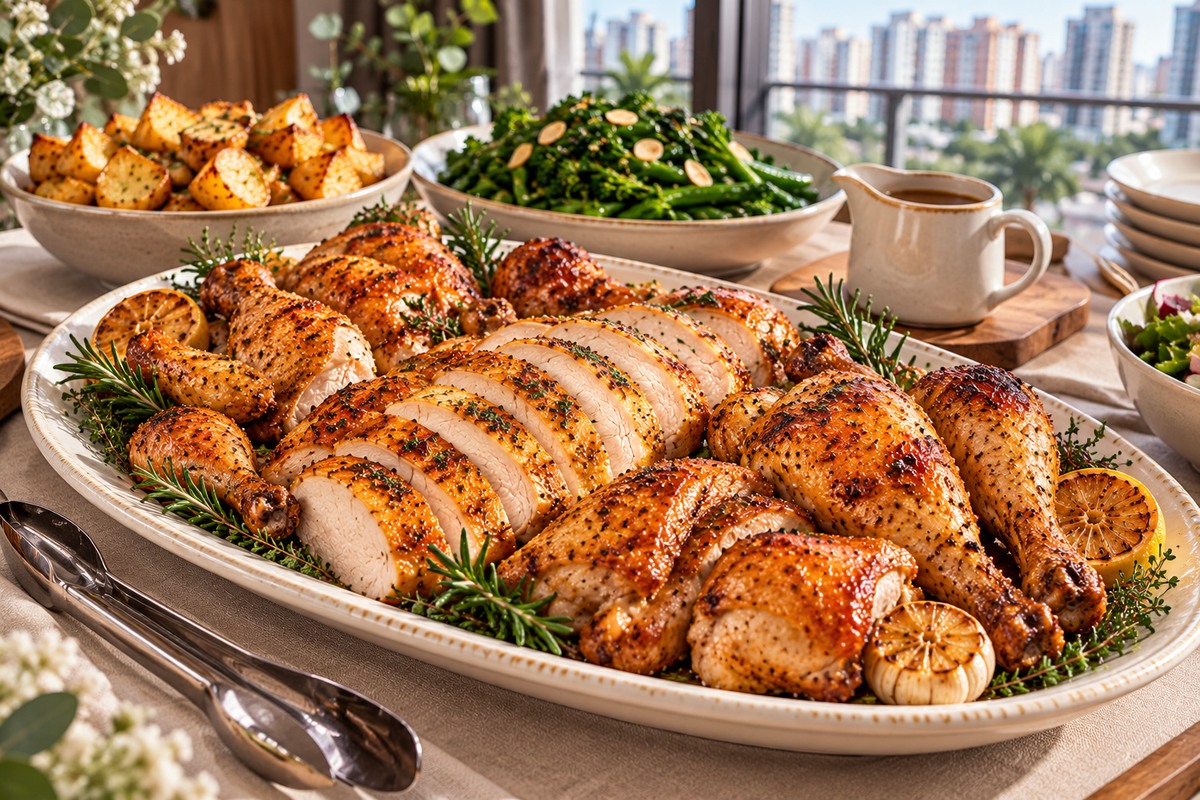
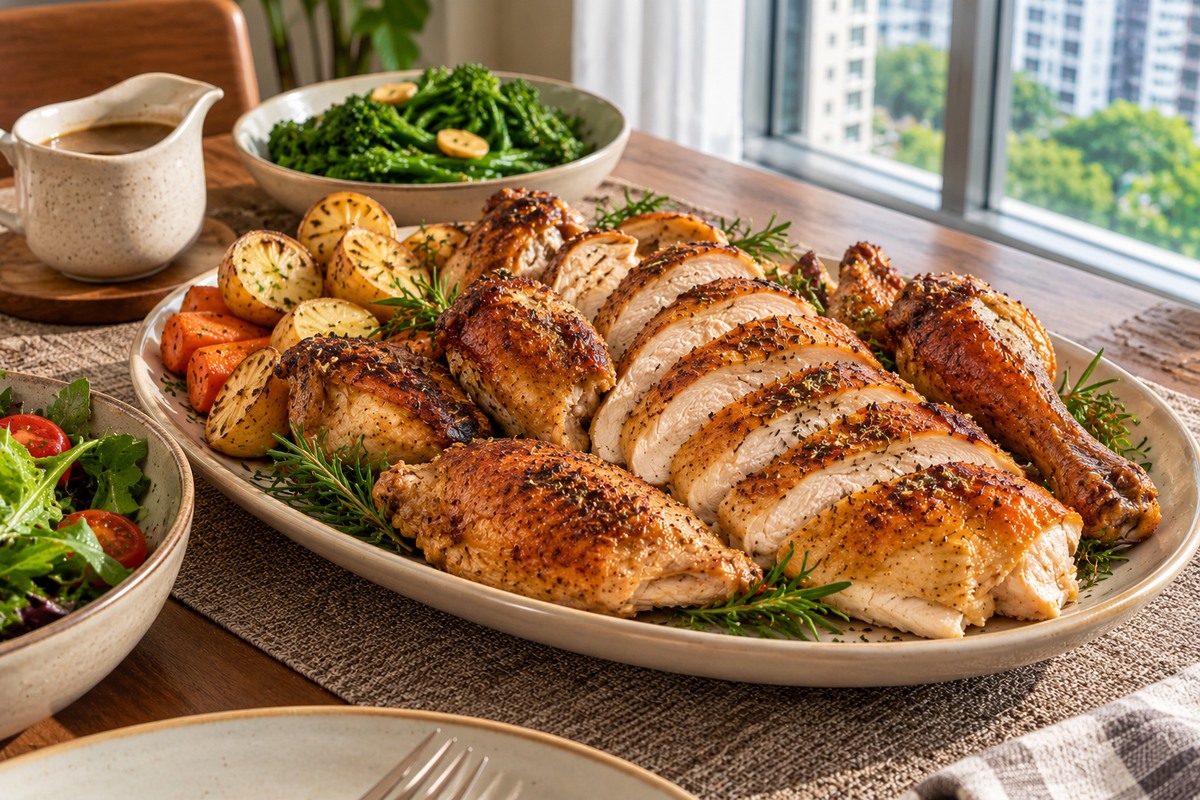
Use a sharp knife and try to keep the browned skin attached to the portions. Arrange breast slices in a shallow layer instead of piling them into a deep mound that traps heat and moisture. Keep thighs, drumsticks and wings identifiable so guests can select their preferred pieces. A platter with space around the portions is easier to serve from than a crowded bowl.
For a longer service, replenish from appropriately held portions following the caterer’s instructions rather than leaving all the carved chicken exposed. Provide clean serving utensils and discourage guests from touching ready-to-eat food directly. The objective is an inviting, recognisable roast, not elaborate plating that delays dinner.
Put gravy beside the chicken, not over its skin
Gravy complements breast meat, but pouring it over the entire chicken immediately softens the skin you are trying to preserve. Put it in a separate jug and let guests add it on their plates. This also helps children and diners who prefer lighter seasoning.
Smashed roast potatoes, simple greens and a bright salad can make the meal feel complete without overwhelming the centrepiece. De’Vour has separate guides to planning gravy quantities and serving smashed roast potatoes. Use them to refine the supporting dishes while keeping roast chicken as the focus.
Plan for guests who prefer different portions
One whole bird does not offer unlimited drumsticks or wings. At a multigenerational Singapore dinner, children may favour legs, some adults prefer breast slices and others enjoy dark meat. Separating the parts clearly makes service easier than assuming everyone wants identical portions.
When estimating quantity, consider whether chicken is the only main protein, whether children are attending and whether guests will return for seconds. Bone-in weight is not the same as edible cooked meat. De’Vour’s cooked-roasts guide lists Signature Roasted Organic Chicken; check the current product listing for the latest size, availability and portion advice rather than relying on an older menu.
What completed festive orders can tell us
De’Vour’s completed festive-order records include recurring organic roast chicken selections as well as beef and pork roasts. That supports a modest insight: chicken is not simply a fallback when hosts cannot choose beef. It is a familiar roast deserving its own serving plan. The records do not establish that any particular household ordered the combinations discussed here, and customer details are neither needed nor shared.
For a smaller table, one well-presented chicken with thoughtful sides may carry the meal. For a larger group, several birds or an additional roast may be more realistic than stretching a single chicken beyond its yield. Base the decision on confirmed guests and the full menu, not an arbitrary promise that one bird feeds everyone.
Make an HDB or condominium serving area work
Most Singapore home gatherings do not have a restaurant carving trolley. They have a dining table, a kitchen counter and relatives moving between them. Give the roast one clear location away from the edge. Place the board on a stable, dry surface, with a clean platter for finished portions and a separate container for bones.
If space is tight, carve in the kitchen and carry the platter out once, rather than working beside guests’ drinks and belongings. Leave room for tongs and plates. At a condominium function room, check whether there is a suitable preparation counter and whether warming equipment is permitted before planning any finishing step.
Food safety matters more than photograph-perfect skin
The Singapore Food Agency’s food-safety advice explains that bacteria multiply rapidly in the 5°C–60°C temperature danger zone. Keep hot food above 60°C for hot service and refrigerate food promptly when it will not be served. Its guidance recommends reheating stored cooked food thoroughly to at least 75°C for two minutes, and no more than once.
Do not leave chicken on a buffet table for hours because the room is air-conditioned, or assume an insulated delivery box keeps food safe indefinitely. Observe “consume by” information and the supplier’s instructions. If a roast has been held outside safe conditions, a quick oven finish is not a reliable remedy. Safety takes priority over texture.
Handle leftover roast chicken promptly
If chicken remains, portion it into clean, shallow containers and refrigerate promptly instead of leaving the whole carcass on the table until late at night. Separate meat from bones where practical, label containers and avoid repeatedly taking them out of the refrigerator. Sensible quantities are the best way to minimise leftovers.
For later meals, follow safe storage and reheating guidance, reheating only once. Do not keep leftovers warm for extended periods in pursuit of crisp skin. De’Vour’s roast reheating guide explains why texture and temperature must be managed together.
Common questions about delivered roast chicken
Can delivered roast chicken still have crisp skin? Sometimes, especially with prompt service, but enclosed transport may soften it. Ask about packaging and timing rather than expecting oven-fresh crispness after a long delay.
Should I remove the packaging immediately? Not merely to chase crispness. Follow the provider’s holding instructions and avoid unnecessary exposure or temperature loss.
Whole chicken or pre-carved portions? A whole bird suits a short family-table reveal; pre-carved portions may simplify a larger service. Decide based on timing, space and who will carve.
Serve the roast at its best moment
The secret to delivered roast chicken is not a complicated last-minute trick. It is choosing the right size, confirming guests, arranging delivery near mealtime and preparing a clean serving area. Protect the roast during transport, avoid unnecessary waiting and let it take centre stage when everyone is ready.
For Singapore family dinners, festive gatherings and office celebrations, explore De’Vour’s current cooked roast selection and confirm chicken size, delivery arrangements and serving instructions before ordering. A well-timed roast with juicy meat and thoughtfully managed skin beats one left on display too long.