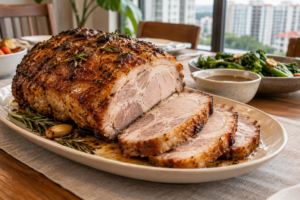
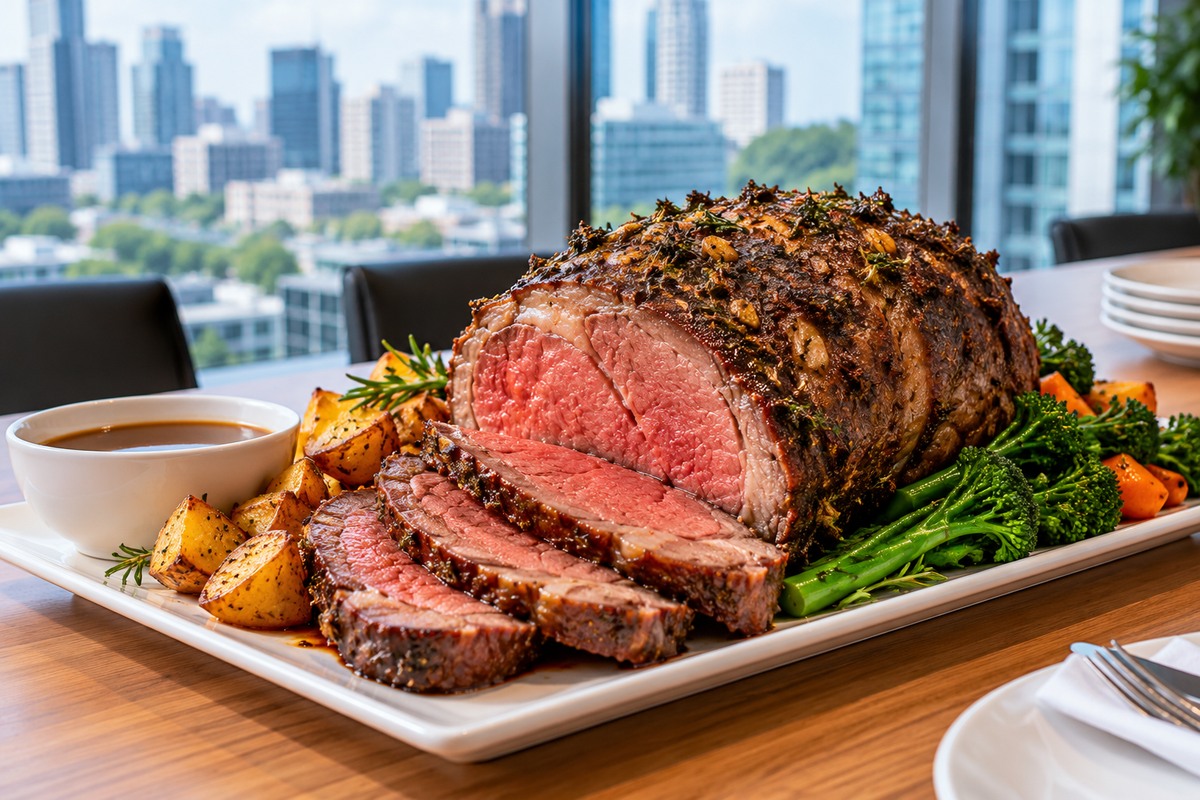
Bringing a cooked roast beef to a Singapore potluck can be memorable without making the host’s kitchen chaotic. The difficult part is often not choosing between ribeye and striploin. It is the handover: a guest carries a substantial roast through a condo lobby or HDB lift, then discovers that the carving board is missing, the kitchen is occupied and dinner will not begin for another hour.
This guide explains how to contribute a cooked beef roast to a shared meal: what to ask the host, which serving format to request, how to plan transport, and how to portion the meat safely. These are illustrative planning situations, not descriptions of individual De’Vour customer orders.
Is roast beef the main dish or one contribution among many?
A potluck headcount does not automatically determine beef portions. If twelve guests each bring substantial dishes, everyone may want just a few slices. If the host supplies only vegetables and rice, roast beef may need to be the primary protein. Ask about children, older relatives, guests who avoid beef and people who prefer their meat more thoroughly cooked.
Check whether someone else is bringing roast chicken or another beef roast. Agree on the roast’s role before deciding its size. For an overview of different cooked cuts, read De’Vour’s roast selection guide.
Choose ribeye or striploin for the intended serving style
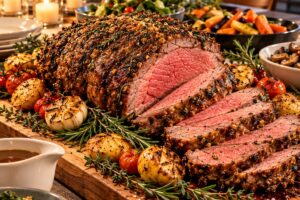
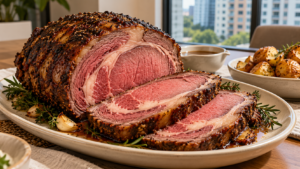
Ribeye’s marbling makes it appealing for freshly carved slices served as a centrepiece. Striploin has a firmer beef texture and a fat cap that some diners enjoy while others trim away. Neither is automatically the right answer for every gathering. Think about whether the host wants dramatic carving, neat pre-portioned slices or a platter guests can serve themselves.
Ask whether the quoted weight refers to raw or cooked meat, and whether the supplier can estimate edible portions. Trimming, shape and cooking loss affect yield. Avoid promising a precise number of slices based on a photograph or treating the whole roast’s weight as the amount of edible beef.
Ask the host five practical questions before ordering
First, when will people actually eat, rather than merely arrive? Second, is the venue an HDB flat, condo function room or office pantry? Third, is there a stable counter or table for carving? Fourth, are a suitable board, knife and clean serving tongs available? Fifth, can the venue safely hold cooked food if service is delayed?
These details change the order. A function room may have tables but no food-preparation counter. A home kitchen may already be occupied by relatives finishing other dishes. Security registration and lift access may delay handover. Give the supplier the correct entrance, delivery contact and serving time rather than only the postal address.
Whole roast, pre-carved or carved at the venue?
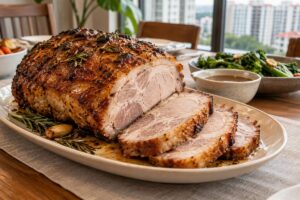
A whole roast makes an impressive entrance but creates work for someone. Pre-carved beef is easier to distribute yet requires careful packing and prompt service. On-site carving may be worthwhile for a larger gathering, provided there is enough space, suitable equipment and an agreed person to handle the knife.
Confirm what the supplier actually offers, including whether slicing or carving assistance costs extra. A photograph of a carved roast is not a promise of included service. De’Vour’s carving station versus pre-sliced roast guide explores the trade-offs.
Plan the trip from collection point to dining table
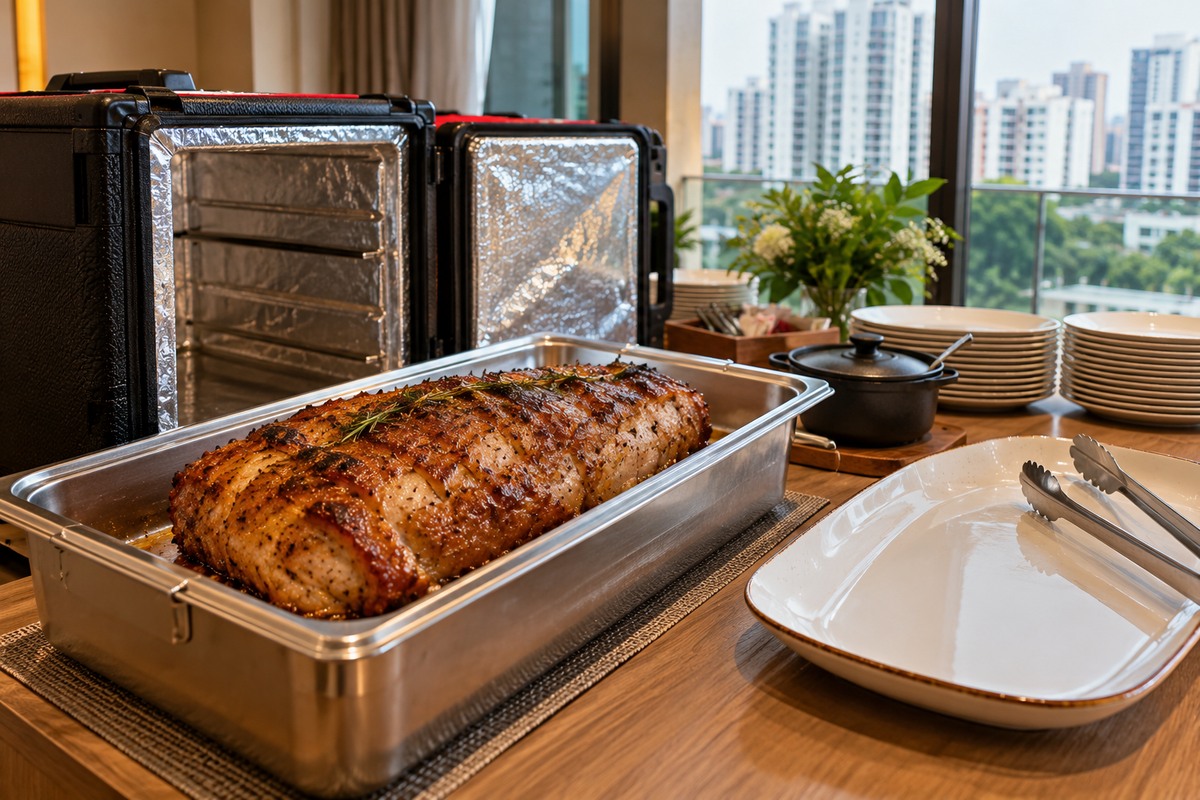
Singapore travel can be disrupted by rain, traffic or a slow building-access process. Arrange pickup or delivery as close as practical to the agreed meal time. Transport the cooked roast in food-safe packaging suited to the supplier’s instructions. A decorative cardboard box or ordinary shopping bag is not a verified temperature-control system.
If collecting the roast, secure the container on a level surface in the vehicle. Pack gravy separately in a leak-resistant container. Travel directly to the venue rather than adding errands. On arrival, take the roast to the designated holding or serving area instead of leaving it in a lobby or beside the door while guests greet one another.
Food safety matters more than a long centrepiece display
The Singapore Food Agency’s temperature-control guidance identifies 5°C to 60°C as the danger zone. Food intended for hot service should be maintained at 60°C or above; food intended for refrigeration should be chilled promptly to 4°C or below. Follow the supplier’s instructions and consume-by information, especially when there is a gap between delivery and dinner.
Foil wrapping and insulated packaging do not prove that a roast remains above 60°C. Without verified hot-holding equipment, coordinate arrival near eating time and serve promptly. Do not leave cooked beef on an unheated table throughout a long party, and do not rely on whether the container still feels warm.
Set up a compact carving area before the roast arrives
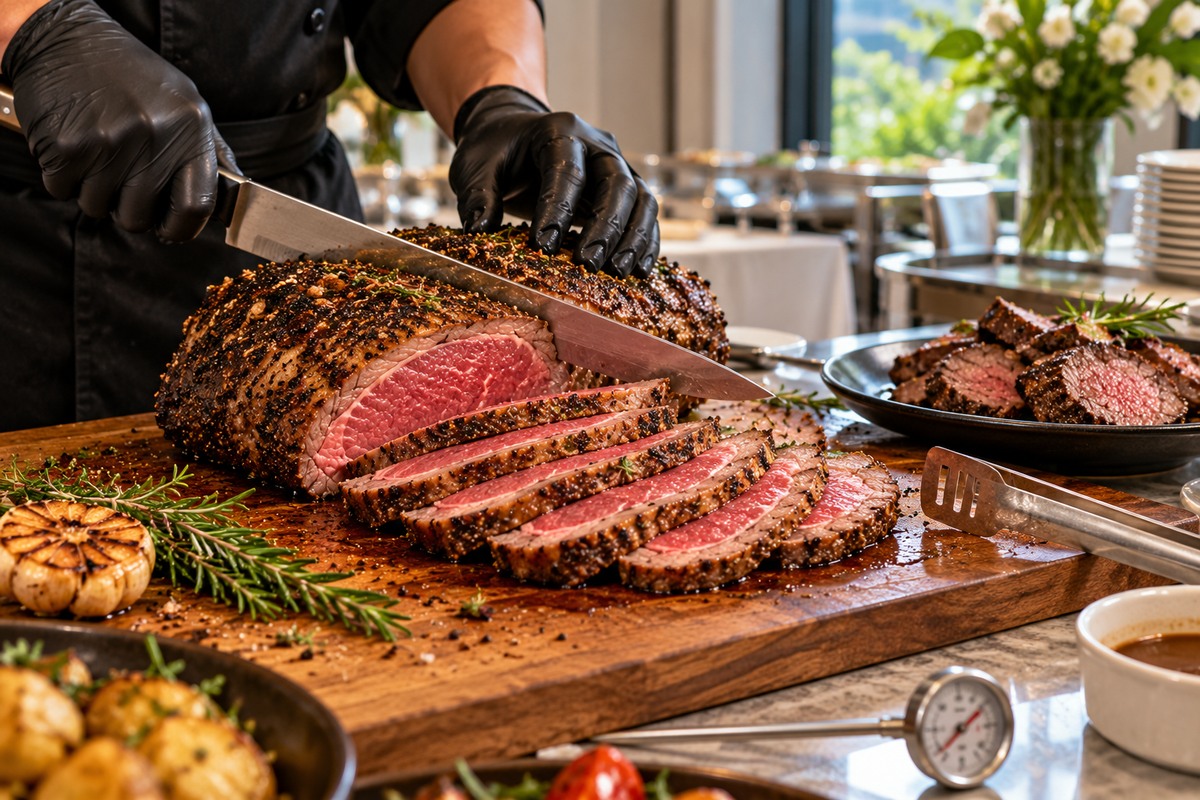
For most home gatherings, the carving area needs a stable board, appropriate knife, clean tongs, a platter for finished slices and a container for used utensils. Keep it away from children and from the queue for other dishes. In a narrow HDB kitchen, one person can carve while another carries finished platters to the dining area.
Use a non-slip mat or damp cloth beneath the board. Leave enough space for the knife to move without reaching across other dishes. If the host cannot provide a safe surface, ask about pre-slicing before ordering. See how to carve a beef roast for a Singapore family gathering for further practical guidance.
Let guests admire the roast, then serve manageable slices
A browned ribeye or striploin deserves a brief moment of attention. Show the roast if the occasion calls for it, then move promptly to carving. It does not need to remain untouched while everyone takes photographs. A beautiful centrepiece becomes less useful if guests cannot actually eat it.
Slice against the grain where practical, and aim for portions that are easy to lift with tongs. Modest first servings suit potlucks because guests may want to sample several dishes and return for seconds. Arrange the beef on clean platters without crushing the slices into a deep pile. Provide separate serving utensils rather than leaving the carving knife at the table.
Keep gravy and accompaniments separate from the knife
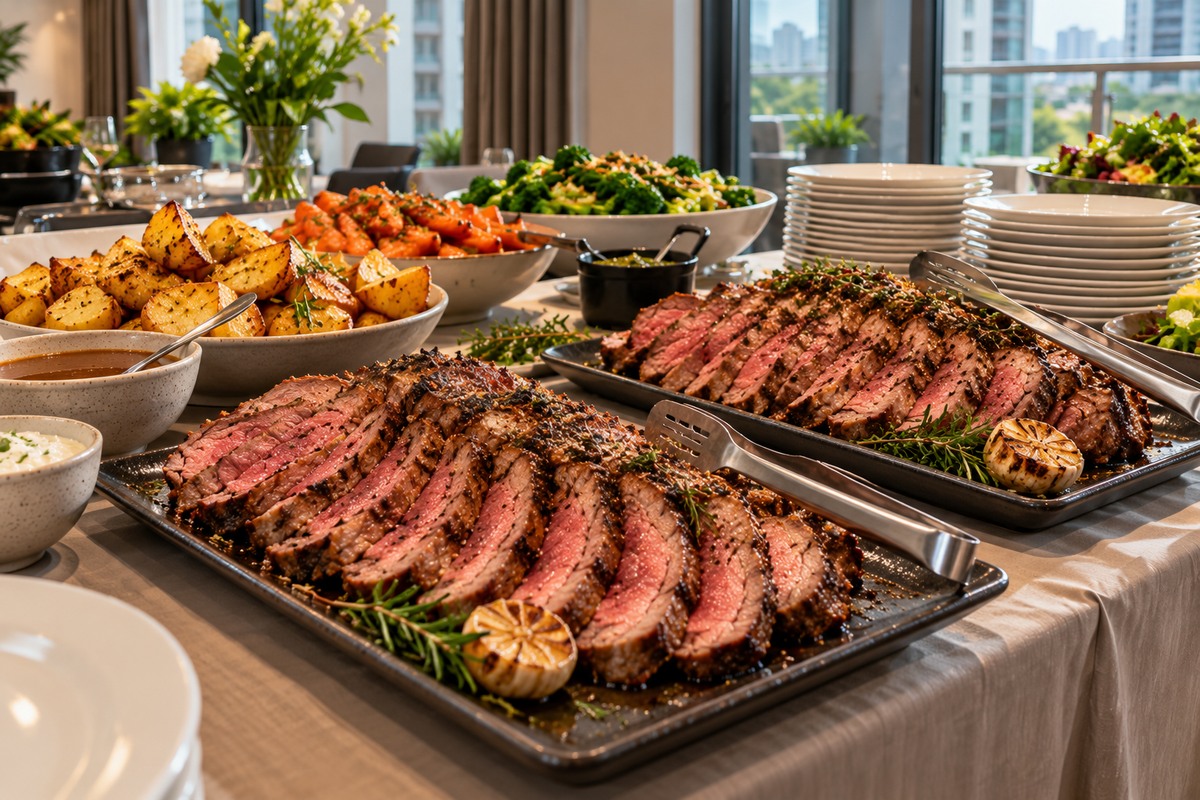
Gravy makes roast beef inviting, but pouring it over every slice can soften the browned exterior and remove guests’ choice. Offer it in a stable jug beside the finished platter. Mustard, roast potatoes and vegetables can complement beef, but check the shared menu first so several contributors do not arrive with the same side dish.
Keep the sauce station away from the carving surface so guests do not reach across the knife. Confirm ingredients and allergens with the supplier, and provide clean serving spoons. De’Vour’s roast gravy and sauce planning guide is useful when estimating accompaniments.
Plan for late arrivals without leaving beef out for hours
Guests may arrive after work, after another family visit or later than expected because of weather. Decide whether everyone will eat together or whether a genuine second serving window is required. Do not use an uncovered roast on the dining table as a holding strategy for latecomers.
If a second service is essential, ask about safe holding and storage, and check whether the venue has the necessary equipment. When proper hot holding is unavailable, serving once at an announced time and refrigerating suitable leftovers promptly is preferable to repeatedly moving the same tray between table and fridge.
Pack leftovers safely, rather than leaving them for the last guest
Once dinner ends, do not leave the remaining roast on the counter during a lengthy cleanup. Follow the supplier’s consume-by directions. For meat suitable for storage, divide it into shallow, clean containers and refrigerate promptly so it cools efficiently. Ask who will take responsibility for leftovers before people start leaving.
Do not hand unrefrigerated meat to someone facing a long journey. If the holding history is uncertain, discard the food rather than assuming reheating can make it safe. For correctly stored leftovers, refer to De’Vour’s guide to reheating roasts and follow the supplier’s instructions.
Example: bringing roast beef to a 7pm HDB potluck
Imagine an HDB gathering where guests arrive at 6.30pm and eat at 7pm. The contributor confirms that roast beef is one of several main dishes and asks the supplier for an appropriate size and serving format. The host reserves a clear carving surface, clean platter and designated receiver, and shares lift or parking instructions in advance.
The roast is delivered or collected near the planned service time under suitable transport conditions. It is received, handled according to the supplier’s directions and carved close to dinner. Gravy stays separate, guests take modest first portions, and suitable leftovers are chilled promptly. This is a planning illustration, not a claimed completed order.
What should you tell De’Vour when enquiring?
Share the venue, meal time, headcount, other main dishes, preferred beef cut and whether you want the roast whole or sliced. Say whether anyone can carve on site and whether you need delivery or collection. Ask about the actual roast options, cooked yield, packaging, temperature-control instructions, accompaniments and any applicable service charges.
A successful potluck roast is more than a premium cut delivered to an address. It is a centrepiece that reaches the right table, at the right time, ready for safe and comfortable service. Browse De’Vour’s cooked roast range and confirm the details for your gathering.