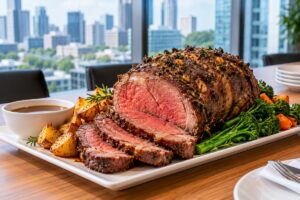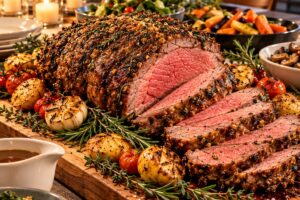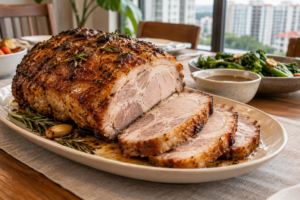
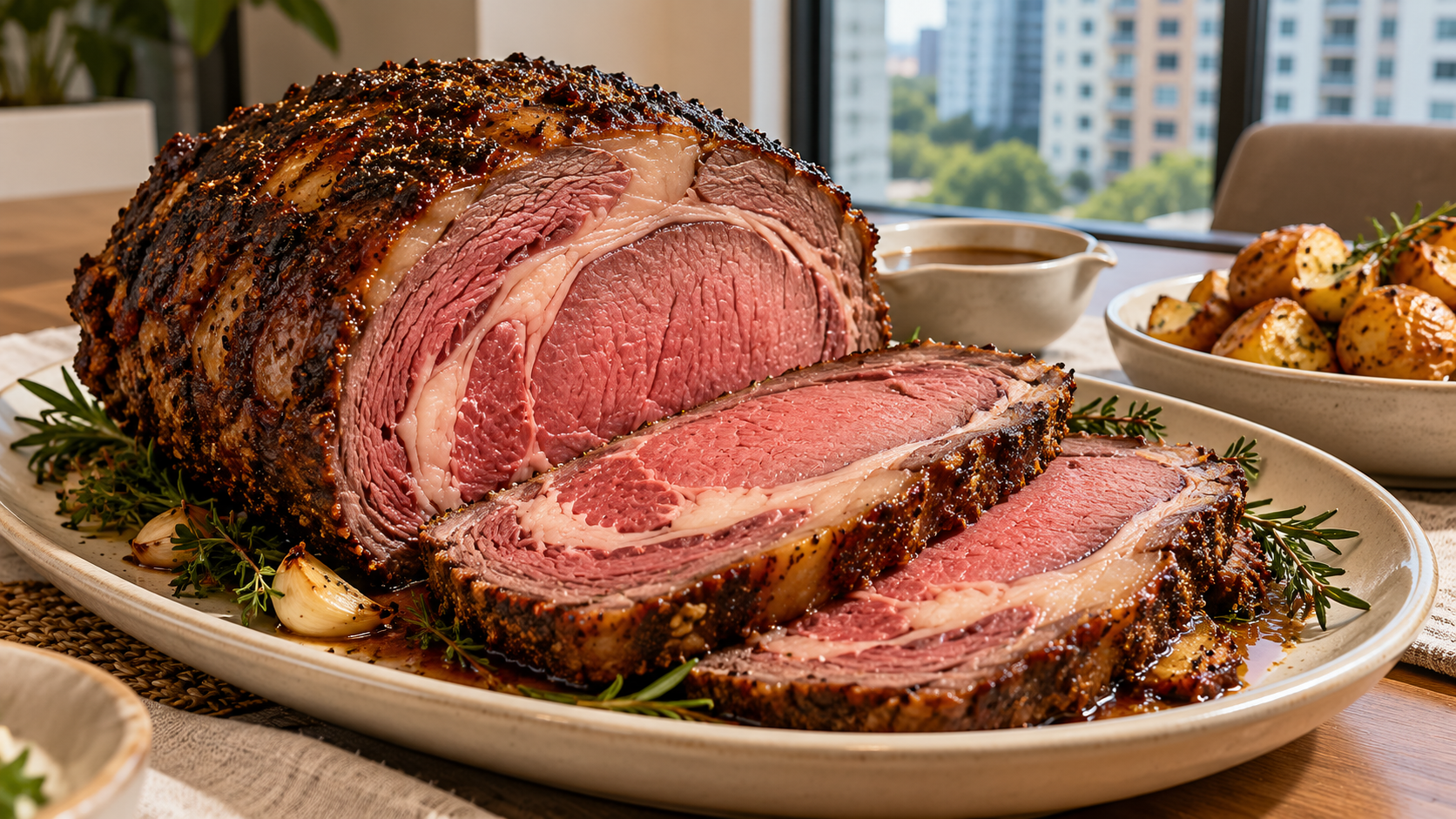
A ribeye roast looks like one impressive centrepiece, but two slices from the same joint can taste surprisingly different. One may be rich, soft and heavily marbled; another may offer a more even beefy chew. That difference often comes from the roast’s anatomy, not a mistake in the kitchen. The ribeye contains a central eye and an outer cap, each with its own character.
For Singapore families planning a birthday dinner, festive gathering or small corporate meal, understanding those parts can help with ordering, carving and sharing. This is a practical guide to the roast itself: what the cap and eye are, why they differ, and how to serve both well.
A ribeye roast contains more than one muscle
The main central muscle is the longissimus dorsi, commonly called the eye. Curving around part of it is the spinalis dorsi, commonly called the ribeye cap. Smaller neighbouring muscles can also appear depending on which part of the rib section was used. They are all beef, but their grain, marbling and texture are not identical.
On a clean cross-section, look for the broad oval eye and the curved cap along one side. A visible seam of fat often separates them. Recognising these features is useful before carving. If you are still choosing a cut, De’Vour’s ribeye, striploin and tenderloin comparison explains the broader differences.
The ribeye cap is meat, not merely a layer of fat
The cap is an actual muscle with its own meat fibres. It often has abundant marbling and a tender, yielding texture, which explains why many beef enthusiasts particularly enjoy it. Because it lies near the outside of the joint, part of it may also carry attractive roast seasoning and browning.
Do not confuse cap meat with a fat cap. A fat cap is surface fat covering a cut; the ribeye cap is the spinalis muscle itself. Trimming external fat does not automatically remove the cap. Butchers can deliberately separate cap and eye into different products, as the beef-industry resource Beef. It’s What’s For Dinner explains.
The central eye offers a different kind of tenderness
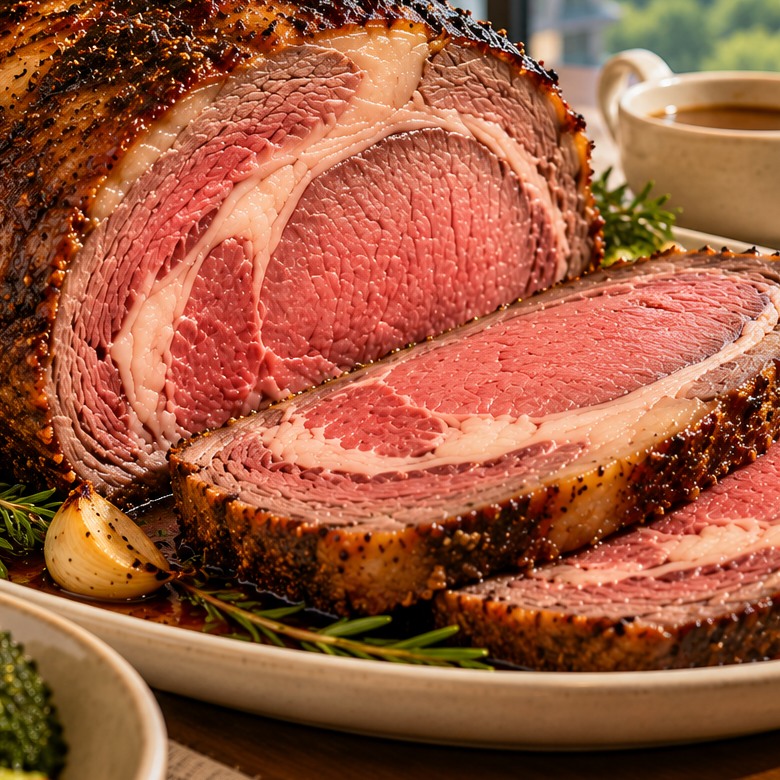
The eye is the substantial centre of the ribeye. It is already a tender roasting muscle, often with fine marbling across a relatively consistent section. Compared with a generous cap portion, its texture may feel firmer and more uniform without being tough.
At a multigenerational Singapore table, some guests prefer that familiar roast-beef bite while others seek out the richer cap. There is no universal winner. A good joint can provide both, and a considerate host can offer different slices without assuming everyone wants the fattiest piece.
Marbling, seams and surface fat should not be confused
Marbling means fine fat distributed within muscle. A fat seam is a more obvious division between neighbouring muscles. Surface fat sits outside the joint. Each influences how a roast looks and eats, but they are not interchangeable.
The seam between the eye and cap is a normal part of ribeye anatomy, not automatically a flaw. Some diners enjoy a little of it; others leave it on their plates. Ask how the supplier has trimmed the roast instead of assuming every ribeye will look identical. Excessive trimming at home can remove good meat along with the fat you intended to discard.
Why some ribeye roasts have a larger cap
The cap is generally more prominent towards the chuck end of the rib section and smaller towards the loin end. Two roasts of similar stated weight can therefore show different cap-to-eye proportions. Trimming, grade and the exact joint supplied also affect appearance.
A dramatic photograph of a thick cap is not a promise that every ribeye roast will match it. If the cap matters especially to your guests, ask De’Vour what cut and presentation can be supplied for your date. A discussion about the actual joint is more reliable than choosing solely from a generic product photograph.
How the two muscles behave during roasting
A whole ribeye roast brings cap and eye to the table as one centrepiece. The outside browns while the centre heats more gradually. Because the cap is curved and sits nearer the exterior, its edges can experience heat differently from the thick centre of the eye. Size, preparation and resting all affect the finished result.
Do not judge food safety by pinkness or a clock alone. If cooking at home, follow appropriate food-safety guidance and check temperatures with a reliable thermometer. If ordering a cooked roast, follow the supplier’s instructions. The Singapore Food Agency advises prompt serving and safe temperature control for cooked food.
Carve balanced slices rather than reserving the cap
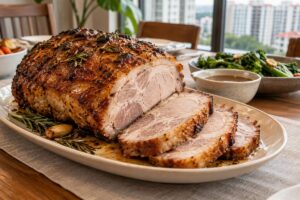
For most family-style roast dinners, carve the joint crosswise into neat slices, cutting against the main muscle’s grain where appropriate. When the cap remains attached, a slice may contain both eye and cap, letting someone enjoy their different textures together. That is usually fairer than separating all the cap and giving it to the first few people.
Use a stable carving board, a sharp knife and a clean platter. Rest the roast according to its cooking or supplier instructions, then slice with controlled strokes rather than sawing through the seam. Our beef-roast carving guide covers equipment and technique. For a buffet, carve smaller batches near service rather than exposing all slices at once.
When separating the cap might make sense
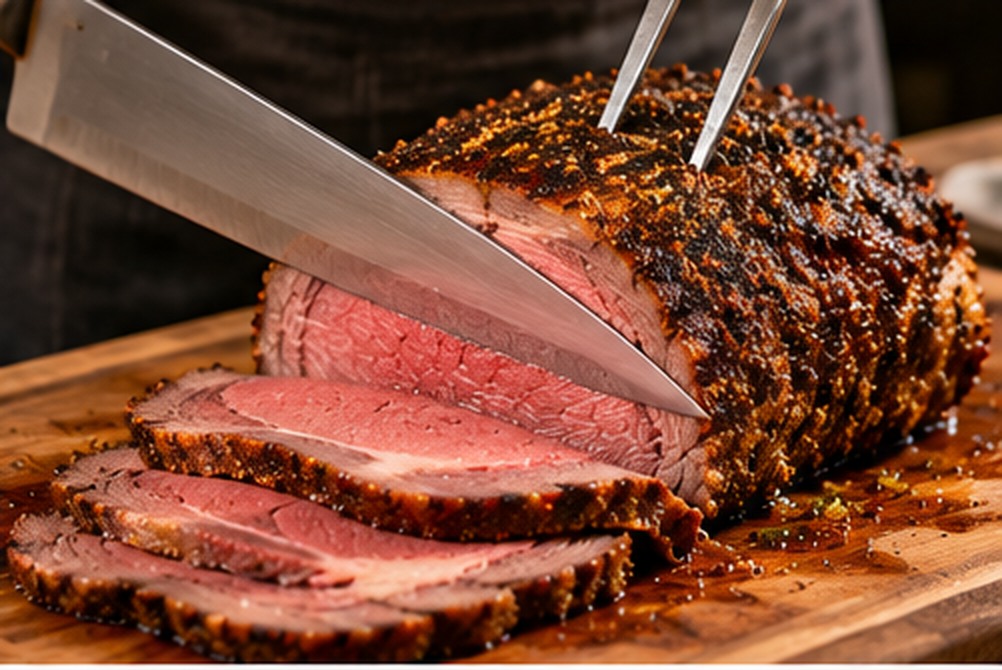
For a small seated dinner, you could explain the cap and offer a little separately to diners who enjoy richer beef. That can be a pleasant tasting experience. For a larger gathering, however, the extra knife work slows service and produces uneven portions. Mixed slices are often simpler.
If you specifically want a cap-only roast, ask whether it is available as a separate preparation rather than assuming a whole cooked ribeye should be dismantled at the table. Keep the aim practical: serve good beef while it is in its intended condition, not create a lengthy demonstration that leaves guests waiting.
Make the roast work at an HDB or condo dinner
At a Singapore family meal, guests may differ in appetite, preferred slice thickness and tolerance for visible fat. Offer smaller and larger slices, with a few eye-heavy portions for those who prefer less richness. Do not assume older guests or children all want the same cut.
Place the carving board away from the main traffic route to the dining table. Keep the knife-hand side clear, transfer finished slices with clean tongs and allow guests to trim a seam on their own plates if they wish. A tidy serving station is more useful than a crowded decorative board.
Choose accompaniments that support ribeye
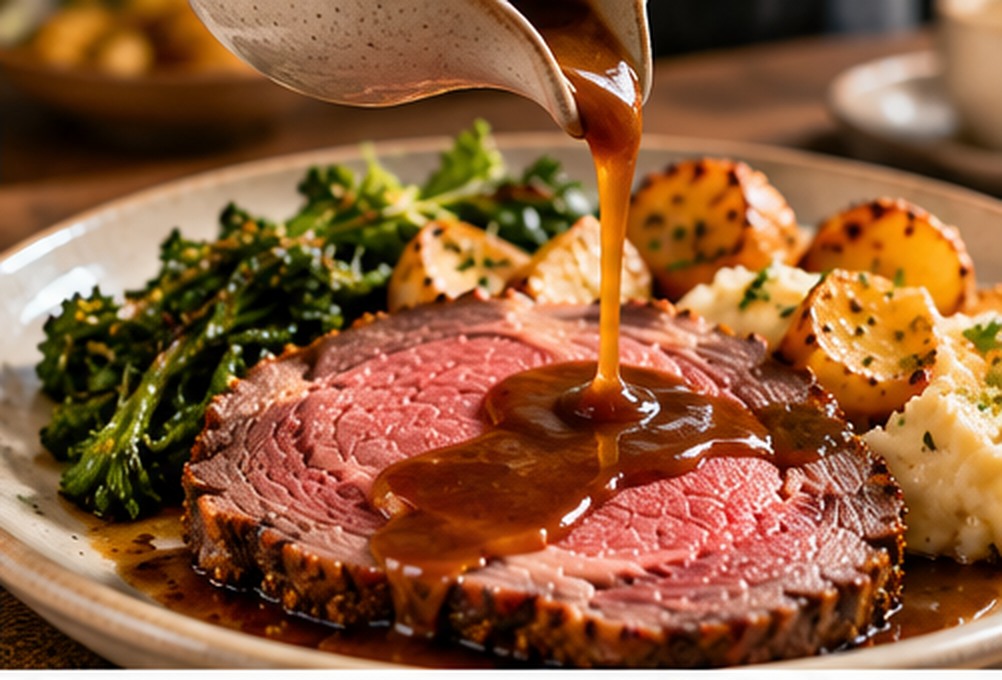
Ribeye’s richness pairs well with straightforward roast potatoes, vegetables, a little gravy or a sharp mustard. Keep sauces in separate jugs rather than soaking the beef’s browned surface before anyone eats. A lighter vegetable accompaniment can provide contrast without stealing attention from the roast.
Plan the quantity of beef first, considering whether it is the main course or part of a larger roast-centred spread. Then size the accompaniments. De’Vour’s gravy and sauce planning guide can help with those supporting portions.
Protect the roast in Singapore’s warm climate
A whole joint can look warm even when its surface has cooled into an unsafe range. SFA identifies 5°C to 60°C as the temperature danger zone and advises keeping hot cooked food above 60°C or promptly chilling food intended for storage. A cover alone is not a verified hot-holding system.
For catered roasts, observe the supplier’s stated consume-by time and storage instructions. Do not leave beef on display for hours merely to preserve the centrepiece effect. If guests will eat in separate waves, arrange suitable temperature control with the supplier. For larger events, compare live carving and pre-sliced roast service before ordering.
What to ask De’Vour before ordering
Share the date, venue, guest count and meal time. Explain whether ribeye is the main centrepiece, whether you want it whole or carved, and if guests prefer a particular serving style. Ask whether the quoted weight is before or after cooking, how the roast will be delivered and what resting, storage and serving instructions apply.
Historical De’Vour order entries include ribeye roasts in different stated sizes, but those entries cannot establish a universal portion rule or guaranteed cap size. Ask for a recommendation based on your own event. Start with De’Vour’s cooked-roast selection guide and confirm current availability directly.
Frequently asked questions about ribeye cap and eye
Is the ribeye cap just fat? No. It is the spinalis dorsi muscle, often richly marbled but still meat.
Does every ribeye roast have the same amount of cap? No. Its size changes along the rib section and depends on how the joint is prepared.
Should I remove the seam before carving? Not automatically. Carve carefully and let diners decide how much visible fat they enjoy.
Is the cap always better than the eye? No. The cap is often richer; the eye offers a more consistent slice. Preference depends on the diner.
The point is to share a well-prepared roast
Knowing the difference between cap and eye explains why one ribeye roast offers several textures. Recognise the muscles, avoid unnecessary trimming, carve balanced portions and keep the service plan safe. Whether the occasion is a Singapore birthday dinner, family reunion or office celebration, the best result is a roast everyone can enjoy together.