De’Vour roast serving guide · Singapore · Updated 22 October 2026
Quick answer: To serve roast pork collar without drying it out, coordinate delivery with the actual meal, keep it at a safe temperature, carve across the grain in moderate slices just before service, and offer gravy separately. For a small HDB dinner, a pre-sliced platter can be more practical than a carving station.
Why pork collar deserves a different serving plan
A roast pork collar can look modest beside a large ribeye or a dramatic bone-in centrepiece. Yet for a Singapore family dinner, its appeal is practical: the cut has intramuscular fat, a rounded shape and a savoury bite that works with both Western-style roast sides and familiar local flavours. The challenge is not simply cooking it. It is preserving that texture between the kitchen, the carving board and the last guest’s plate.
De’Vour has featured Akabuta pork collar roast among its cooked-roast selections. Our earlier introduction to Akabuta pork collar as a sharing roast explains why the cut belongs on a celebration table. This guide answers a different question: once the roast is ready, how should a Singapore host slice, hold, transport and serve it so that it stays enjoyable?
Understand the cut before you pick up the knife
Pork collar comes from the shoulder-neck area. It is not the same as a lean pork loin: seams of fat and connective tissue run through it, helping a properly prepared roast feel rich. Those seams also mean that a thick, random slice may be less pleasant than a deliberate cut across the visible grain.
Ask whether the roast is supplied whole, pre-sliced or with a separate sauce. A whole piece generally offers more flexibility for presentation and carving, while pre-slicing is easier when guests will serve themselves. Neither format automatically guarantees tenderness. The cooking method, final temperature, holding conditions and how long slices sit exposed all matter.
Choose a slice thickness that suits the meal
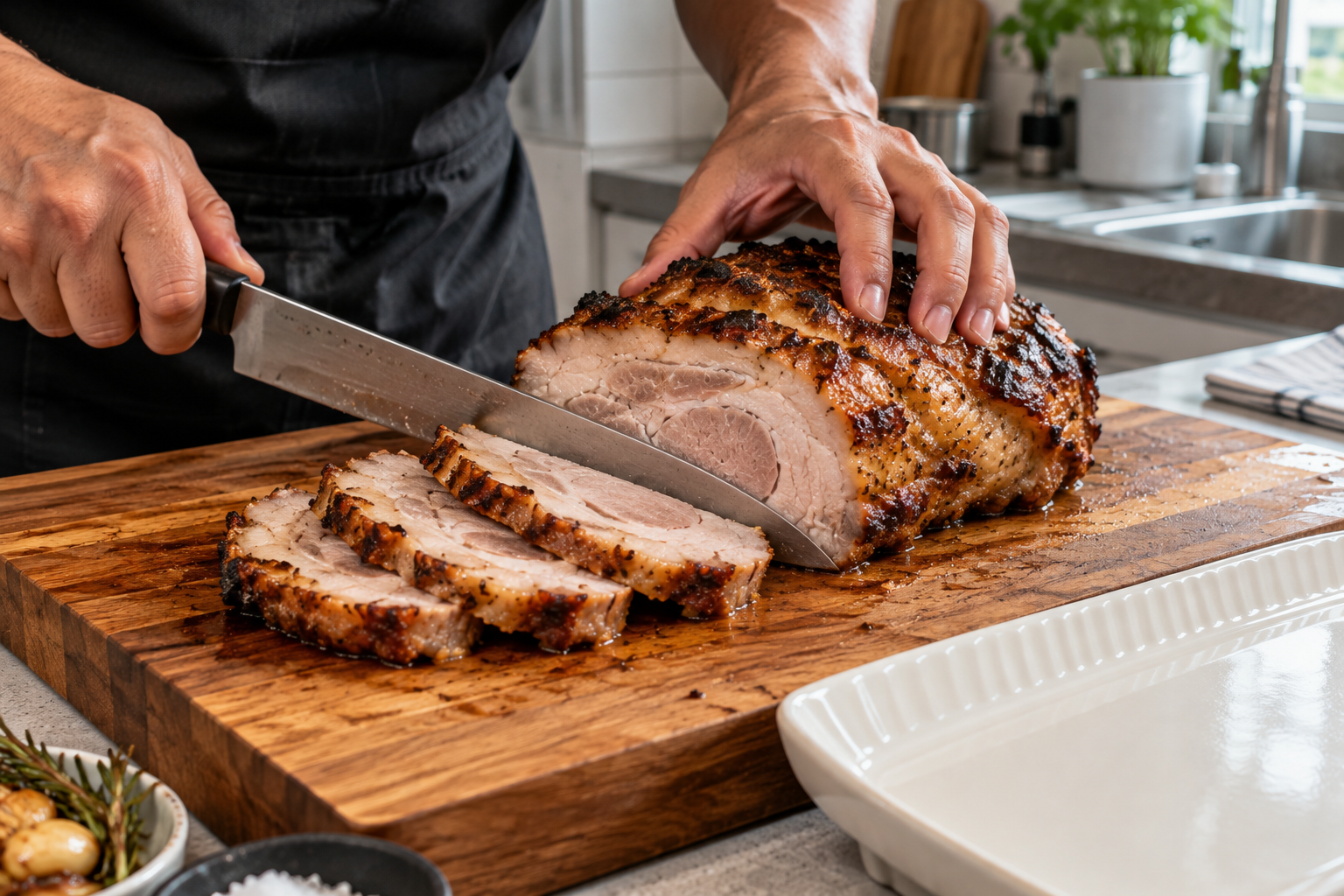
For a sit-down dinner, start with slices roughly 5–8 mm thick, then adjust for the roast’s texture. This is a practical presentation range, not a fixed culinary rule. Very thin slices cool rapidly and may tear where the collar’s muscle groups meet; very thick pieces can feel heavy, especially when several dishes share the table.
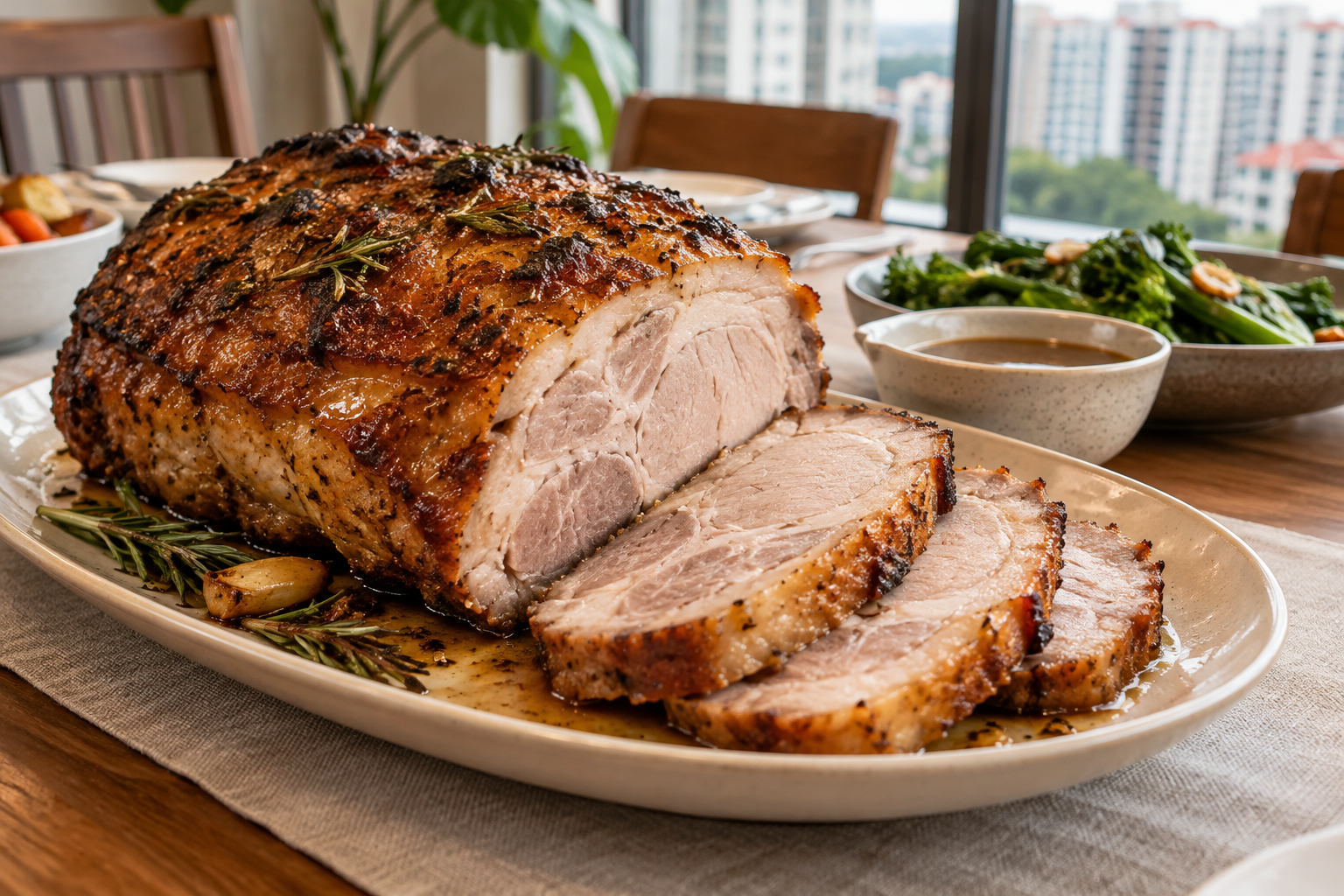
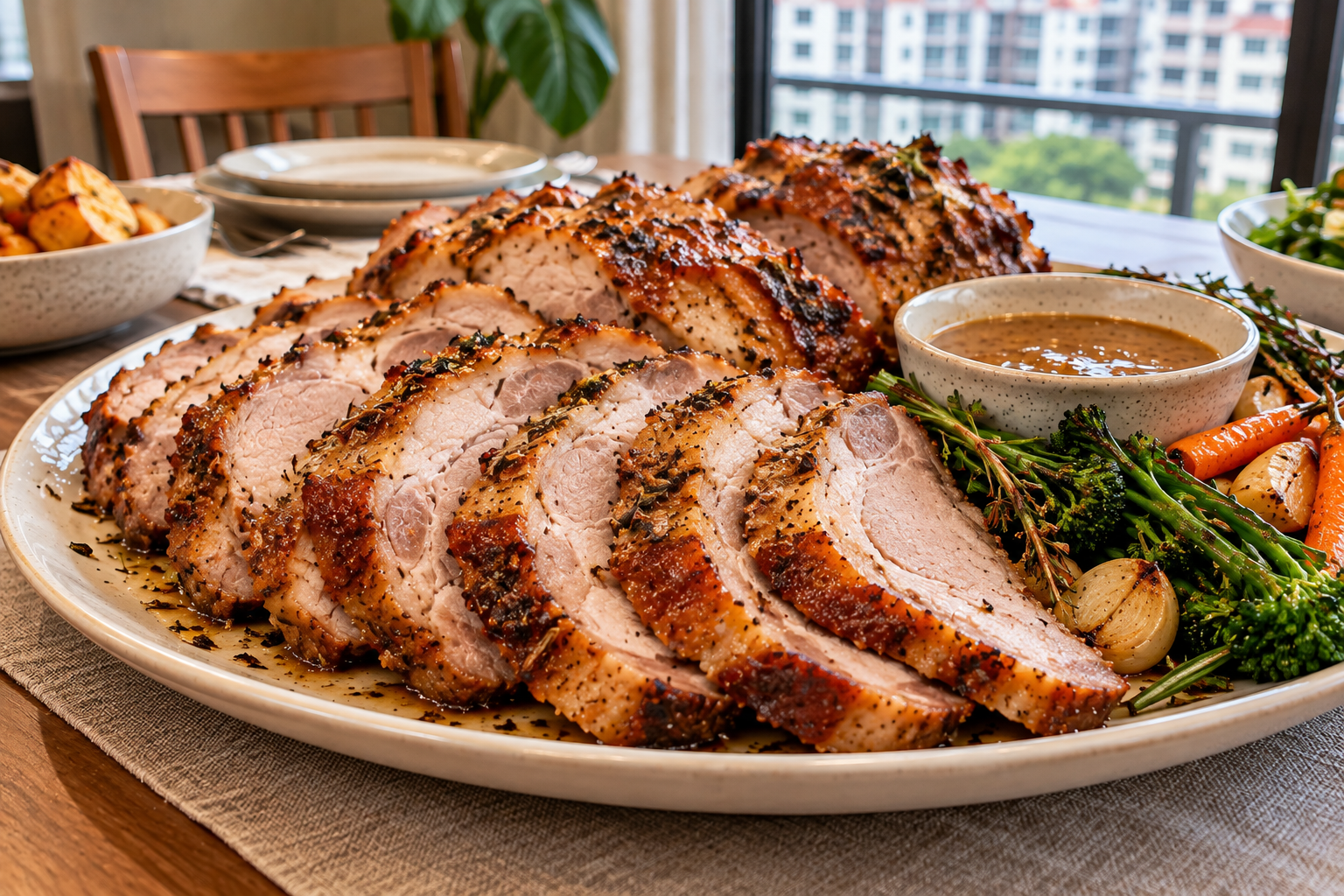
Use a sharp carving knife, a stable board and a clean platter. Locate the grain in the exposed cut face and slice across it where possible. Arrange the pieces in a shallow overlapping fan rather than piling them into a tall mound. Keep any collected juices separate and spoon them over just before serving. For children or guests who prefer smaller portions, cut some slices into manageable pieces rather than making the entire roast uniformly tiny.
Whole roast or pre-carved: which works in an HDB flat?
In a typical HDB dining area, space is often the deciding factor. If the kitchen counter is already occupied by rice, vegetables and drinks, carving a whole roast beside guests may create a bottleneck. A pre-carved platter that goes straight to the dining table is often easier to manage.
If presentation matters and there is room for a carving board, bring the whole roast out briefly, then return it to a clear preparation surface to slice. Avoid carving directly above a crowded table. In either case, confirm the supplier’s serving instructions and whether the roast arrives ready to eat or needs controlled reheating. Never assume a decorative platter is also suitable for an oven.
Keep the crust attractive without sacrificing moisture
A browned exterior gives roast pork collar aroma and visual contrast. Covering a hot roast tightly for too long can trap steam and soften that crust, while leaving carved slices uncovered makes the surface dry. The useful compromise is to keep the roast in a food-safe covered container until the appropriate serving stage, then transfer it to a warm platter shortly before guests eat.
Do not try to rescue a roast by repeatedly blasting it with high heat. That may brown the edges while drying the interior. If the supplier provides a separate sauce, warm the sauce safely and offer it alongside; guests can add it without soaking every slice. For a roast that is being held for a later service, temperature control takes priority over appearance.
Build the plate around pork collar, not the other way around
Roast pork collar is already rich, so the best accompaniments give it contrast. Smashed roast potatoes add crispness; sautéed greens, carrots or a bright cabbage salad cut through the fat. A mustard-forward sauce works with the savoury crust, while a light pan gravy keeps the dish familiar to guests who expect a traditional roast dinner.
For a Singapore home gathering, steamed rice can be a sensible alternative to an oversized tray of potatoes. Keep sauces separate if guests have different preferences. Avoid turning the table into a generic buffet of unrelated mains: let the pork collar remain the centrepiece and select two or three supporting dishes that can be served at the same time. For sauce planning, see De’Vour’s guide to gravy quantities for roast dinners.
Transporting a roast across Singapore: plan for arrival, not departure
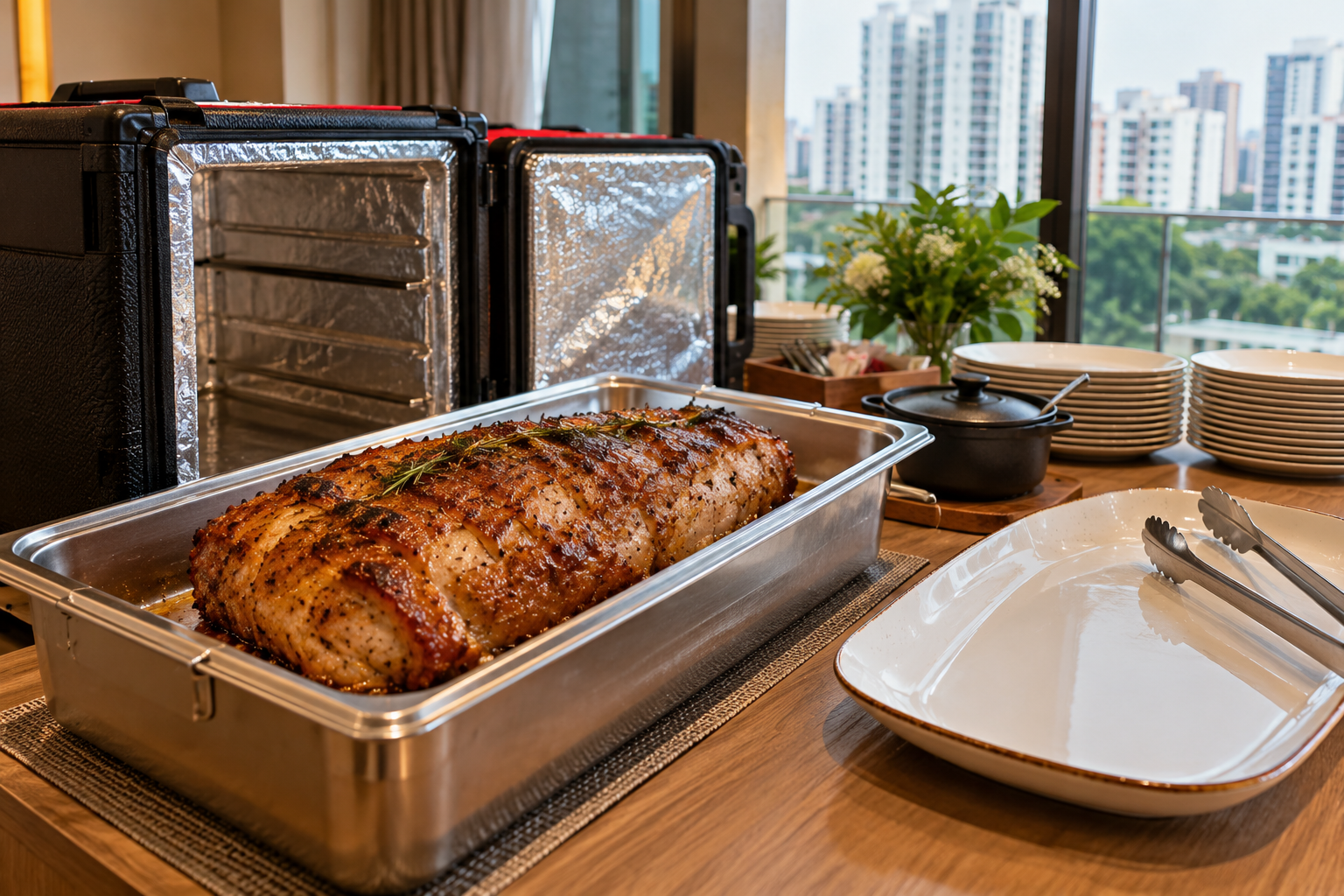
A roast travelling from a kitchen to an HDB flat, condominium function room or office pantry needs more than a delivery address. Consider lift access, security registration, loading bays, the distance from drop-off to the dining table and whether someone will be present to receive it. A short drive can still turn into a long wait if access instructions are incomplete.
Agree on a delivery window close to the intended meal and ask how the roast will be packed and temperature-controlled. If it arrives hot, use suitable insulated food transport and check the supplier’s consumption instructions. If it is supplied chilled for later service, refrigerate promptly and follow the provided reheating method. Do not leave a covered roast on a warm counter for hours because it ‘still feels hot’.
The food-safety rules matter especially for pork
The Singapore Food Agency’s consumer guidance advises thorough cooking, with cooking temperatures above 75°C helping to kill harmful bacteria. It also advises keeping hot cooked food above 60°C until service and reheating stored cooked food to at least 75°C for two minutes, no more than once. Use a clean probe thermometer rather than judging safety from colour alone.
For catered meals, SFA’s temperature-control advice recommends serving promptly, maintaining hot food at 60°C or above, or refrigerating at 4°C or lower. Separate ready-to-eat roast from raw ingredients and use clean knives and boards. When a roast has been sliced, its exposed surfaces make careful handling even more important. For vulnerable guests, follow the safer fully cooked service guidance rather than treating pink pork as a selling point.
A simple service timeline for a small dinner
For a 7 pm family dinner, aim to have the roast and sides ready for coordinated service rather than letting the pork wait while other dishes are cooked. Confirm the supplier’s arrival and handling instructions beforehand. Clear the carving surface, put clean tongs and plates in place, and prepare the sauce before the roast is presented.
At serving time, transfer the roast to its platter, carve only what is needed for the first round and bring out the accompanying dishes together. If the meal will run in waves, use proper hot-holding equipment or keep the next portion chilled for a single thorough reheat later; do not cycle the same platter repeatedly between room temperature and the oven. The objective is an organised meal, not a complicated chef performance.
Serving pork collar at a condo function room or office gathering
For a condominium function room, check whether open food preparation is allowed and whether there is a suitable power supply for approved hot-holding equipment. A clean pre-sliced roast platter can work better than a carving station where guests must queue. For an office gathering, verify access to a food-safe preparation area and ensure that the service time does not drift because of meetings.
If a carving service is desired, confirm it explicitly with the provider rather than assuming a roast order includes staff, carving tools or equipment. De’Vour also discusses the broader distinction in its carving station versus pre-sliced roast guide; the same service-flow question applies to pork, even though the cut and carving approach differ.
What the historical order notes suggest—and what they do not
De’Vour’s historical planning records include Akabuta pork collar roast line items in approximately 1 kg formats, and at least one roast request specifically notes that the meat should be cut before service. These are anonymous product and preparation patterns, not proof that every quoted item was fulfilled or that any particular customer preferred a specific presentation.
The useful takeaway is operational: ‘whole or cut?’ should be settled before the kitchen packs the roast. When placing an order, give the expected serving time, venue type, preferred slicing arrangement and whether you need sauce or accompaniments. That information is more actionable than asking for ‘a roast for a party’ and hoping the rest is understood.
Frequently asked questions about roast pork collar in Singapore
Is pork collar the same as pork loin? No. Collar comes from the shoulder-neck area and generally has more marbling and connective tissue; loin is typically leaner. They should not be assumed to cook or carve identically.
Should I order pork collar whole or sliced? Choose whole for a controlled carving moment and pre-sliced for a compact self-service setup. Confirm whether the provider can supply your preferred format.
Can I reheat leftover roast pork collar? Only if it has been handled and refrigerated safely. Follow SFA guidance for thorough reheating to at least 75°C for two minutes, and reheat only once.
What sides go well with roast pork collar? Crisp potatoes, vegetables, cabbage salad, rice and a separate gravy or mustard-based sauce all work. Choose accompaniments that balance the richness rather than compete with it.
Order the roast with the service plan in mind
The best roast pork collar dinner is not necessarily the one with the most elaborate menu. It is the one where the cut, slicing format, temperature control, sauce and serving time all make sense together. For Singapore hosts, especially those working with limited HDB kitchen space or a condo function-room timetable, those details determine whether the roast arrives as a practical centrepiece or an extra last-minute job.
Browse De’Vour’s Singapore cooked-roasts buying guide to compare roast styles, then check the current ordering menu for product availability, prices and lead times. Tell the team whether you want a whole or sliced roast and when guests will actually eat. A little planning protects the texture of the pork—and gives the host more time at the table.