Peranakan dishes, satay, roast beef and salmon may sound like four different menu directions. On the same catering table, however, they can work surprisingly well.
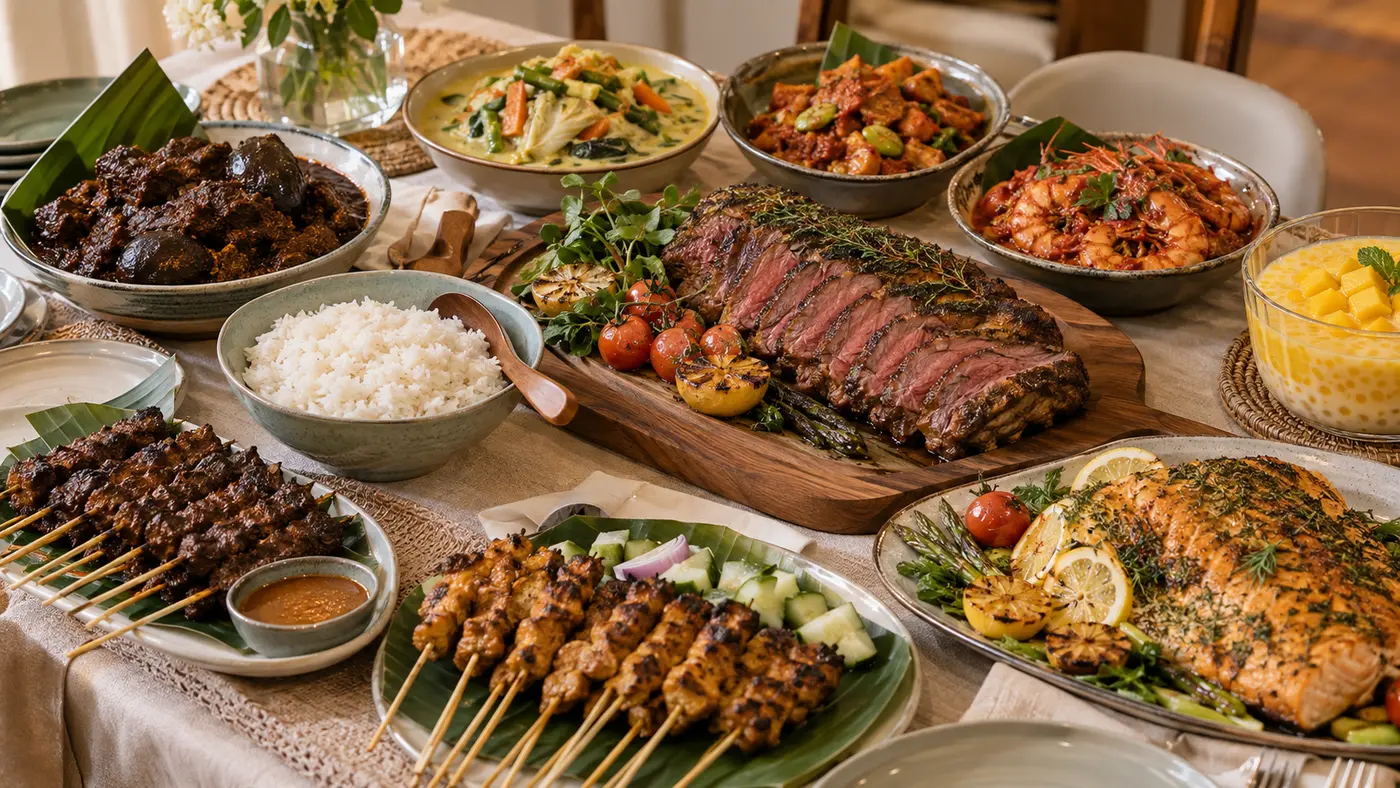
A De’Vour delivery from June 2026 brought these elements together for a shared meal. The menu included ayam buah keluak, sayur lodeh, sambal goreng, sambal udang, pork and mutton satay, Angus striploin roast, lemon-herb salmon, white rice and mango sago.
Rather than following one strict cuisine, the order was built around how people actually eat at a Singapore gathering: a little rice, familiar gravies and vegetables, several proteins to share, and one or two centrepieces that make the spread feel special.
Mixed Menus Work When Every Dish Has a Role
A mixed catering menu becomes confusing when every dish competes to be the main attraction. It becomes cohesive when the items have distinct jobs.
In this order, the Peranakan dishes formed the comforting core of the meal. Satay added an easy-to-share grilled favourite. Striploin brought the visual and flavour impact of a carved beef roast. Salmon provided a lighter premium option. Rice connected the gravies, sambal and proteins, while mango sago gave the meal a clean finish.
The menu was varied, but not random.
Why Peranakan Food Makes a Strong Catering Base
Peranakan dishes suit shared dining because they offer contrast within the same flavour family.
- Ayam buah keluak brings a deep, earthy and savoury character.
- Sayur lodeh adds vegetables and a gentler coconut-rich gravy.
- Sambal goreng gives the spread texture and a familiar vegetable component.
- Sambal udang introduces seafood, sweetness and chilli.
Served with white rice, these dishes already form a complete meal. The remaining items can then widen the choice instead of trying to rescue an incomplete menu.
Satay Bridges the Traditional and the Casual
Pork and mutton satay fit naturally beside local cooked dishes, but they also make the table feel more relaxed.
Guests can take a few sticks without committing to another large portion. Satay works for early arrivals, children, guests who prefer familiar food and anyone returning to the table later in the event.
It also adds a grilled note without requiring the entire meal to become a live BBQ. For venues where open-flame cooking is impractical, cooked satay can still provide that familiar sharing experience.
What Does a Beef Roast Add?
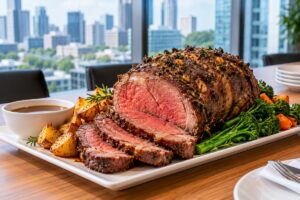
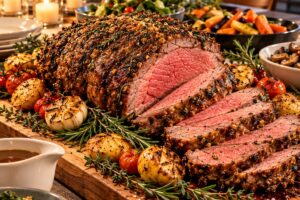
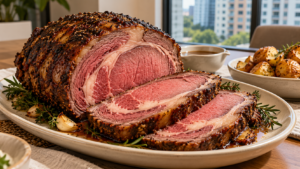
The Angus striploin roast changes the visual centre of the spread.
Peranakan dishes are usually served in trays or pots because their gravies are part of the appeal. A sliced roast offers a different presentation: clean carved portions, a clear beef flavour and a centrepiece guests immediately recognise.
Striploin is especially suitable when the menu already contains rich dishes. It has a firm bite and strong beef character without relying on extremely heavy marbling. Guests can take a few slices alongside rice and vegetables, or enjoy it separately with sauce.
Salmon Prevents the Protein Selection From Feeling Too Heavy
When the menu includes ayam buah keluak, satay and roast beef, a lighter protein creates balance.
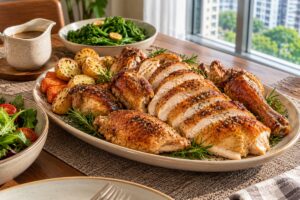
Lemon-herb salmon brings acidity, colour and a softer texture. It gives guests who prefer seafood a substantial option without adding another chilli-based or gravy-heavy dish.
That does not mean salmon must be treated as a diet item. It still feels generous and celebratory. Its value is that it changes the pace of the plate.
How to Avoid Ordering Too Many Mains
A menu with several protein choices does not need one full serving of every protein for every guest.
Most diners will build a mixed plate. Someone may take ayam buah keluak, vegetables and two slices of roast. Another guest may choose salmon, sambal udang and satay. Children may concentrate on rice and familiar grilled items.
Quantity planning should consider the complete spread:
- How many substantial meat and seafood dishes are offered?
- Are the dishes served with rich gravies?
- Will guests be seated for a meal or grazing over several hours?
- Are there children or older guests?
- Is the roast a centrepiece or the main source of protein?
This approach is more accurate than multiplying every dish by the full guest count.
Do You Need More Than White Rice?
White rice was the logical staple for this menu because it works with every gravy and does not introduce another competing flavour.
Additional noodles or fried rice may be useful for a much larger event, but they are not automatically necessary. When the table already contains multiple proteins, vegetables, satay and dessert, one dependable staple may be enough.
Keeping the carbohydrate selection focused can make the entire buffet feel more intentional.
Dessert Should Reset the Palate
Mango sago follows a rich shared meal well because it is chilled, fruity and easy to portion.
A heavy cake or baked dessert could still work for a birthday, but it is not required to complete the catering menu. A lighter dessert allows guests to finish comfortably after gravies, sambal, satay and roast meat.
Presentation Matters More With a Mixed Menu
Clear arrangement helps guests understand the table.
Rice should sit near the Peranakan dishes. Vegetables and gravies should follow naturally. Satay can occupy its own platter with the appropriate sauce and condiments. Striploin and salmon should be displayed as centrepieces rather than disappearing among the buffet trays.
Labels are useful, particularly for buah keluak, sambal dishes and meats. They help guests identify spice levels and protein choices before filling their plates.
A Singapore Catering Menu Does Not Need to Choose One Identity
Many gatherings include guests with different ages, preferences and ideas of what makes a satisfying meal. A local buffet can provide comfort while premium roasts make the occasion feel more celebratory.
The key is not forcing cuisines together. It is choosing dishes that perform different roles and still make sense on the same plate.
De’Vour can help customers combine cooked local dishes, satay, premium roasts, seafood and dessert into a balanced catering spread. The result can feel familiar and special at the same time, without turning the menu into an endless list.