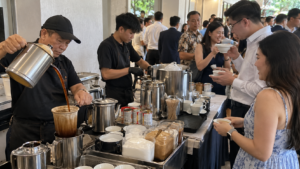
Can a premium roast and Singapore comfort food share one catering menu? A completed De’Vour order in the Daily Orders 2026 record included Australian Angus Ribeye Roast, rosemary pork jowl, Salted Egg Fried Chicken, Smoked Salmon Salad, Chicken Curry, Fried Bee Hoon and Fried Rice. The record confirms the dishes, but does not establish the guest count, venue or occasion.
The appeal of a table that refuses to choose one cuisine
Picture the choices guests make at a Singapore gathering. Someone starts with a spoonful of fried rice; another heads straight for a slice of roast beef. A third person wants noodles and a generous ladle of curry. These are not competing approaches to dinner. They are different ways of enjoying the same occasion.
That is what makes a mixed-menu buffet interesting. Instead of dividing dishes into rigid Western and Asian categories, the host can think in terms of how food is actually eaten: something substantial, something saucy, something crisp, something fresh and something memorable. The menu can offer familiarity without sacrificing a centrepiece.
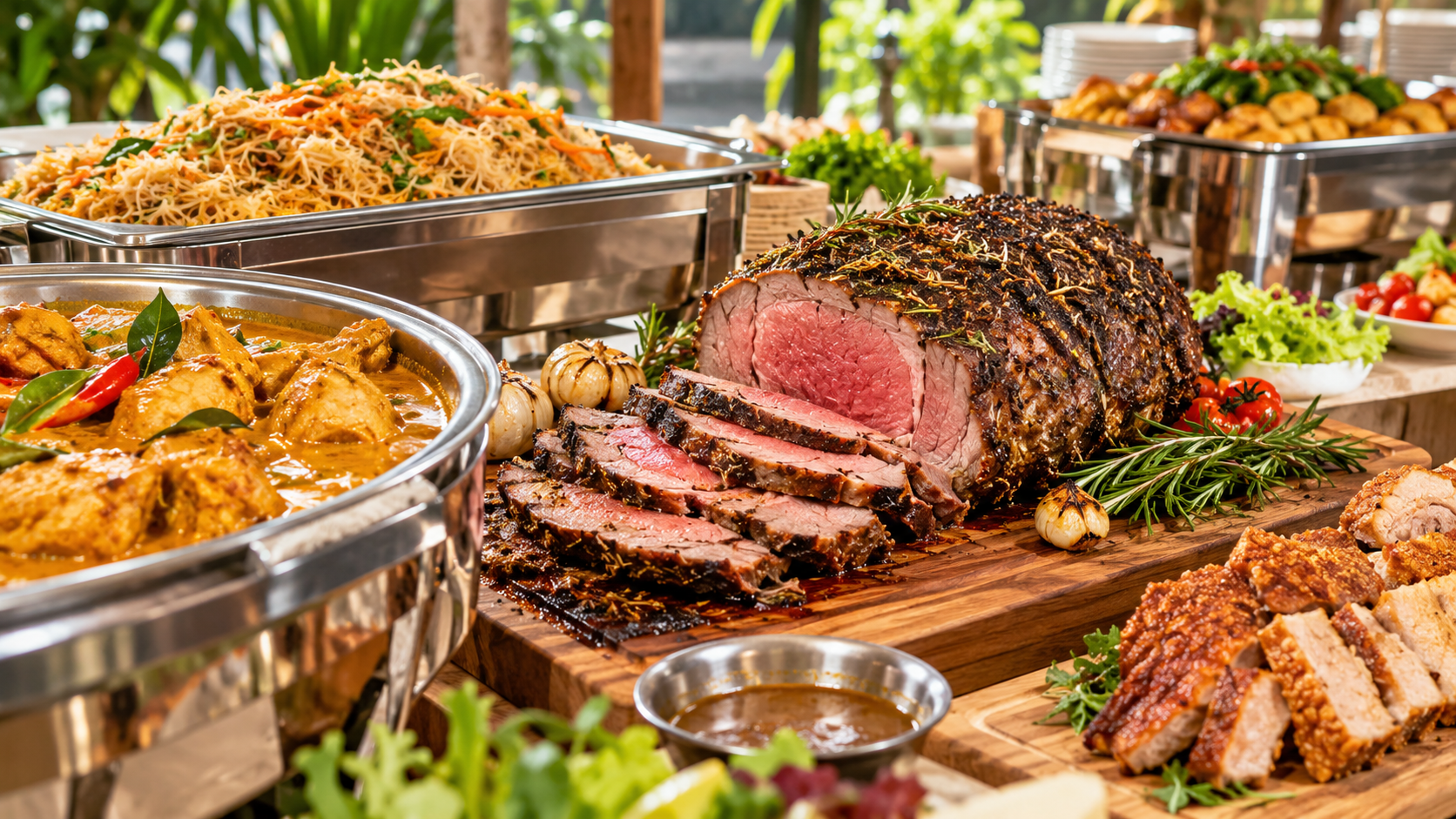
One completed De’Vour order illustrates the idea. Its recorded dishes were Australian Angus Ribeye Roast, rosemary pork jowl, Salted Egg Fried Chicken, Smoked Salmon Salad, Chicken Curry, Fried Bee Hoon and Fried Rice. The order record establishes this combination, not the event type, venue or guest count. The lessons below concern menu design rather than an invented account of the occasion.
Roasts and familiar staples have different jobs
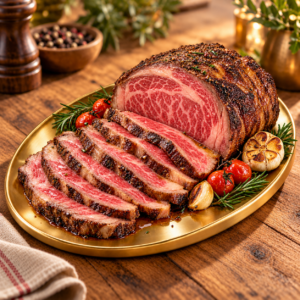
Ribeye Roast makes a natural centrepiece, while rosemary pork jowl adds a contrasting cut. Fried Rice and Fried Bee Hoon help guests build a complete plate without relying entirely on premium meats. Chicken Curry adds a saucy, familiar option, while Salted Egg Fried Chicken brings a different texture. Smoked Salmon Salad provides a fresher contrast to the rich mains.
What the ribeye roast brings to the table
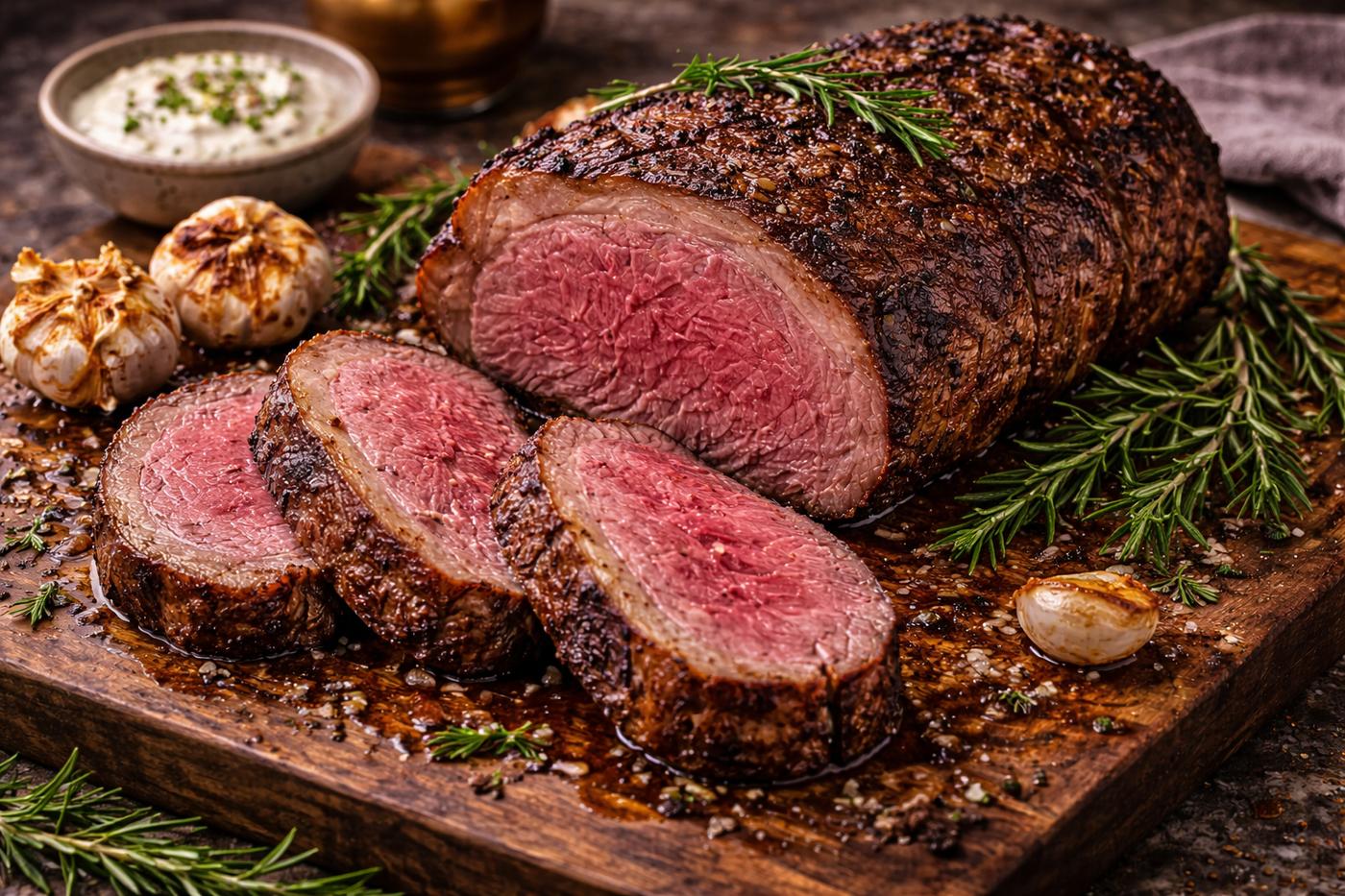
Ribeye is a natural anchor because it offers a different experience from the surrounding buffet dishes. A roast is sliced rather than scooped; it invites a little attention to doneness, carving and serving. Its richness and browned exterior can stand on their own, so it need not be buried beneath strongly flavoured sauces. Offer sauce separately, and guests can choose how much they want.
Rosemary pork jowl adds a different kind of richness. Compared with a leaner roast, a fatty cut can offer a softer, more indulgent bite. Placing both on a menu is not simply doubling up on meat: it gives guests different textures and flavours. That said, hosts should ask about dietary restrictions before finalising any mixed-meat menu. Pork dishes need clear labels and separate utensils, and a menu containing pork should never be presented as halal.
Why curry, rice and bee hoon matter just as much
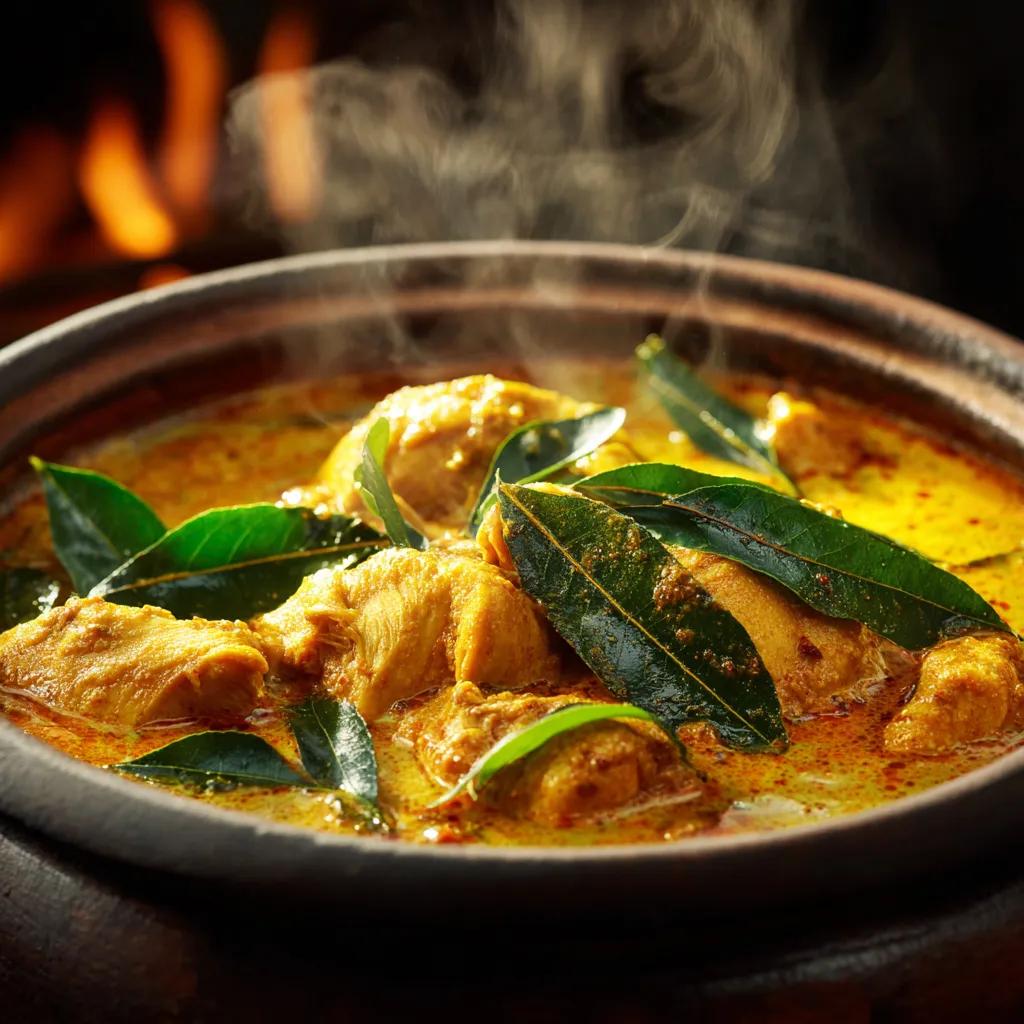
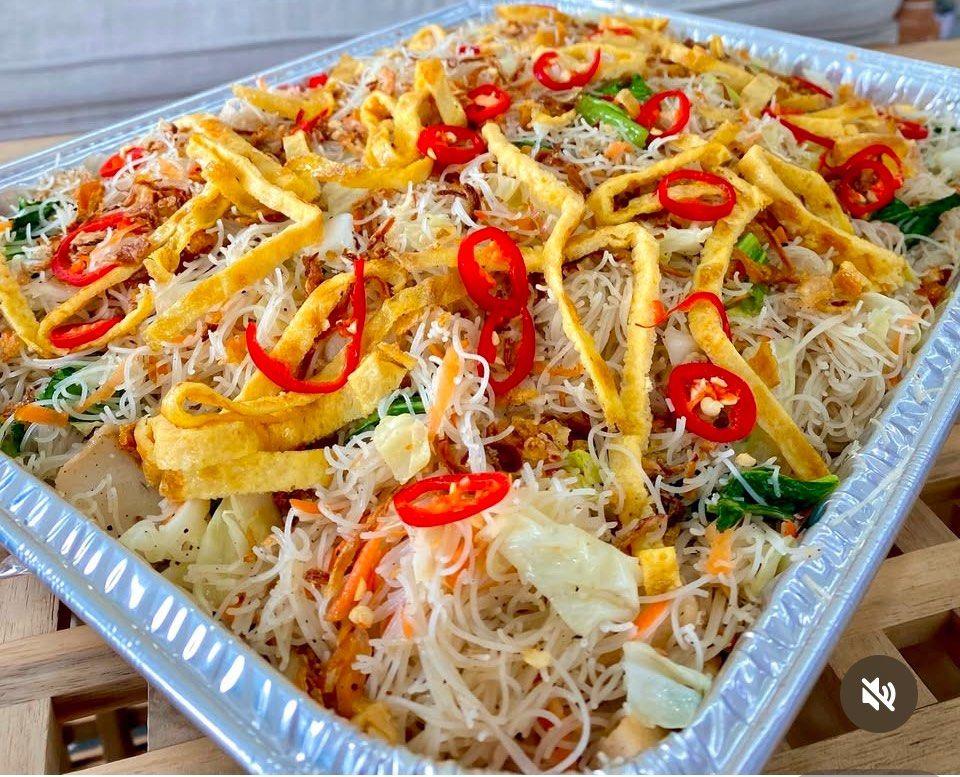
Chicken curry is a bridge between the centrepiece and the everyday plate. Its sauce changes the experience of rice and noodles, while providing a comforting option for guests who may not want a large serving of roast. Fried rice is familiar and easy to portion; fried bee hoon brings a lighter, springier texture and another way to build a satisfying meal.
Serving both rice and bee hoon is not automatically excessive. The right decision depends on expected preferences, the number of other dishes and whether guests will be grazing or eating a full meal. A caterer should assess total food volume rather than treating each carbohydrate as a separate full-sized meal for every guest.
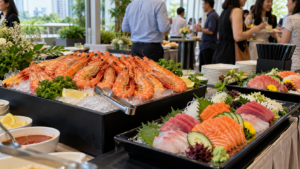
Then consider the two chicken preparations. Salted Egg Fried Chicken offers crunch and concentrated savoury flavour; Chicken Curry is soft, saucy and better suited to pairing with a staple. They perform different jobs. The Smoked Salmon Salad, meanwhile, brings a chilled, fresher counterpoint that can make the heavier dishes feel less relentless.
Plan the serving flow, not just the dish count
For Singapore buffet catering, start by confirming the number of guests, venue rules and whether food will be served seated or as a buffet. Give carved roasts a dedicated serving plan. Position rice and noodles where guests can build their plates, with separate utensils for each dish. Keep chilled salads protected and ensure hot dishes are safely held.
The invisible work behind a generous buffet
Good buffet design is also operational design. If a roast needs carving, the serving area must allow space for the board, utensils and queue. Saucy dishes should be placed where ladling does not create a mess across other trays. Chilled salads should remain under appropriate temperature control, away from hot holding equipment. Guests need clear labels, especially for seafood, pork and potential allergens.
For a Singapore venue, access and setup time matter too. Confirm loading arrangements, lift access, available power, table dimensions, permitted setup areas and the window in which caterers may arrive. A home gathering, an office lunch and a function-room event can have very different constraints even when the menu is identical.
Food safety cannot be an afterthought. Hot dishes need appropriate hot holding; chilled items need proper refrigeration or cold holding. Raw ingredients must be kept separate from ready-to-eat dishes. A generous buffet only works if the last guest receives food handled as carefully as the first.
Why variety needs a purpose
Two chicken dishes can make sense when one is saucy and the other is fried. Two carbohydrate options can be helpful for choice, but quantities should reflect the rest of the menu. More dishes do not automatically create a better gathering: each should contribute flavour, texture, convenience or balance.
How to build a balanced Singapore buffet menu
Begin with a centrepiece only if the occasion benefits from one. A ribeye roast can create a focal point, but a strong menu should not rely on spectacle alone. Add a staple that suits your guests, then choose supporting dishes that contribute a genuinely different texture or flavour. A saucy main and a crisp main can be more useful than two dishes prepared in almost the same way.
Next, account for dietary needs. Ask about pork, seafood, allergies and other restrictions early, and do not assume a mixed menu can satisfy everyone without adjustments. If a halal-certified meal is required, verify certification and the full preparation and service arrangements rather than relying on the absence of pork in one dish.
Finally, consider service rhythm. A buffet that looks abundant at the start should remain appetising and manageable throughout the event. Replenishing smaller trays when feasible, labelling dishes and separating serving utensils can help preserve quality and ease the queue.
Frequently asked questions
Can Western roasts and Singapore-style dishes work together?
Yes, provided the portions, service layout and food handling are planned together.
Should I order both Fried Rice and Fried Bee Hoon?
That depends on guest preferences and how many other substantial dishes are served.
How many guests did this order serve?
The order record does not verify the guest count, so we cannot infer it.
One table, many ways to eat
The most successful catering menus are not necessarily the ones with the greatest number of dishes. They are the ones where each item has a reason to be there. In this recorded order, a premium roast sat alongside familiar Singapore staples, two contrasting chicken preparations, another rich meat and a fresher salad. That combination offers a useful lens for anyone planning a gathering: think beyond cuisine labels and ask what each dish contributes to the plate, the room and the experience.
Explore our buffet versus bento guide and From the Kitchen for more Singapore catering ideas.