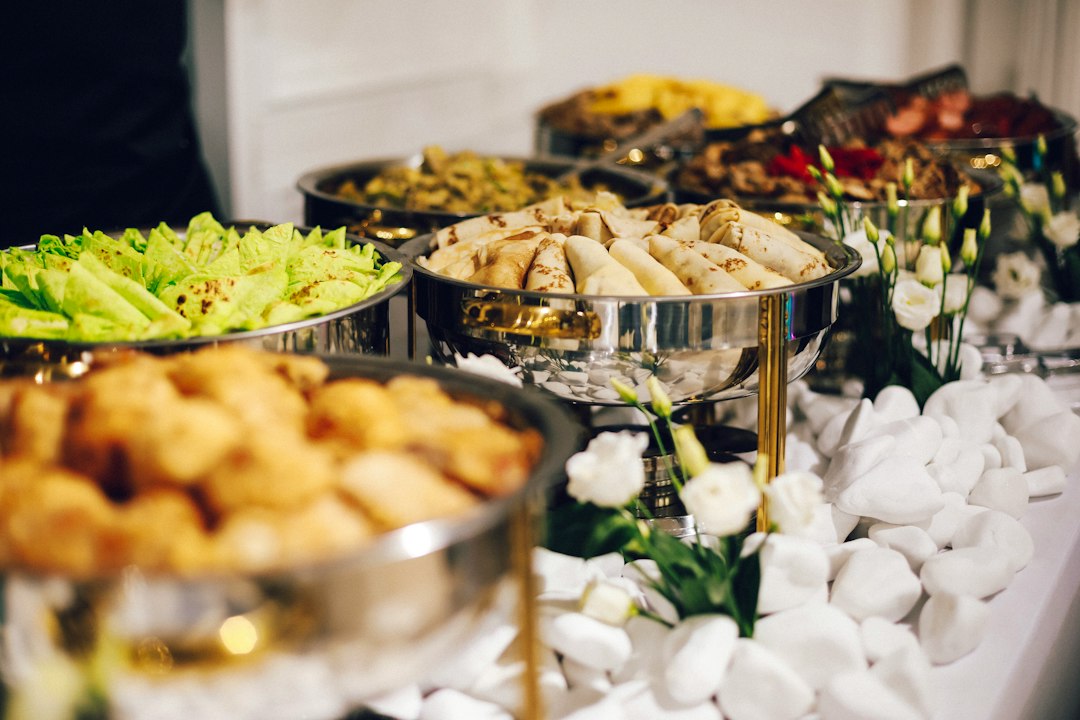
Planning catering for a Singapore HDB home gathering? The biggest question is not how many trays to order, but where the food, equipment and guests will go. Here is a practical guide to choosing a serving format, managing delivery, keeping food safe and making room for everyone.
Why space matters as much as the menu
Hosting family or friends in a Singapore HDB flat can be wonderfully personal. The dining table is familiar, guests can settle in without a formal venue, and the host gets to choose the food. The challenge is that a catered meal must share the same space as shoes by the door, children moving between rooms, a kitchen already in use and people trying to greet one another.
That is why home catering is not simply a smaller version of a hotel buffet. A menu that looks sensible on a quotation may still be awkward when the trays, plates, utensils, drinks and guests arrive together. The best approach is to plan the flow of food through the flat before deciding how elaborate the spread should be.
This is a practical planning guide, not a description of a particular De’Vour customer order. Every flat and estate has its own access and layout considerations, so confirm the actual arrangements before placing an order.
Start with the route from lift lobby to dining table
Before thinking about dishes, trace the delivery route. Where can the vehicle stop legally? Is the lift close to the unit? Is there a step, narrow corner or shared corridor to navigate? Will someone be available to receive the food while the host attends to guests?
Tell your caterer the block, floor, lift-access situation and delivery window, along with any genuine restrictions. Do not assume the driver can park at the void deck or leave boxes in a common passageway. Shared corridors and fire-escape routes must remain clear. Even a few minutes of staging multiple trays outside the unit can create an obstruction.
Inside the home, identify a clear landing spot for delivery. A side table near the dining area works better than a stack of boxes in the doorway. Assign one person to receive and count the items, while another clears the route and gets serving utensils ready.
Choose a serving format that fits the flat
There are three practical approaches for a home gathering. A ready-to-serve tray spread is suitable when food can be placed directly on a prepared dining table and guests help themselves. A mini buffet can work when there is enough stable table space for multiple trays and safe temperature control. Individually packed meals make sense when guests will arrive at different times or when there is no comfortable serving line.
A full buffet with multiple chafing dishes may look impressive, but the equipment needs space and must be used according to the caterer’s instructions. Hot-holding equipment also needs safe clearance from children, curtains, loose items and traffic. Never improvise a heat source in a cramped room.
Our buffet versus bento guide explores the broader trade-offs. For an HDB gathering, the most useful deciding question is simpler: can people collect food and move away without blocking the entrance, kitchen or living-room seating?
Measure the table, not just the guest list
A ten-person gathering does not necessarily need ten people standing around a buffet at once. But it does need enough surface area for the dishes and a sensible place for clean plates, utensils and drinks. Measure the actual usable tabletop after accounting for decor, a rice cooker, a cake, or other items already occupying it.
For a narrow dining area, consider placing plates and cutlery at one end and drinks somewhere else. A separate beverage corner prevents guests from stopping in front of hot food to pour a drink. Put sauces on a small side table only if that table does not interfere with movement.
Think about the direction of the queue. A one-way route from plates to food to seating is easier than two lines crossing in a doorway. If the dining table doubles as the buffet station, give guests another place to sit and eat comfortably.
Build the menu around how people will eat
For a casual home lunch, start with a staple such as rice or noodles, then choose mains with contrasting textures and flavours. A saucy chicken dish and a roast can coexist well, but both need their own utensils and serving space. A salad or vegetable dish provides contrast, while a smaller number of well-chosen sides is often more useful than filling every available centimetre with trays.
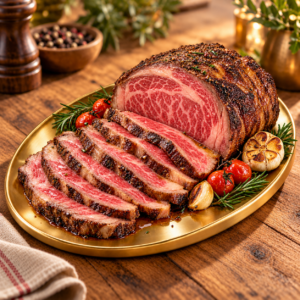
Carved roasts require particular thought. A whole roast looks striking, but carving needs a stable board, knife, clean surface and someone comfortable handling the task. If the home has no suitable carving station, ask whether the roast can be prepared for easier service. The same principle applies to seafood that needs peeling or dishes that require assembly.
Our article on pairing ribeye roast with chicken curry and bee hoon shows how different dishes can play distinct roles on a shared table. The lesson for small-space catering is to keep variety purposeful rather than simply increasing the dish count.
Protect food quality in Singapore’s climate
Singapore’s heat and humidity make delivery timing and food handling especially important. Coordinate food arrival with the actual serving time rather than the earliest moment someone will be home. Check which dishes are intended to be served hot, which need to stay chilled, and what equipment is required if the meal will continue over an extended period.
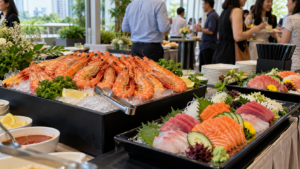
Do not treat an air-conditioned living room as a substitute for refrigeration. Chilled salads and seafood need appropriate cold holding; hot dishes need proper hot holding when they are not being served promptly. Follow the caterer’s storage and service instructions and current Singapore food-safety guidance. Avoid leaving food out for prolonged grazing, especially when guests come and go over several hours.
Keep serving spoons with their own dishes and separate items containing pork, seafood or common allergens. Ask about dietary requirements before ordering; a menu without pork is not automatically halal-certified. Clearly identify dishes when guests may have restrictions.
Make delivery, setup and cleanup somebody’s job
A common source of stress is assuming the host will handle everything at once. Decide who will receive the delivery, who will check the dishes, who will set out the serving items and who will handle packaging after the meal. A small allocation of responsibilities makes the gathering feel much less crowded.
Confirm whether the order includes setup, whether equipment must be returned, and whether collection is scheduled for the same day or later. Keep packaging out of shared corridors and dispose of waste using the estate’s designated facilities. Do not assume a caterer can leave equipment unattended in a public area.
If you are deciding whether you need a full setup at all, read when one large tray can work better than a full buffet. Sometimes the most hospitable choice is a simpler arrangement that leaves everyone more room to enjoy the meal.
A practical checklist before confirming your order
Before placing an HDB home-catering order, confirm the number of guests, delivery address and access, serving time, available table dimensions, dietary needs, hot or cold holding requirements, whether carving is needed, and who will handle cleanup or equipment collection. Check that the chosen serving layout leaves the entrance and escape routes clear.
Also consider whether guests are mostly seated, eating in waves, or collecting food before moving elsewhere. The same ten dishes can require very different service plans depending on how the gathering works.
Frequently asked questions
Can I have buffet catering in an HDB flat?
Often yes, provided the setup fits safely inside the home and complies with building, fire-safety and food-handling requirements. Check actual space and equipment needs with the caterer.
Is a mini buffet better than individually packed meals?
Choose a mini buffet when guests will eat together and there is room for a safe serving station. Individually packed meals can be easier when seating or table space is limited, or guests arrive in shifts.
Should food be delivered early?
Not unnecessarily. Coordinate delivery with service and make sure appropriate hot or cold holding is available if there will be a gap.
What if my dining table is too small?
Reduce the number of simultaneously displayed dishes, use a separate drinks area, or consider ready-to-serve trays and individually packed portions. Never block the common corridor to create extra buffet space.
Leave room for the gathering itself
The aim of home catering is not to turn a flat into a banquet hall. It is to make good food easy to share while preserving the comfort of the home. A thoughtful menu, a clear delivery route and a manageable serving station can do more for the occasion than adding one more tray.
Explore more practical ideas in De’Vour’s From the Kitchen journal, including guides to function-room catering logistics and planning a complete buffet menu. Choose the format that suits your home, not just the photograph in the catalogue.