
Most people ordering a roast make one decision.
Which roast?
This order went in another direction.
For a private delivery, the customer chose:
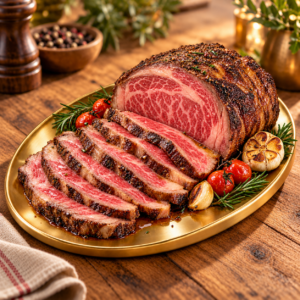
USDA Certified Angus Breed Choice Ribeye Roast — 1kg.
USDA Certified Angus Breed Choice Tomahawk Roast — around 1.5 to 1.7kg.
And:
Australian Angus Ribeye Roast — 1kg.
Three beef roasts.
Different cuts.
Different origins.
All for the same gathering.
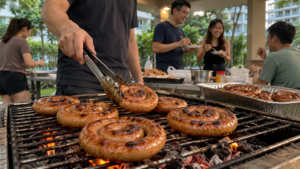
Then, just in case the table needed something else, there was also a Sausage Fiesta with five different sausage flavours.
At that point, choosing one centrepiece clearly wasn’t part of the plan.
Roast Beef Doesn’t Have to Be One Big Piece in the Middle
When people think about a premium roast dinner, the image is usually one large beef roast sitting in the centre.
It gets carved.
Everyone eats the same thing.
Perfectly reasonable.
But ordering several different roasts creates another kind of meal.
Now guests can compare.
A Ribeye Roast has one eating style.
A Tomahawk Roast brings a different cut and presentation.
Australian Angus can be compared directly with USDA Angus.
Suddenly dinner becomes a small beef tasting without needing to become formal about it.
Nobody needs a scorecard.
Take a slice.
Try another.
Decide what you like.
The Tomahawk Naturally Becomes the Visual Centrepiece
There are some cuts of beef that need help looking impressive.
A Tomahawk is not one of them.
The long bone does most of the work before the meat is even sliced.
At around 1.5 to 1.7kg, it also has enough size to look substantial on the table.
That makes a Tomahawk Roast useful when the customer wants something visually dramatic.
But the bone doesn’t automatically make it “better” than Ribeye.
It simply creates a different presentation.
Once everything is sliced, the actual eating experience still comes down to the beef, marbling, doneness and how well it was cooked.
Then You Can Compare USDA Angus and Australian Angus
This is where the order becomes more interesting.
Two Ribeye Roasts.
One USDA Certified Angus Breed Choice.
One Australian Angus.
That gives the table two pieces of beef with broadly similar cut characteristics but different production backgrounds.
And that’s the kind of comparison we find more useful than declaring that one country automatically produces “better” beef than another.
Beef doesn’t really work that way.
Breed.
Feed.
Marbling.
Grading.
Ageing.
Cut.
Cooking.
All of those things affect the final result.
Country of origin is only part of the story.
Premium Roast Delivery Is About Getting the Difficult Part Done Before Dinner
One advantage of ordering a premium roast rather than cooking one yourself is fairly obvious.
Large cuts require time.
You have to judge the temperature.
Let the heat reach the centre.
Rest the meat properly.
And then hope dinner isn’t delayed because the roast needs another forty minutes.
For roast delivery in Singapore, most of that work happens before the food reaches the customer.
That changes the role of the host.
Instead of spending the gathering checking a meat thermometer every few minutes, the focus can be on carving and serving.
Especially when there are three different roasts involved.
Resting Matters More Than People Think
One thing that becomes particularly important with large beef roasts is resting.
Cut too early and the juices that should remain in the meat end up on the carving board.
That is why a roast cannot simply come out of the heat and immediately be attacked with a knife.
It needs time.
The larger the cut, the more important that becomes.
For customers, that process is mostly invisible.
They see the finished roast.
But much of what determines whether the meat is juicy has already happened before the first slice.
Then There Were Five Kinds of Sausage
Because three beef roasts apparently weren’t enough variety, the order also included:
Herb & Garlic Sausage.
Smoky Bacon Sausage.
Apple Sage Sausage.
Spicy Italian Sausage.
Cheddar Cheese Sausage.
Five flavours.
That actually works quite nicely beside roast beef.
The sausages are casual.
Easy to share.
Completely different in texture.
And guests who don’t necessarily want another full slice of beef can still pick at something smaller.
Again, there isn’t a requirement for every item on the table to behave like one formal dinner course.
Premium Roasts Work Particularly Well for Home Entertaining
This is one area where roast delivery makes a lot of sense.
Hosting people at home already creates enough jobs.
Clean the house.
Set the table.
Sort out drinks.
Make sure everyone knows where they’re going.
Figure out what the children are eating.
Find another chair.
Cooking several kilograms of premium beef on top of that is optional stress.
A roast lets the main protein arrive largely handled.
The host can still carve it.
Serve it.
Pair it with whatever sides they want.
But the technically difficult cooking has already been done.
Sometimes Variety Is the Centrepiece
The interesting thing about this order is that there wasn’t really one hero roast.
You could argue the Tomahawk was the most dramatic.
But the experience came from having all three.
USDA Ribeye.
USDA Tomahawk.
Australian Ribeye.
Try them beside each other and dinner becomes a conversation.
Which one is richer?
Which texture do you prefer?
Does one taste more strongly of beef?
Would you order the same one next time?
There doesn’t necessarily need to be a correct answer.
That’s part of the fun.
The Best Beef Is Still the One You Actually Prefer
We work with different beef origins, grades and feeding programmes.
And the more beef you eat, the harder it becomes to believe there is one universal ranking that tells everybody what they should enjoy.
Some people want heavy marbling.
Some prefer something less rich.
Some love Australian beef.
Others prefer USDA cuts.
Some want Wagyu.
Some simply want a properly cooked Ribeye.
This particular customer found a fairly efficient solution to the debate.
Order three roasts.
Taste them.
And let the table decide.