
Some BBQ orders are easy to understand from the grill.
Steak.
Chicken.
Sausages.
Done.
Then there are menus like this one at HomeTeamNS Bedok Reservoir.
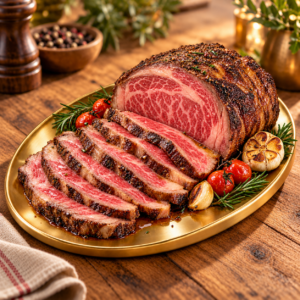
Australian Angus Ribeye.
Pork Jowl.
Chicken Satay.
Pork Satay.
Garlic Pork Skewers.
Sotong.
Argentinian Prawn Skewers.
Sambal Seabass.
Corn.
King Oyster Mushrooms.
Otah.
It’s the kind of menu where the word “BBQ” makes everything sound like it belongs together.
Technically, it does.
The problem is that none of it wants to cook the same way.
A Mixed BBQ Is Really Several Cooking Jobs Happening at Once
This is one reason a BBQ chef service isn’t simply about having somebody turn food over a fire.
Look at the beef first.
Australian Angus Ribeye needs a reasonably hot grill and close attention to doneness.
Then look at Pork Jowl.
Different fat content.
Different texture.
Different cooking behaviour.
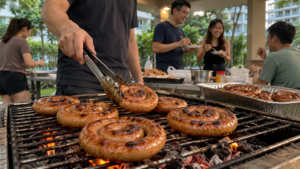
Satay is another process entirely.
You’re dealing with lots of small pieces that can cook quickly and need frequent turning.
Then there are prawns.
Sotong.
Whole pieces of fish.
Mushrooms.
Corn.
Suddenly one BBQ pit is behaving like several little kitchens sharing the same heat source.
Ribeye Doesn’t Care That the Satay Is Ready
This is probably the simplest way to explain the problem.
Every item has its own timing.
The satay might be ready.
That doesn’t mean the Ribeye is.
The prawns might only need a few minutes.
The Sambal Seabass needs more time.
The sotong definitely doesn’t benefit from being forgotten at the back of the grill.
And because people naturally want to eat continuously at a BBQ, you also don’t want to wait until everything is finished before serving the first piece of food.
So the grill needs a sequence.
Not everything on at once.
Not everything off at once.
Just a steady flow.
Satay Is Usually Good at Keeping People Busy
There is a reason satay works so well at BBQs.
It’s fast.
It’s familiar.
And people can start eating it without waiting for the larger items.
This order had both Chicken Satay and Pork Satay.
Add skewers and otah and you already have several things that can keep food moving while the beef, fish and larger seafood are doing their thing.
That matters more than it sounds.
A group waiting beside an empty table feels very different from a group eating satay while asking when the Ribeye will be ready.
Seafood Needs Its Own Attention
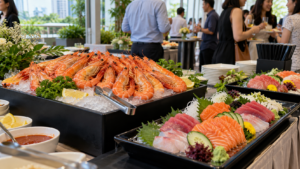
Then you have the seafood side of this order.
Argentinian Prawns.
Grilled Sotong.
Sambal Seabass.
All three belong perfectly well at a Singapore BBQ.
But treating all seafood as one category would be a mistake.
Prawns cook quickly.
Sotong can become tough if it stays over the heat too long.
A substantial piece of fish needs time for heat to reach the centre.
That’s why one of the easiest ways to ruin an otherwise good seafood BBQ is trying to cook everything according to the same clock.
There isn’t one.
And Vegetables Aren’t Just There for Decoration
The order also had white corn and King Oyster Mushrooms.
We actually like seeing those on a BBQ menu.
Partly because not every bite needs to be meat.
But also because vegetables respond very well to direct heat.
Corn takes on a little char and sweetness.
King Oyster Mushrooms develop a completely different texture once grilled.
They’re useful in the gaps between all the heavier food.
Especially when the rest of the menu contains Ribeye, pork, satay and seafood.
This Is What a BBQ Chef Is Actually Managing
When people hire a BBQ chef in Singapore, the obvious benefit is that they don’t have to stand at the pit themselves.
But from our side, the more important job is managing the sequence.
What goes on first?
What can cook together?
What needs the hottest part of the grill?
What needs to come off immediately?
What can wait?
What should be served now while something else continues cooking?
This HomeTeamNS Bedok Reservoir order is a good example because there wasn’t one giant centrepiece controlling the menu.
It was variety.
A lot of different BBQ food sharing one grill.
A Good BBQ Doesn’t Need Everything Ready at Once
That might actually be one of the biggest differences between BBQ catering and a conventional buffet.
A buffet is often presented as a finished thing.
Everything is there.
A BBQ is moving.
The food you ate ten minutes ago may be completely different from what is coming next.
Satay first.
Then prawns.
Some Ribeye.
Maybe the fish is ready.
Another batch of skewers.
Someone suddenly decides they want corn.
And the evening keeps going.
For a mixed BBQ like this, that’s not a problem to solve.
That’s how it’s supposed to work.