Serving lunch to the same group for several consecutive days is a different challenge from catering one event. The food must arrive reliably, but the experience cannot feel like the same meal wearing a different sauce.
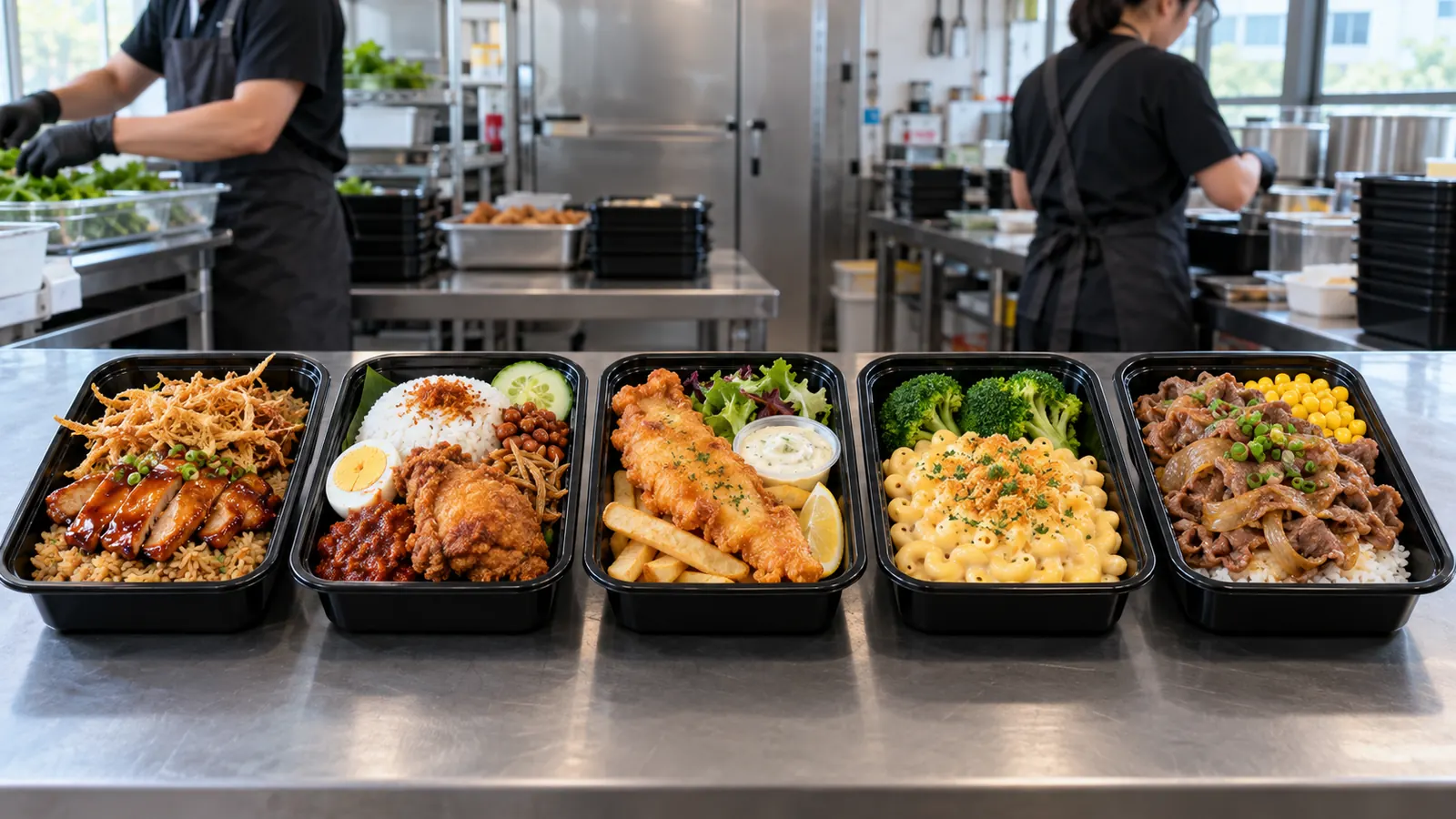
A completed sequence of De’Vour orders used five clearly different lunches: Japanese garlic fried rice with teriyaki chicken and crispy enoki; nasi lemak with fried chicken; fish and chips; macaroni and cheese with broccoli; and beef gyudon with Japanese rice and sweet corn. The series moved through Asian rice, local comfort food, Western fried fish, creamy pasta and a Japanese-style beef bowl.
Change the Meal Format Not Only the Protein
Replacing chicken with fish while keeping the same rice, vegetables and sauce may not feel like a new lunch. This rotation changed the whole format from day to day.
Fried rice is mixed and savoury, nasi lemak is aromatic with condiments, fish and chips is crisp and handheld, macaroni and cheese is creamy, and gyudon is a composed rice bowl. Those structural changes make variety more noticeable.
Use Familiarity as the Anchor
A rotating menu should not become a five-day experiment. Each meal in this sequence had a familiar anchor: teriyaki chicken, fried chicken, battered fish, macaroni and cheese or sliced beef with rice.
The supporting elements created interest without making lunch difficult to recognise. Crispy enoki added texture, broccoli balanced the macaroni, and sweet corn brought colour and sweetness to gyudon.
Alternate Rich and Lighter Days
Nasi lemak, fish and chips and macaroni and cheese can all feel substantial. Placing them without contrast may make the week progressively heavier.
A rice bowl with teriyaki chicken or gyudon can provide a cleaner change of pace, depending on portion and sauce. When planning the actual calendar, alternate creamy, fried and sauce-heavy meals rather than grouping them together.
Vary Texture Across the Week
Texture is one of the fastest ways diners notice repetition. The crispy enoki, fried chicken, battered fish, creamy pasta and tender beef each give the meal a different rhythm.
Even vegetables should not appear in the same form every day. Broccoli can be steamed or roasted, cabbage can be sautéed, and corn can remain crisp and sweet.
Keep the Operational Format Stable
Variety in food does not require chaos in delivery. The same dependable arrival window, container size, cutlery plan and distribution point can remain consistent all week.
That stability helps organisers. Diners experience change on the plate while the team handling lunch does not need to relearn the service process each day.
Plan Vegetarian Alternatives at the Same Time
Several meals in the completed series included vegetarian alternatives, such as fried rice with cabbage and crispy enoki, macaroni and cheese with spring rolls, creamy tomato pasta with mushrooms, and aglio olio with vegetables.
The strongest alternatives share the same basic format as the main meal. They should feel like a complete lunch, not a protein removed from a half-empty tray.
Collect Feedback Without Turning Lunch Into a Survey
Watch what returns uneaten and note which meals finish first. A simple tally is more useful than asking broad questions such as whether everyone liked lunch.
For a repeating programme, those observations help adjust quantities and decide which format can return in a future cycle without repeating the exact same week.
A Good Rotation Feels Coherent but Not Predictable
These five lunches worked as a sequence because each had a recognisable identity and a dependable complete-meal structure. The cuisines and textures changed, but lunch still felt organised.
De’Vour can plan multi-day catered lunches in Singapore around group size, dietary requirements and delivery windows, with enough variation to keep regular diners interested.