Variety can come from flavour instead of protein count
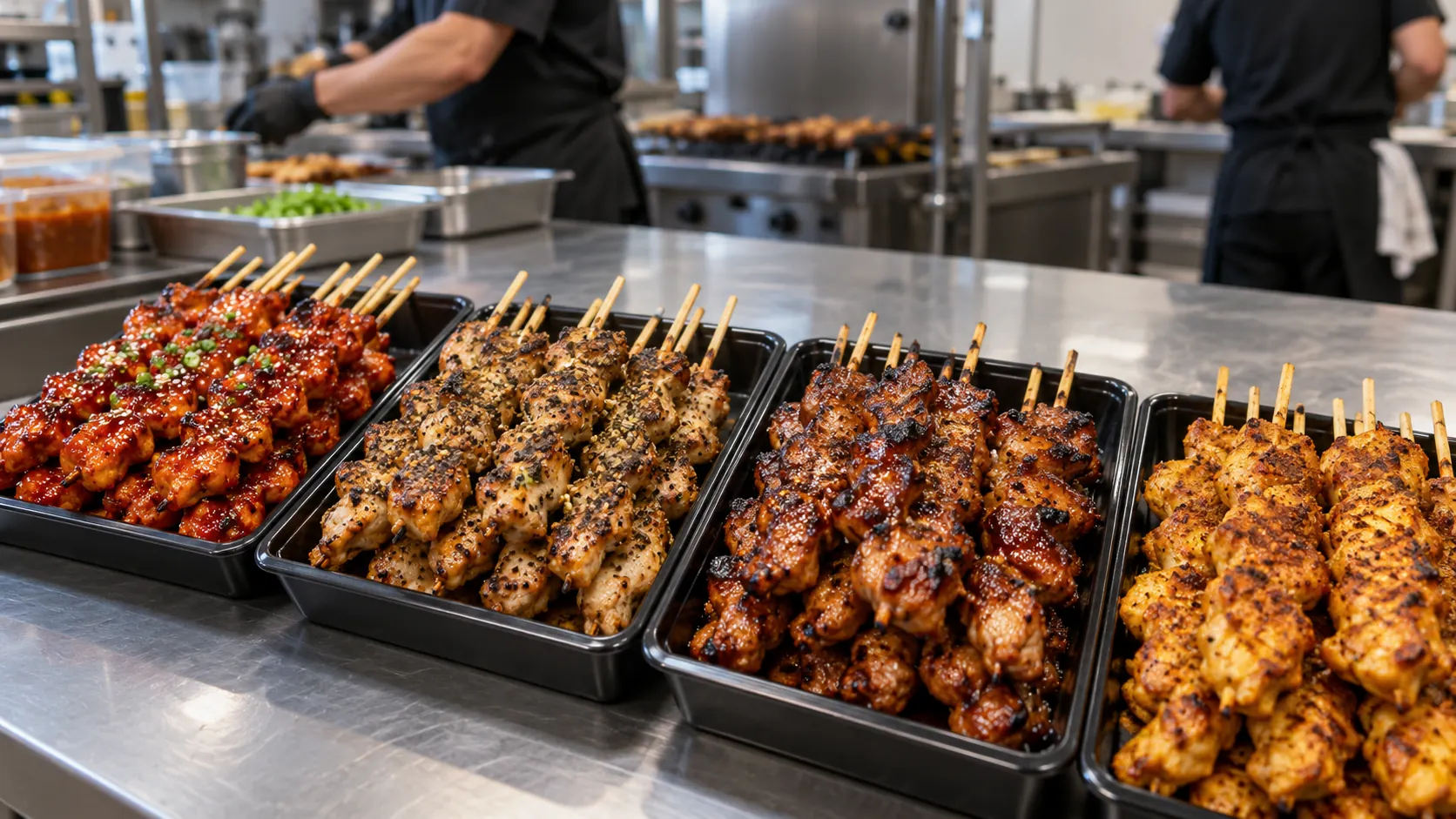
Party menus often chase variety by adding more meats. That increases sourcing, storage and cooking complexity, but it does not guarantee a more interesting meal. A completed De’Vour order took a different route: four groups of chicken skewers in spicy bulgogi, black pepper, smoky grill and Cajun flavours.
Using one protein keeps the format familiar while the marinades create four distinct eating experiences. It is a practical idea for gatherings where guests enjoy choice but the host wants portions and service to remain straightforward.
Choose flavours with clear separation
The four profiles work because they do not blur into one another. Spicy bulgogi brings sweetness, heat and a glossy Korean-style character. Black pepper is aromatic and direct. Smoky grill leans into char and savoury depth, while Cajun seasoning adds warm spices and a drier, golden finish.
A good flavour lineup should be recognisable before guests read a label. Colour, surface texture and aroma can help distinguish each tray. If every marinade is sweet, dark and sticky, the selection may look varied on paper but taste repetitive in practice.
One protein simplifies preparation
Chicken pieces can be cut to a consistent size, skewered with the same spacing and cooked using a similar basic method. That makes purchasing easier and reduces the number of separate raw-food workflows in the kitchen. It also helps with portion planning because every stick occupies roughly the same place in the menu.
Consistency does not mean treating all marinades identically. Sugary bulgogi needs careful heat so it caramelises without burning. Pepper crusts can scorch if the grill is too aggressive. Drier Cajun seasoning benefits from enough oil and controlled cooking to keep the chicken juicy.
Marinate and organise in separate batches
Each flavour should be mixed, stored and skewered separately. Dedicated containers and utensils prevent sauces from blending and make the final count easier to verify. The skewers can then be arranged by flavour in black-base catering trays, with enough separation that guests can select confidently.
A sensible production order also matters. Start with the least staining or strongly flavoured marinade, clean the work area between batches and keep everything chilled until cooking. These are simple controls, but they preserve the differences that make the menu worthwhile.
Cook for juiciness as well as colour
Skewers invite high heat, yet the goal is not maximum char. Chicken needs to cook through while retaining moisture. Uniform pieces, a properly preheated grill and frequent attention are more important than dramatic flames. Finished batches should rest briefly before going into trays, without being sealed so tightly that steam softens the surface.
For delivery or buffet service, cooking in manageable waves can protect texture. Saucy skewers remain glossy, pepper and Cajun coatings stay defined, and the smoky flavour comes from browning rather than dryness.
Use the format for easy sharing
Skewers are naturally portioned and easy to distribute. Guests can try one flavour, return for another and compare favourites without committing to large cuts of meat. Four equal groups also create a strong visual spread on a buffet or party table.
The broader lesson is that menu variety should be designed, not counted. One protein with four genuinely different flavour directions can offer more contrast than several meats prepared in the same sauce. It keeps the kitchen organised while giving guests a clear reason to sample across the table.