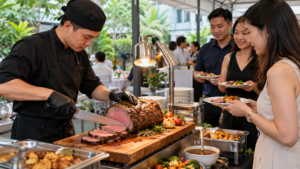
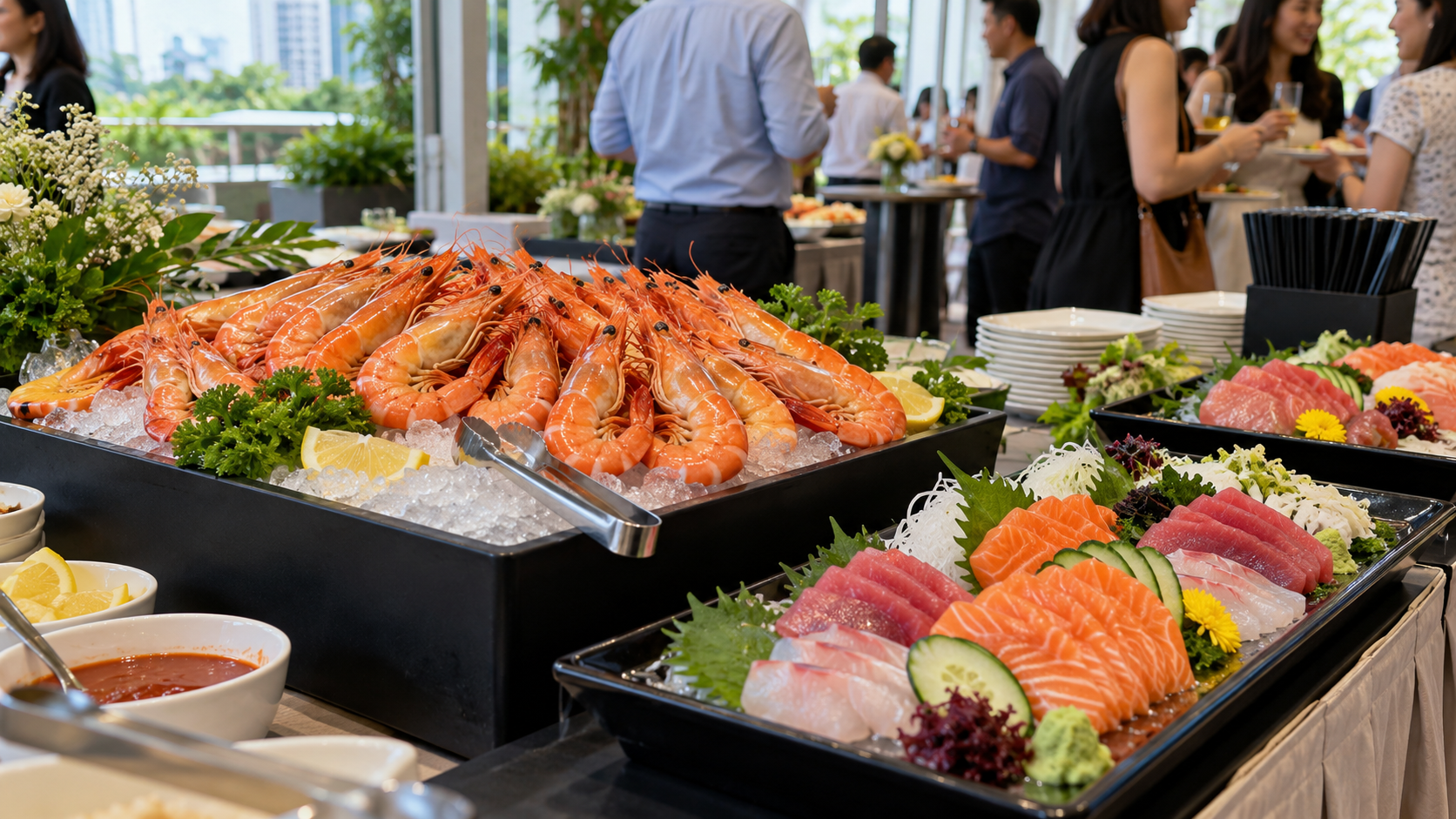
A chilled seafood table gives a Singapore celebration a fresh, generous opening. Guests might reach for a cooked prawn, a slice of salmon sashimi or both before moving on to roasts and hot dishes. But those choices are not interchangeable. They involve different preparation requirements, risks and serving arrangements.
For a wedding, condominium function-room dinner, office gathering or private celebration, the useful question is not simply, “Which seafood looks more premium?” It is which chilled seafood course can be served safely, comfortably and at the right pace? De’Vour’s order records include cooked chilled prawns, salmon sashimi and seafood served alongside roasts. The lesson is to plan chilled seafood as its own service, not as decoration beside the main meal. No individual customer is identified here.
Quick answer: cooked prawns or sashimi for your event?
Choose properly cooked, chilled prawns for a familiar seafood option at a mixed-age gathering. They still need chilled storage, hygienic handling and allergy precautions. Consider sashimi when guests actively enjoy raw fish and the operator can demonstrate appropriate sourcing, ready-to-eat preparation and cold-chain controls. Raw fish is higher-risk because no cooking step kills harmful microorganisms.
For a broad guest list, cooked seafood plus a non-seafood alternative can be more inclusive than a raw-only station. A mixed display may work, but only with proper segregation and temperature control. Ice alone does not make food safe.
Start with the guest list, not the platter photograph
Singapore events bring together different diners. A corporate reception may include people who avoid shellfish or would never eat raw fish. A family celebration may include older relatives, young children and guests with dietary restrictions. Ask about these needs before deciding the seafood mix.
Pregnant people, older adults, young children and immunocompromised guests should be offered cooked alternatives rather than encouraged to eat raw fish. The Singapore Food Agency’s ready-to-eat raw fish guidance identifies vulnerable groups who should avoid it. Cooked prawns are not a substitute for somebody with a crustacean allergy. Provide an appropriate non-seafood choice.
Record how many guests prefer cooked seafood, whether raw fish is actually wanted and whether allergies have been disclosed. An impressive platter should never leave someone without a suitable meal.
What does “sashimi-grade” really tell you?
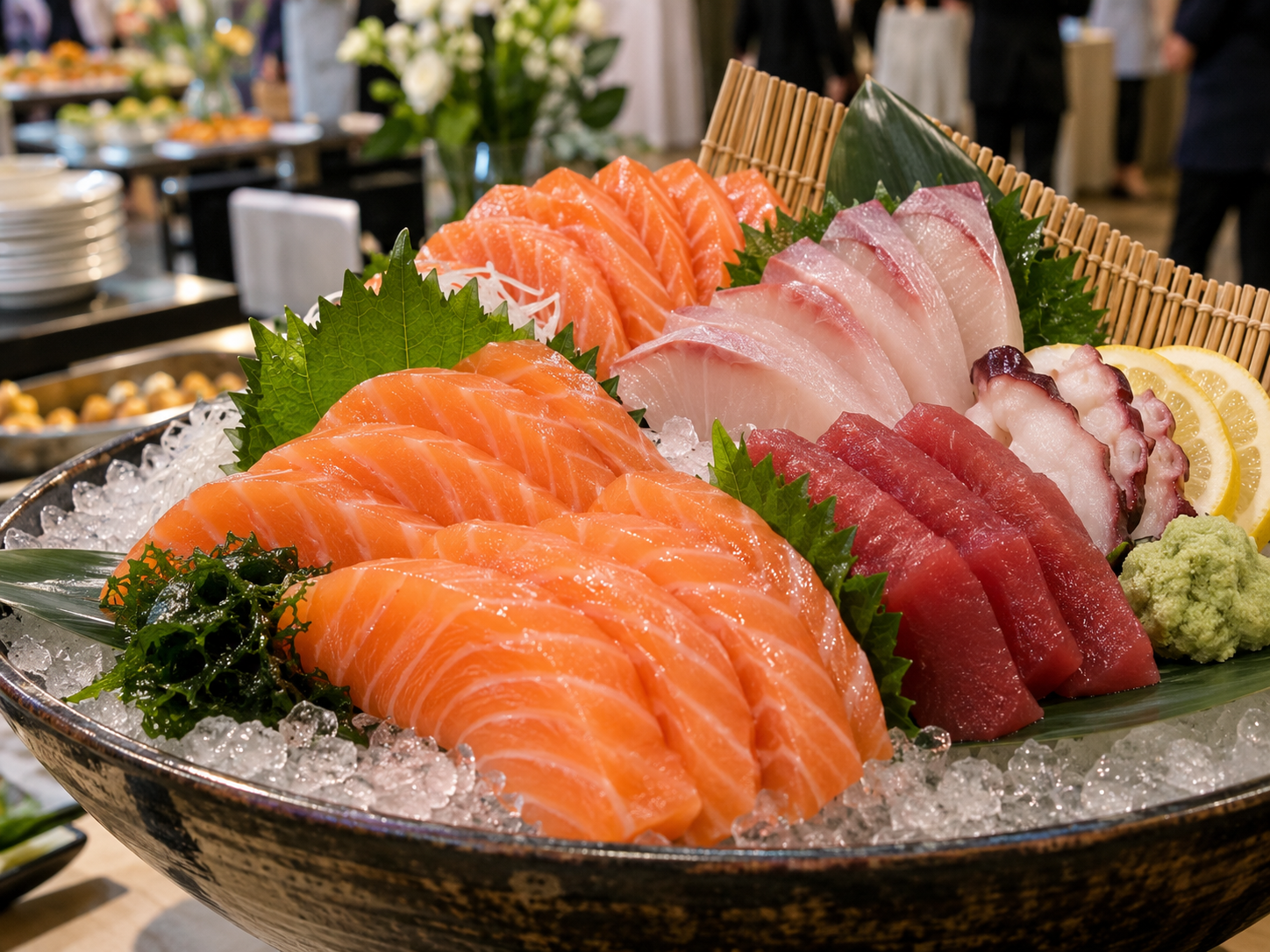
“Sashimi-grade” appears in menus and product descriptions, but the phrase alone cannot replace checks on sourcing and handling. Fish intended for raw consumption must be distinguished from fish sold for cooking. Ask whether it is explicitly suitable for raw consumption, where it comes from and how it is transported.
SFA advises storing ready-to-eat raw fish at 0°C to 4°C and keeping it separate from fish meant for cooking. Raw freshwater fish is not permitted in ready-to-eat raw-fish dishes in Singapore. Catering operations must comply with applicable SFA requirements; not every business that sells cooked seafood is automatically equipped or approved to offer raw-fish service.
Even excellent sourcing does not eliminate every risk. If a venue lacks suitable chilled storage, handwashing access or controlled preparation space, change the menu rather than improvise a sashimi station.
Cooked chilled prawns also need a cold chain
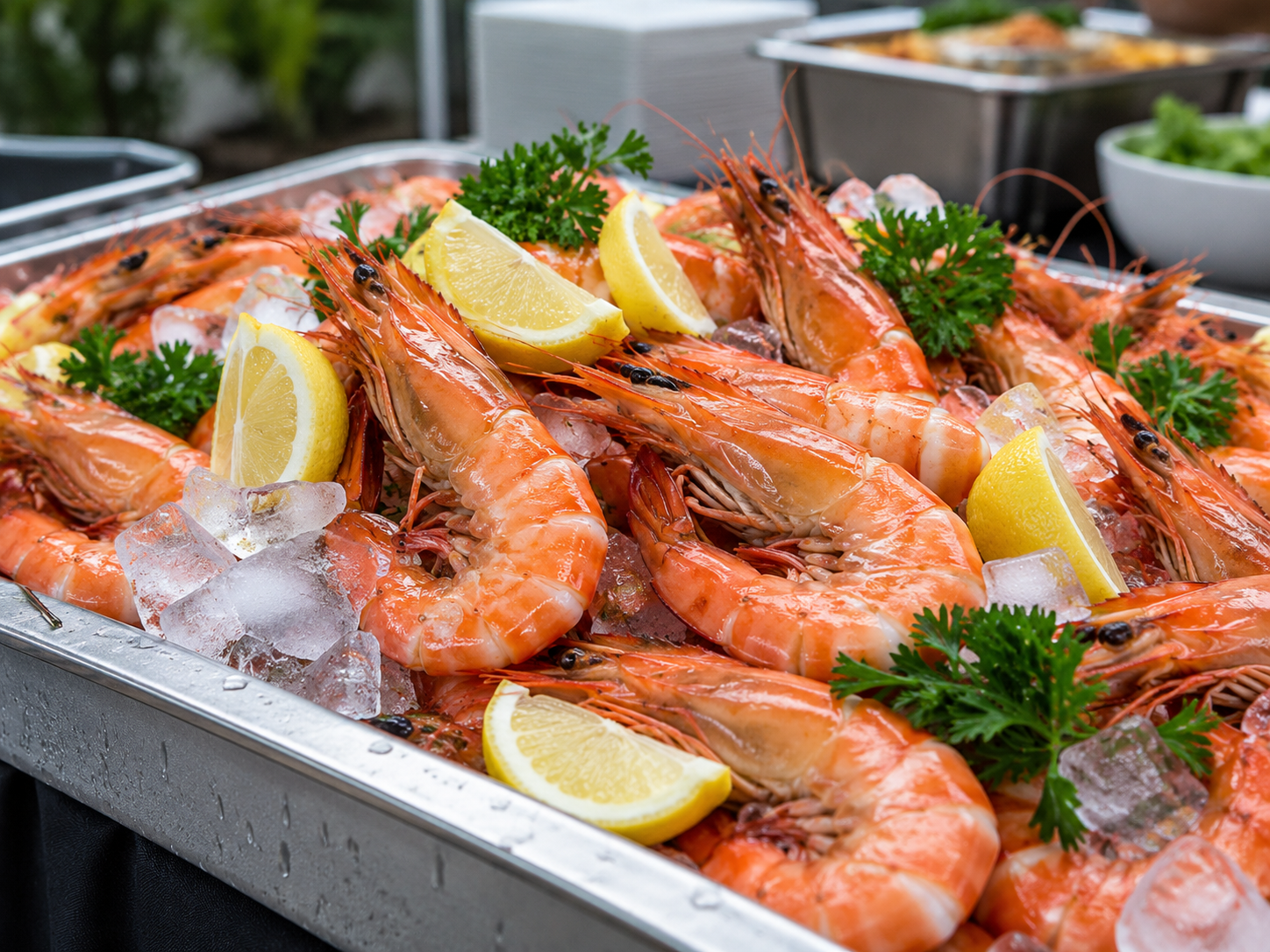
Cooking reduces important risks, but cooked prawns can become unsafe through poor handling afterwards. They need hygienic cooling, covered storage, protection from contamination and controlled transport. They should not wait at room temperature while the organiser finishes decorating or guests arrive late.
SFA’s guidance for catered functions advises keeping cold food below 5°C and arranging delivery close to meal time. Ask who transfers prawns from insulated transport to the display, what keeps them chilled and who supervises replenishment. A tray that looks abundant at 6pm must not be left warming until 9pm.
Calculate portions by the seafood’s role in the meal
A chilled seafood course might be an arrival bite, a small starter or the main attraction. If guests also have satay, beef roast, rice, pasta and sides, seafood is one component. If it is the highlight, they may return for seconds. Those situations need different quantities.
Ask the supplier to translate the proposed quantity into realistic serving portions. Prawn size varies, and shell-on weight differs from edible yield. Sashimi portions depend on cut, thickness and whether staff serve individual plates. Avoid a universal “pieces per kilogram” assumption without knowing the actual product.
Guest arrival matters too. One hundred people reaching the station together create a different replenishment challenge from the same crowd mingling over two hours. Plan quantity alongside serving time and safe chilled holding capacity.
Why smaller replenished displays often work better
A towering seafood display looks dramatic but can be impractical. Smaller, frequently replenished platters let staff keep reserve portions properly chilled while maintaining an attractive presentation. Do not indiscriminately top up a platter over food that has already been displayed for some time.
Separate reserve stock, the guest-facing table and waste collection. If sashimi and cooked prawns are served together, provide dedicated utensils and appropriate preparation separation. Raw preparation tools must never contaminate cooked ready-to-eat seafood.
Food-grade ice and insulated containers can support service, but they do not replace temperature checks. SFA’s food-establishment advisory recommends keeping ready-to-eat raw seafood below 5°C during storage and display.
Design a station that fits a Singapore venue
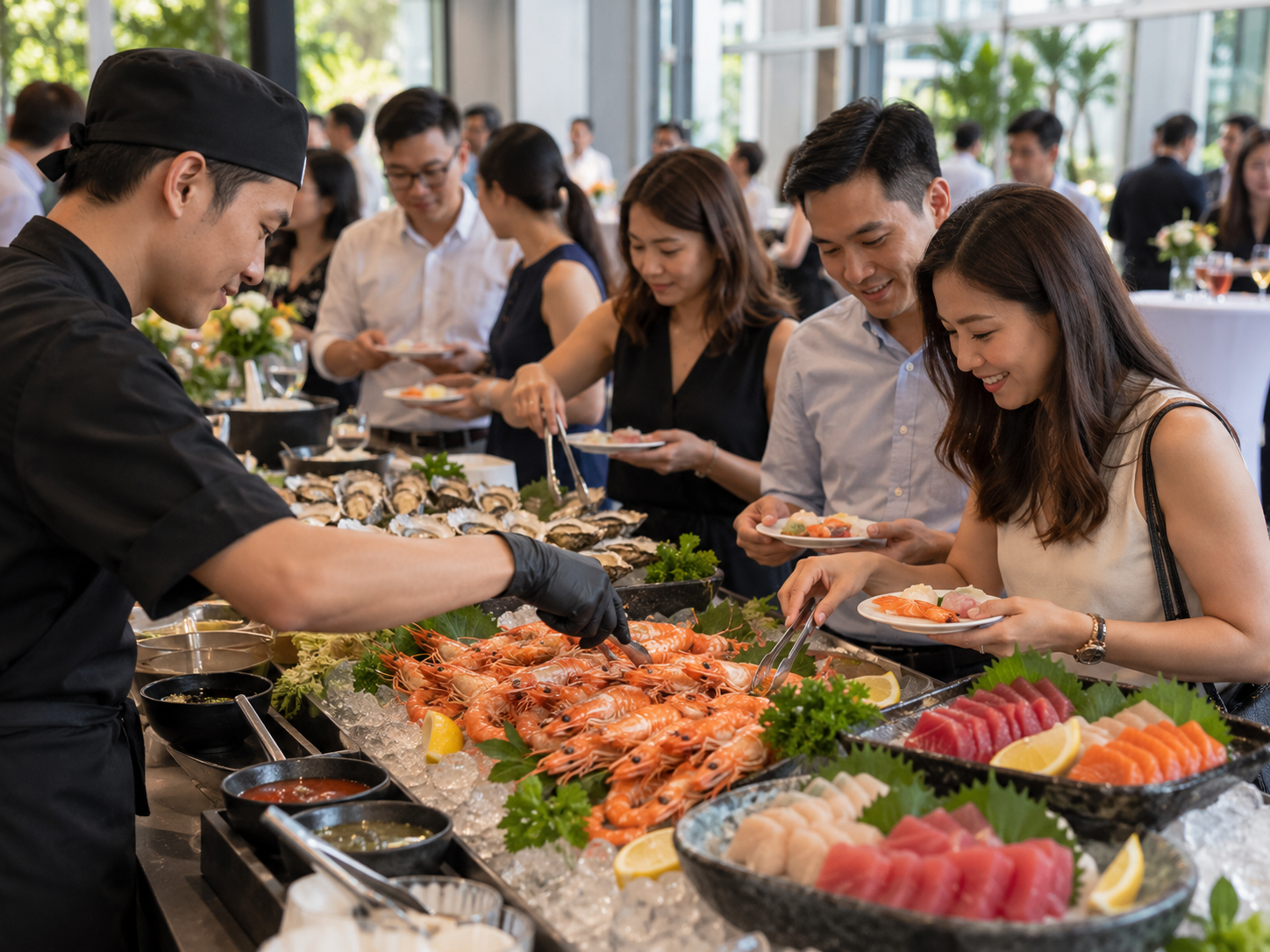
In a condominium function room, the seafood table may sit between drinks and a buffet. At a wedding, it might share attention with a roast-carving station. Neither arrangement works if guests cross the food-preparation area to collect a plate.
Allow a clear approach, collection point and exit path. Keep staff replenishment separate. If guests peel prawns, provide a convenient shell-disposal point away from clean food. For sashimi, portioning by trained staff can limit guest handling and help manage replenishment.
If oysters are also on the menu, their shucking and service need separate planning. Our live oyster bar guide addresses those specific requirements.
Keep labels, condiments and utensils clear
Cooked prawns may come with a suitable dip or citrus; sashimi may be paired with soy sauce and wasabi. Keep condiments stable and easy to replenish, positioned so guests do not reach across exposed seafood. Separate utensils are essential.
Label dishes accurately: “cooked chilled prawns” and “raw salmon sashimi” communicate more than “premium seafood”. Identify relevant allergens, including crustaceans and fish, without promising an allergen-free environment unless that can genuinely be assured. Offer a clearly labelled non-seafood alternative.
Simple signage also improves flow. Guests can choose quickly instead of touching food or asking staff to identify every item.
Pair the seafood course with the rest of the menu
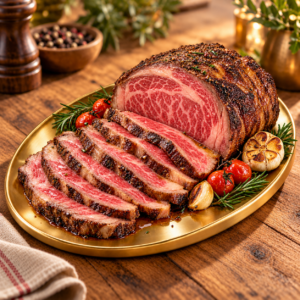
Chilled seafood works best when it contrasts with the main course. A beef roast offers richness; cooked prawns bring a lighter opening. Sashimi can be a delicate starter before carving and sides. But a BBQ already featuring several prawn dishes may not benefit from another large prawn platter.
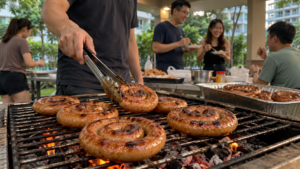
Decide whether you need a staffed seafood point, a delivered ready-to-serve course or no separate station. Our overview of Singapore live food stations explains how stations shape the guest experience. If prawns are already on the grill, our BBQ prawn timing guide helps assess the overlap.
Past De’Vour menus show that seafood, roasts and local sides can share a celebration. The goal is not to include every premium ingredient, but to give each dish a purpose.
Check the venue’s limits before confirming
Ask about loading bays, lift bookings, food-preparation permissions, table dimensions, power and waste removal. Some venues prohibit particular live stations or require approved vendors. An HDB home has different practical limits from a clubhouse or corporate venue.
Confirm the actual chilled holding plan, not merely a promise to bring ice. Agree on service start and end times, crockery, staffing and how delays will be handled. A seafood course that starts too early creates avoidable quality and food-safety risks.
Also clarify who manages the food while the host greets guests. As our chef-led versus DIY BBQ guide explains, responsibility should be assigned before the event begins.
Questions to ask before ordering chilled seafood
Ask what each seafood item actually is, whether it is cooked or raw, and how portions are defined. For sashimi, confirm suitability for raw consumption, sourcing and applicable regulatory compliance. Ask how chilled transport, holding and replenishment will work, who handles the food and what alternatives are available for guests unable to eat seafood.
Confirm the stated consume-by time and the plan if service is delayed. Do not assume leftover raw seafood can safely be taken home. Follow the operator’s food-safety instructions.
Frequently asked questions
Is cooked chilled seafood always safe?
No. Cooking reduces important risks, but cooked seafood still needs hygienic handling, chilled storage and allergy precautions. It cannot sit on a room-temperature buffet indefinitely.
Can sashimi and cooked prawns share a station?
They can form part of one coordinated service only with appropriate segregation, dedicated utensils and safe temperature control. Check whether the venue and operator can support that arrangement.
How early should chilled seafood arrive?
Plan around actual serving time and setup needs. SFA recommends that catered food arrive at most one hour before the meal. Equipment setup for a staffed station may be scheduled separately.
Should every guest receive sashimi?
Not automatically. Check who wants raw fish, who should avoid it and how the seafood fits the rest of the meal. Cooked and non-seafood alternatives may serve a mixed crowd better.
Make the seafood course feel effortless
A memorable Singapore event does not require the biggest seafood display. It needs food suited to the guests, held at appropriate temperatures and served in good condition. Cooked prawns and sashimi both have a place, but sourcing, preparation, guest suitability and service should drive the choice.
When discussing an event with De’Vour, share the guest count, venue, serving time, other dishes and dietary requirements. We can discuss which seafood format, subject to suitability and availability, makes sense alongside the feast. Plan the service first; let the presentation follow.