A familiar Singapore drink can become the most welcoming station
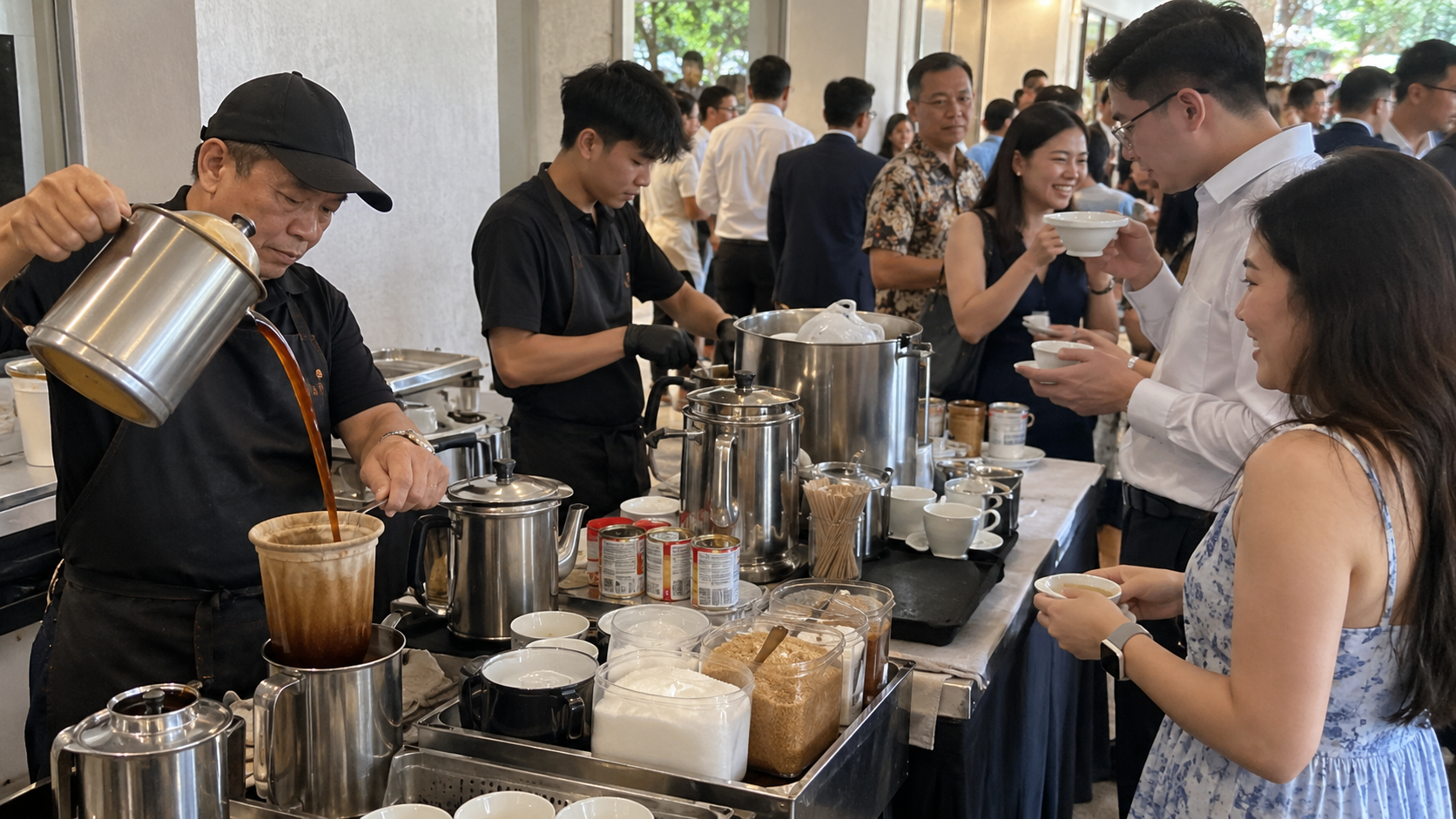
A live kopi and teh bar feels different from a table of bottled drinks. Guests can ask for the coffee or tea they enjoy, watch the drink being prepared and take a moment to chat. That familiarity can be a useful feature at weddings, workplace gatherings and family celebrations in Singapore, where some guests want a strong hot drink while others prefer something lighter. It adds a recognisably local touch without needing an elaborate hotel-style setup.
But the success of a drinks station has very little to do with decoration. Cups, hot water, ingredient storage, queue flow, serving pace and clean-up determine whether the experience feels thoughtful or chaotic. A practical station is designed as a working service point first and a visual attraction second.
Decide what the station should actually serve
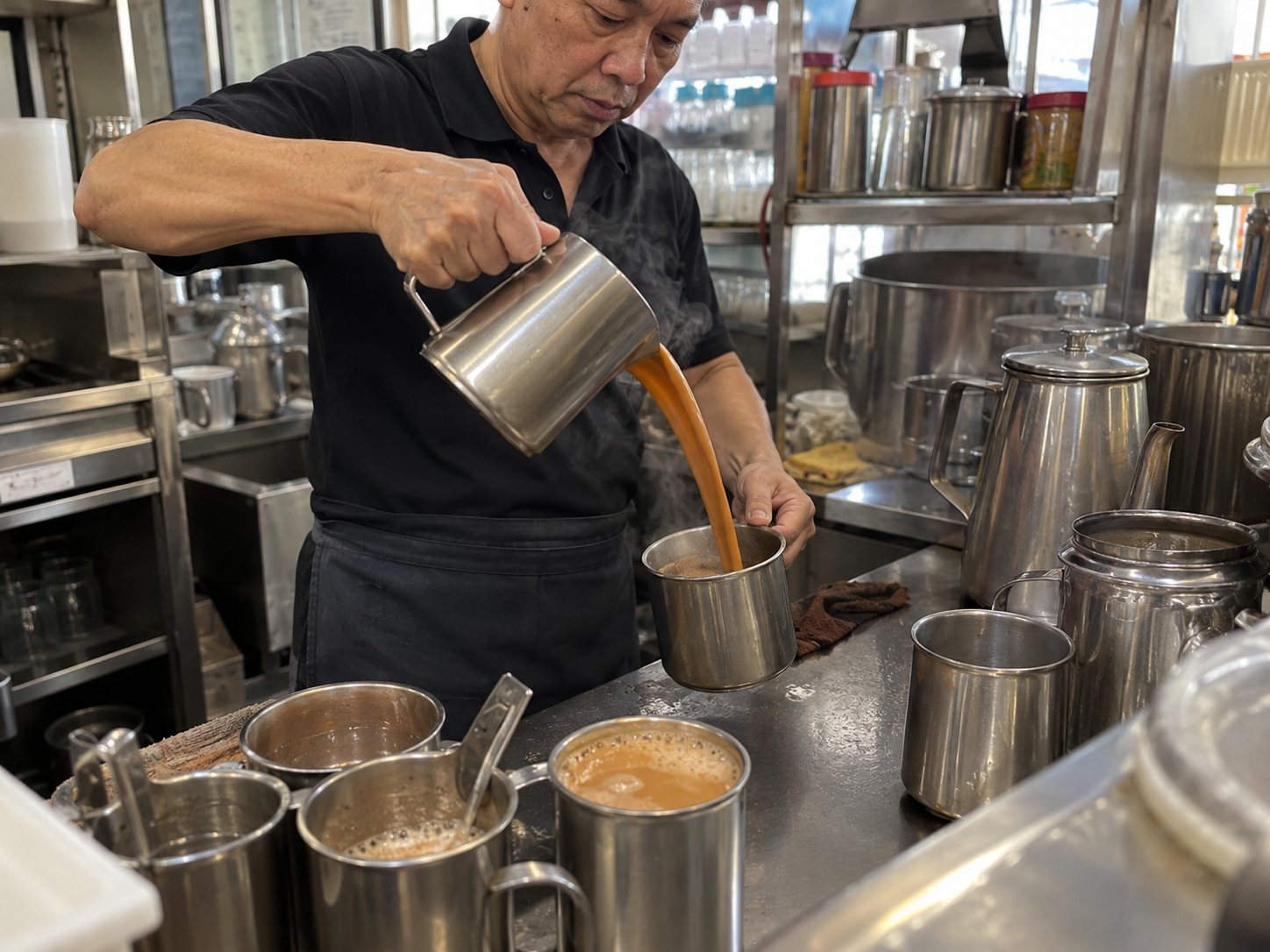
Start with a manageable menu rather than every possible kopi-shop variation. Core options might include kopi and teh, together with agreed variations such as less sugar or without milk, depending on the ingredients and equipment the operator can reliably support. Confirm the precise drinks and dietary alternatives with the service provider; do not assume every style of coffee or tea is included simply because a station is described as a kopi bar.
A limited menu helps staff work faster, keeps the equipment footprint smaller and reduces guest uncertainty. The best menu is one that visitors can understand at a glance. An event with many overseas guests may benefit from plain-English descriptions of the choices rather than a long unexplained list of local terminology.
Choose the right role in the event
A kopi bar can operate as a welcome drink, a post-meal station or a relaxed corner that runs during an event. Those are different services. If it is part of guest arrival, the first wave might all arrive within ten minutes. If it begins after dinner, guests will come in smaller bursts but may expect their drinks immediately before leaving. Decide the role before deciding the staffing.
Consider the guest mix too. At an afternoon community gathering, a warm beverage could be appreciated throughout the session. At a busy wedding reception, the station might work best slightly away from the main buffet and photo area. Guests should not have to choose between collecting drinks and blocking an important walkway.
Calculate the demand in waves
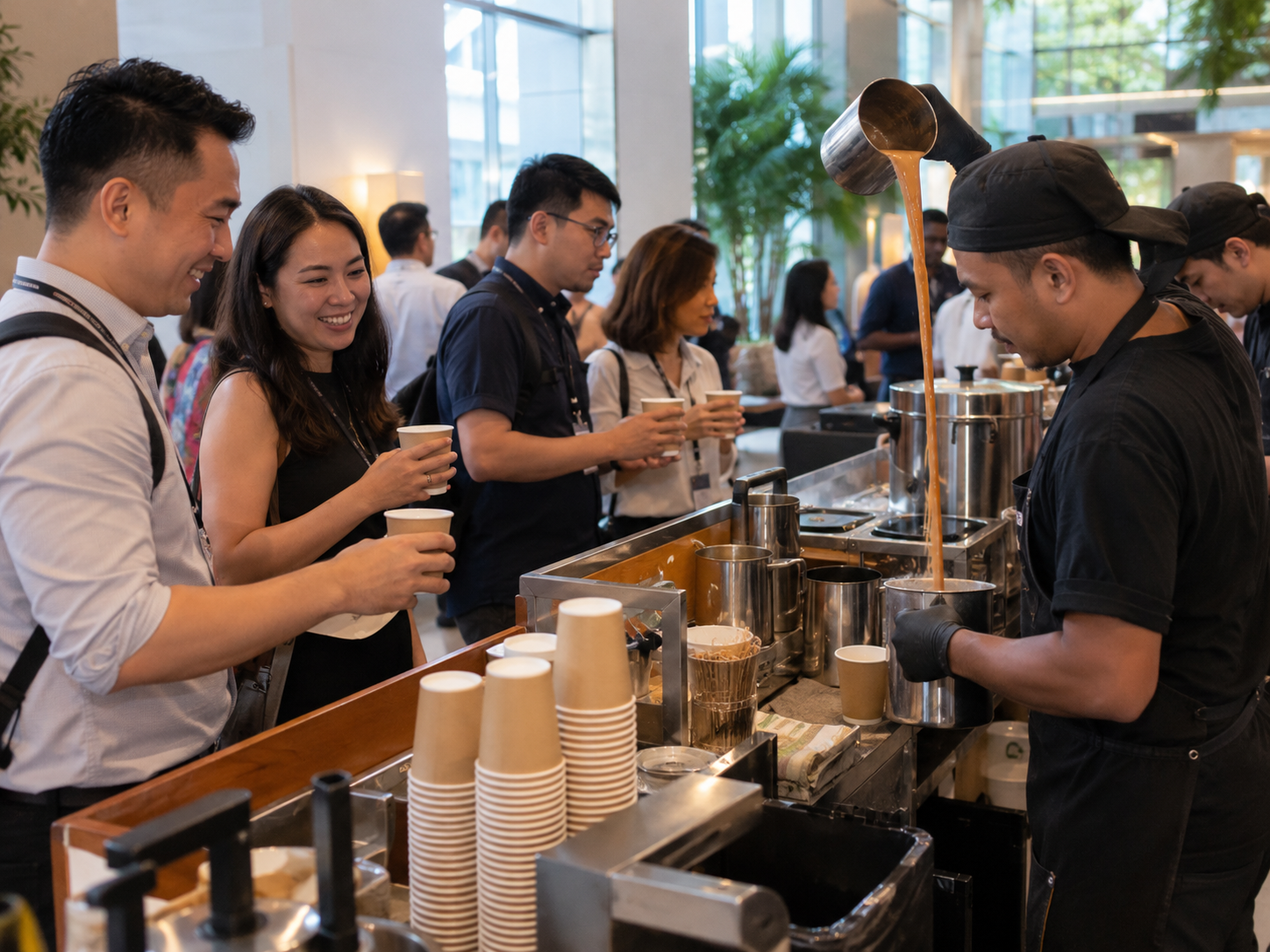
Headcount alone is not a full drinks plan. Fifty attendees may not all want coffee, and those who do may not order at the same time. Estimate how many people are likely to approach the bar during its busiest fifteen minutes and how complex each drink will be. Drinks with additional steps will slow the queue even when the total number of cups is modest.
For a conference break with a fixed return time, advance planning matters more than a lengthy menu. Service can be staged so the station is ready when the break begins. In a casual family setting, guests may spread their orders across the afternoon, giving the team more flexibility. Ask the provider what throughput is realistic for the selected setup rather than guessing a number of cups per hour.
Position the station where it can actually work
A drinks station needs room for a worker to prepare beverages, somewhere to place cups and ingredients, an accessible collection point and a clearly defined guest approach. It should not obstruct a door, lift lobby or the route to a hot-food station. Consider where used cups and rubbish will go; the station is still operating after the drink has been handed over.
In a function room or office pantry, the ideal location may be a simple wall-side table with suitable access rather than a prominent central island. For outdoor events, consider shade, rain protection and the venue’s power and water arrangements. A compact, tidy setup can look more inviting than a large display with poor traffic flow.
Hot drinks require proper equipment planning
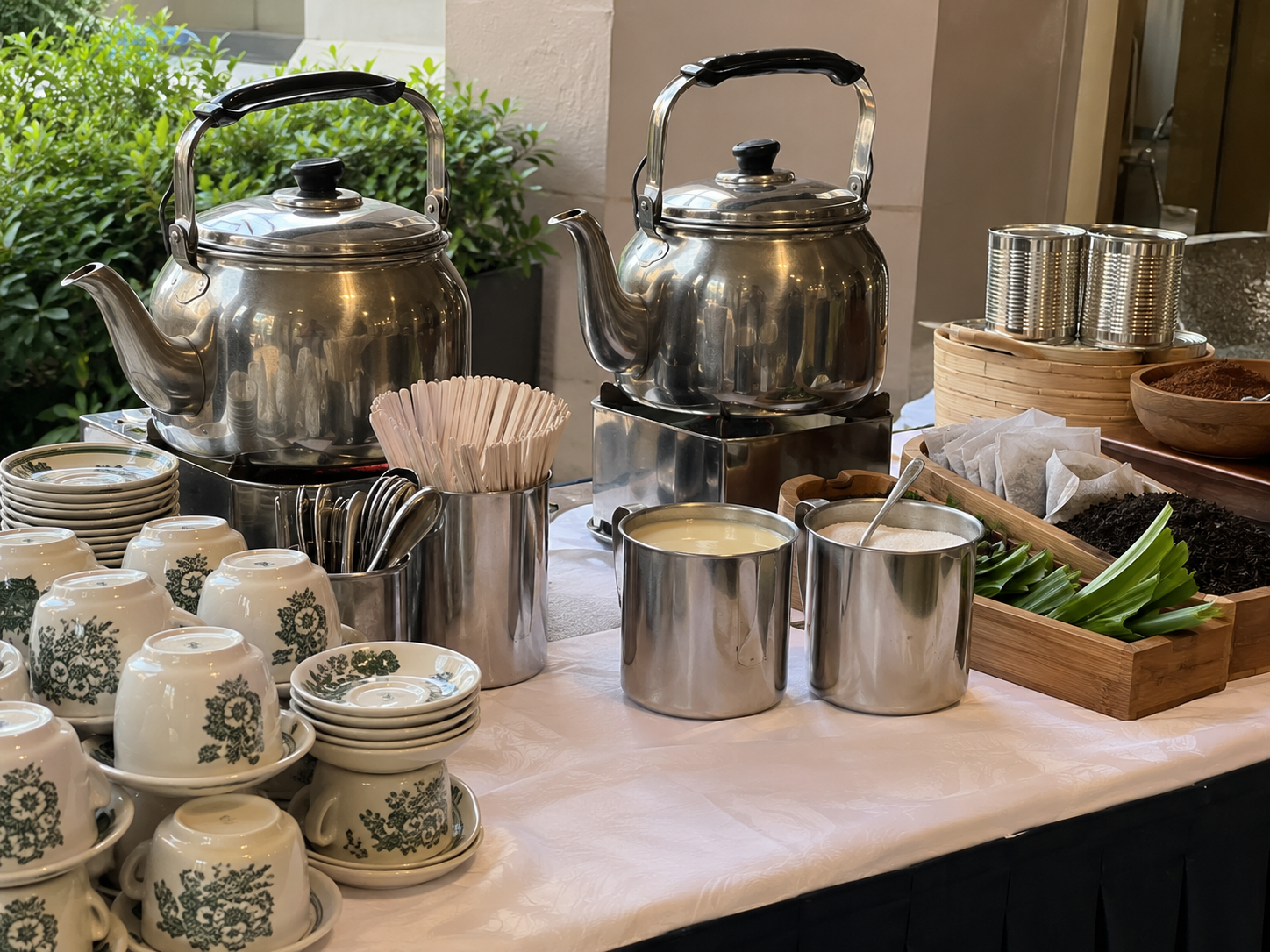
Producing hot drinks safely means planning for sufficient hot water, stable equipment, safe cable routing when electrical devices are used and protection against spills. The venue may restrict kettles, boilers or other equipment, and not every outdoor area offers dependable power. Ask what the operator will bring and what the venue or organiser is expected to provide.
Keep guests from reaching across the working area to collect drinks. Separate the point where orders are taken from the location where freshly prepared hot cups are handed over, where space permits. This helps prevent accidental knocks and makes it easier for staff to manage the next order.
Milk, sugar and dietary requests need clear answers
A local coffee menu often involves different combinations of milk and sugar. Some guests avoid dairy, others watch their sugar intake, and some simply prefer tea without additions. Specify which alternatives are genuinely available and how they will be handled. If non-dairy options are offered, ask how the ingredients are stored, served and kept separate from other products as necessary.
Clear labels are better than improvising at the counter. The organiser can collect general menu preferences in advance, but should avoid collecting or displaying more personal dietary information than needed. A provider cannot guarantee the absence of allergens without appropriate controls, so any specific allergy requirements should be discussed directly before the event.
Make the ordering process visible
If a station has ten people waiting and no one knows where to order or collect, it quickly looks more crowded than it is. A simple menu and one clear handover point do much of the work. At larger gatherings, one person can take or coordinate orders while another prepares beverages, if staffing and space allow. The aim is to prevent guests from clustering around the equipment.
At a busy event, a short list of popular options can help move the line. If the station makes personalised variations, make sure those requests reach the preparer clearly. Repeating every order three times slows service and increases mistakes. Keep the system low-tech if that fits the gathering; good communication is more important than elaborate ordering tools.
Coordinate drinks with food, not against it
Serving hot drinks during the exact moment the buffet opens can create competing queues. Guests may carry a plate in one hand and a hot cup in the other, which is uncomfortable and increases the chance of spills. Consider opening the kopi bar before the food, after the main eating period, or at an independent corner with comfortable circulation.
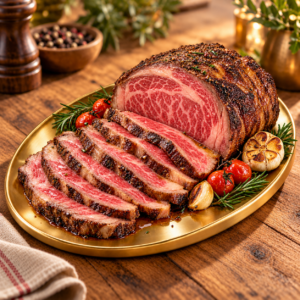
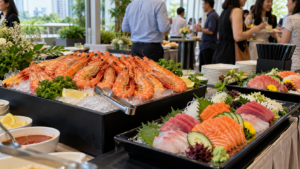
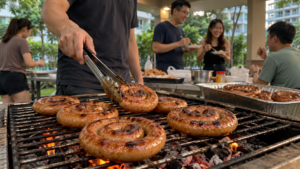
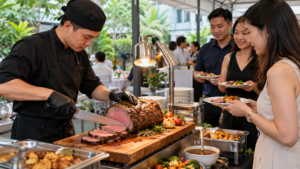
Pairing drinks with a small snack counter can work, but only if the serving points do not interfere with each other. Where roast carving, seafood and satay live stations are also planned, sketch the guest journey from arrival through eating and drinks. Each counter needs enough room to operate independently.
Plan for local weather and the actual venue
Singapore weather changes how people use the station. An outdoor setup must account for rain, wind, humidity and the comfort of staff working near hot equipment. A tent or awning is not automatically an approved place for every heating device. Check venue rules and agree on a safe wet-weather plan before the event begins.
For indoor venues, confirm access hours, loading arrangements and building restrictions. An operator who can begin setup only when guests arrive may struggle to serve the first crowd on time. Share a realistic event schedule with the provider and identify one point of contact who can make decisions if the programme changes.
What should the organiser provide?
Ask exactly what the service includes. The preparation team might bring cups, ingredients, beverage equipment and staff, while the organiser may need to supply a table, electricity, water access, waste bins or shelter. The arrangement varies by provider and venue. It is better to clarify every operational item than to assume ‘live station’ means that nothing else is required.
Disposables also deserve attention. Decide if takeaway-style cups are appropriate, whether lids are necessary and where guests can leave used items. If the event prefers to minimise waste, discuss practical alternatives early; they may affect service pace and the equipment needed.
A wedding reception is different from a corporate break
At a wedding, guests may use a kopi and teh station as a social stop between activities. There could be a quiet period followed by a rush when a programme ends. At a corporate break, everyone may have fifteen minutes and then return to their seats. The second setting usually places more pressure on throughput and predictable preparation time.
At an intimate home gathering, the attraction may simply be the convenience of having someone make familiar drinks while family members catch up. A smaller station and shorter menu may be appropriate. Tailoring the service to the occasion creates a better guest experience than copying the same package for every event.
Questions to ask before booking
Before confirming a live kopi bar, ask: Which drinks can the operator make? Are hot and iced drinks both possible or only selected types? How many staff will attend? What are the service hours, setup requirements and power needs? Who supplies cups and manages the rubbish? Can the venue accommodate the equipment safely? What happens if guests arrive in one large group?
Also clarify how changes are handled. A difference in guest count, a delayed dinner or a moved station position may affect service. Share venue access instructions and programme timings in writing so the team can plan before arriving.
Keep the experience recognisably Singaporean and straightforward
The appeal of a kopi bar is not a giant decorative arch or an overproduced backdrop. A clean counter, a clear menu, familiar drink options and a friendly person making them can be enough. Guests remember whether their drink arrived comfortably and tasted as expected, not how expensive the setup looked.
De’Vour offers live local drinks stations alongside other event food services. For a gathering that includes multiple counters, it helps to plan the beverage bar as part of the whole event rather than as a separate afterthought. Read our guide to planning free-flow coffee and tea and our guide to guest flow at a live oyster bar for related service considerations.