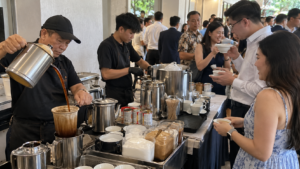
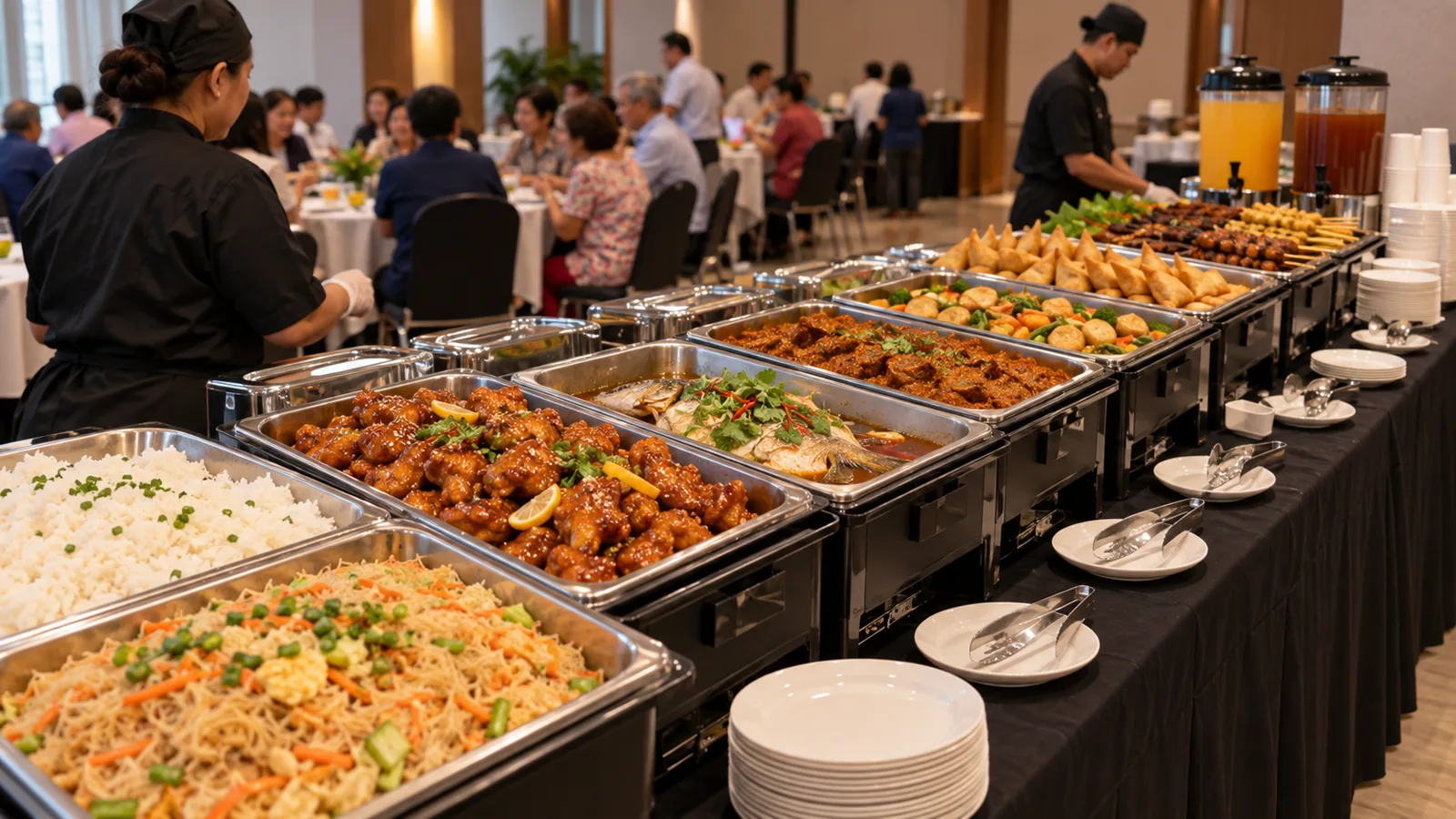
One De’Vour order for 60 people included fried bee hoon, rice or nasi lemak, sticky lemon chicken, Hong Kong-style steamed fish, chicken rendang, sayur lodeh, braised egg tofu with mixed vegetables, samosas, cooked chicken and beef satay, two 10-litre drink canisters, disposable wares, serviettes, rubbish bins and rubbish bags.
The food was only one part of the order. The rest made it possible for 60 guests to eat and for the venue to function afterwards. If you are comparing service formats, our guide to buffet versus bento catering in Singapore explains when each approach fits an event.
Begin With More Than One Carbohydrate
Fried bee hoon and rice gave guests two familiar starting points. Offering both is useful for a mixed crowd because not everyone wants the same base.
The quantities also do not need to equal the total headcount individually. When two carbohydrates are available, guests divide themselves between them and some take a small portion of each.
Planning each carbohydrate for all 60 guests would usually create unnecessary excess.
Use Mains With Different Flavour Profiles
Sticky lemon chicken, steamed fish and chicken rendang served different purposes.
Sticky lemon chicken offered a sweet and familiar choice. Steamed fish gave the table a lighter protein with a different texture. Chicken rendang provided a richer, spiced dish that paired naturally with rice.
Although two dishes used chicken, they did not taste or eat the same way. Variety came from preparation and sauce, not only from changing the protein.
Vegetarian Dishes Need to Feel Complete
Sayur lodeh and braised egg tofu with mixed vegetables gave guests more than a token tray of greens.
They also contributed different textures and sauces for the whole group. Even guests who were eating meat could use these dishes to balance their plates.
Organisers should still confirm whether a dish is strictly vegetarian and whether the preparation uses meat-based stock, seafood seasoning or shared utensils. The menu name alone is not enough when a guest has a firm dietary requirement.
Finger Food Helps the Buffet Flow
Samosas and cooked satay gave guests items they could take easily without building a full plate immediately.
This is useful when people arrive at different times. Early guests can start with a small bite while the organiser waits for the full group before encouraging everyone towards the main buffet.
The order contained 50 chicken and 50 beef satay sticks. Because satay was only one part of a much larger menu, it did not need to provide several sticks for every guest.
Twenty Litres of Drinks Is a Planning Decision
Two 10-litre canisters provided 20 litres in total. Divided evenly across 60 guests, that works out to about 333 millilitres per person.
Whether that is enough depends on the event duration, room temperature and whether bottled water or other drinks are also available. A short indoor meal needs less than a long outdoor event.
Drink quantity should be calculated rather than added as an afterthought.
Disposable Wares Must Match the Menu
Plates, spoons and forks need to suit the food being served. A menu containing rice, noodles, curry and tofu cannot rely only on small plates or forks.
The organiser also needs serving utensils for every tray. Guest cutlery and buffet serving tools are separate requirements.
Serviettes should be positioned at more than one point so guests do not have to walk against the queue after collecting food.
Waste Handling Is Part of Catering
Rubbish bins and bags rarely appear in menu photographs, but they become essential once 60 people begin using disposable plates and cups.
Without an obvious disposal point, used wares accumulate on tables and the venue becomes difficult to manage. The organiser should confirm where rubbish can be collected and who is responsible for removing it after the event.
Think About the Order of the Buffet
A practical buffet line normally begins with plates, followed by carbohydrates, vegetables, proteins and smaller sides. Drinks can be placed separately so guests pouring beverages do not stop the food queue.
Satay sauce and other condiments should sit close to the relevant food but not in a position where one person blocks the entire line.
For 60 guests, access from both sides or a second serving point may be useful if the venue allows it.
A Complete Order Removes Jobs From the Organiser
The clearest sign of a complete buffet is not the number of dishes. It is how few missing items the organiser has to solve before guests arrive.
This order covered carbohydrates, several mains, vegetable dishes, finger food, drinks, eating utensils and waste handling. Each component supported the same goal: allowing 60 people to eat comfortably without turning the organiser into the caterer.
For buffet and event catering in Singapore, De’Vour can help plan the food, quantities and practical service requirements around your guest count and venue.