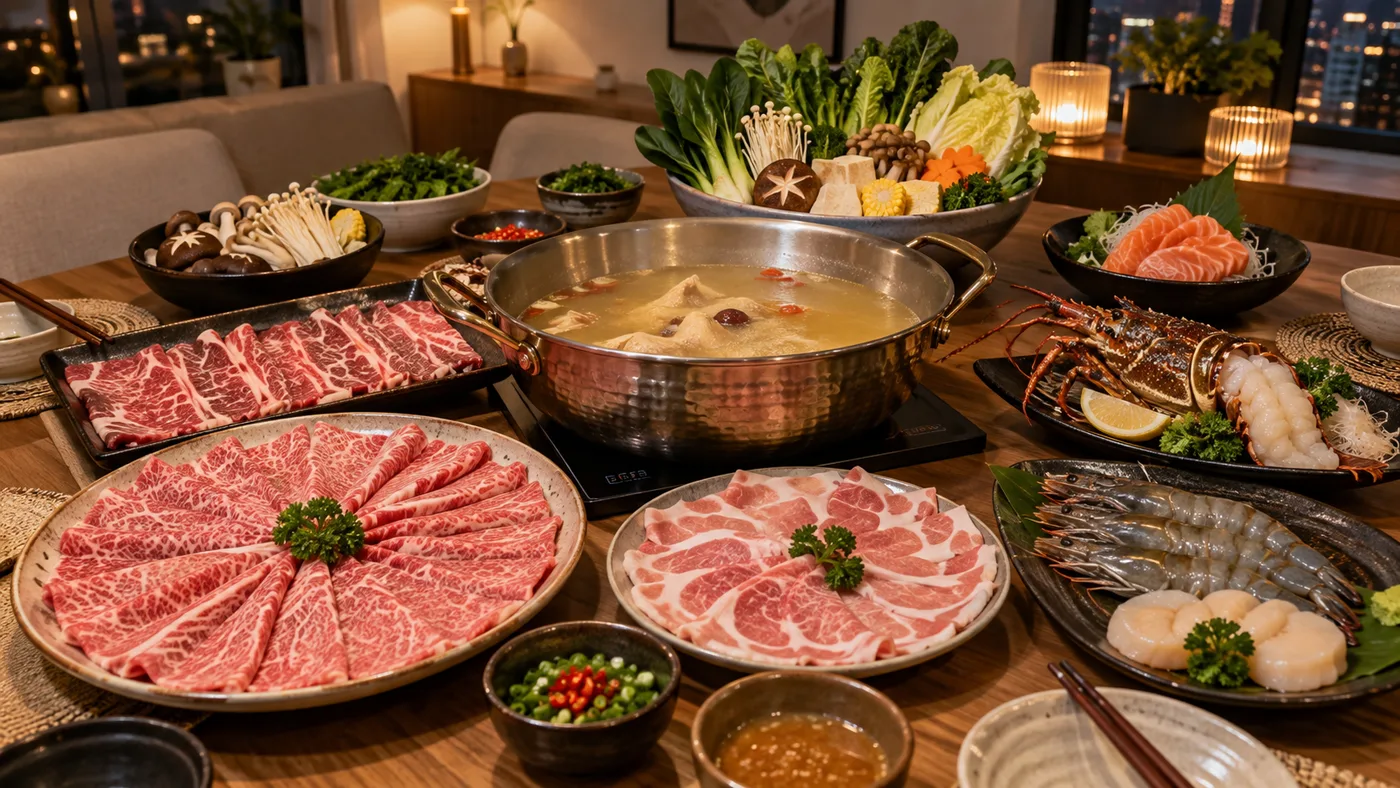
A hotpot dinner can be as simple as sliced meat, vegetables and broth. But once the table includes A5 Wagyu, beef short ribs, Iberico pork, lobster, prawns, scallops and salmon, planning matters just as much as buying premium ingredients.
One De’Vour order from August 2026 brought all of those elements together for a home meal. It was not a restaurant package copied into someone’s dining room. It was a carefully balanced selection designed so that each ingredient had a reason to be on the table.
Start With the Broth, Not the Most Expensive Meat
The order used De’Vour’s golden chicken collagen soup as its base. That choice affects everything else.
A rich but clean chicken broth works with beef, pork and seafood without forcing them to taste the same. It has enough body to support Wagyu and short ribs, but it is not so heavily spiced that lobster, prawns or salmon disappear.
When planning hotpot catering in Singapore, begin with the broth profile. A very spicy broth may suit robust beef and offal, while a lighter collagen or chicken broth gives a mixed premium spread more flexibility.
Why Use More Than One Kind of Beef?
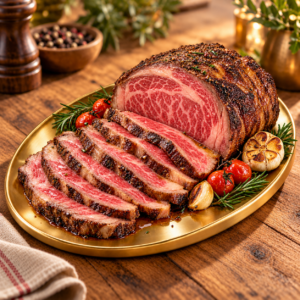
This order combined Miyazaki A5 Wagyu striploin with USDA Choice boneless short ribs.
The Wagyu provides intense marbling and richness. It should be sliced thinly and eaten in smaller amounts. The short ribs have a firmer beef texture and can stay in the broth slightly longer without losing their character.
Using two beef cuts is not about making the table look more expensive. It creates two different eating experiences. Guests who enjoy very rich meat can take a few slices of Wagyu, while others may prefer the more familiar bite of short ribs.
Iberico Pork Adds a Different Kind of Richness
Iberico pork collar brought another layer to the menu.
Pork collar has a balance of lean meat and fat that works well in hotpot. It is rich, but it does not taste like another version of beef. Its texture also changes differently in the broth, giving guests more variety without requiring a long list of sauces or marinades.
For mixed groups, this kind of contrast is useful. A good hotpot table should not be six trays of ingredients that all eat the same way.
Seafood Needs More Careful Timing
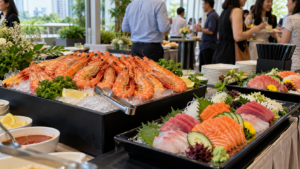
The seafood selection included spiny lobster, Argentina shrimp, scallops and salmon sashimi-grade slices.
These ingredients do not share one cooking time. Lobster takes longer than a thin slice of salmon. Large shrimp need enough time to turn opaque throughout, while scallops can become firm if they are forgotten in the pot.
A simple cooking order helps:
- Cook lobster pieces first so they have enough time.
- Add large shrimp next and remove them once properly cooked.
- Cook scallops briefly in a strainer or ladle so they are easy to retrieve.
- Swish thin salmon slices gently and serve them immediately.
Premium seafood is often wasted through overcooking rather than poor quality. Keeping each ingredient visible and cooking in smaller batches protects the texture.
Vegetables Are Part of the Meal, Not Decoration
The order also included assorted vegetables and mushrooms, white corn and cheese seafood tofu.
Vegetables make the broth better as the meal progresses. Mushrooms add savoury depth, leafy vegetables lighten rich mouthfuls, and corn contributes sweetness. Seafood tofu is familiar, easy to portion and useful for guests who want something less intense between premium ingredients.
A hotpot menu that focuses only on meat may look impressive when it arrives, but it quickly becomes tiring. Vegetables, mushrooms and tofu are what allow the meal to continue comfortably.
How Much Premium Protein Do You Really Need?
The answer depends on the number of guests and how many categories are served.
If the table includes beef, pork, lobster, shrimp, scallops, salmon, vegetables and tofu, guests do not need a full restaurant-sized serving of every protein. They will take smaller portions across the meal.
It is usually better to provide a sensible amount of several contrasting ingredients than to overload the table with one expensive cut. This also reduces the chance that delicate seafood sits out for too long while everyone focuses on the beef.
Arrange the Table Around Cooking Sequence
Presentation should also make the meal easier to manage.
Place longer-cooking items near the person managing the pot. Keep raw seafood on separate platters. Give sliced meat enough space so guests can lift individual pieces without tearing an entire stack apart. Vegetables can sit farther from the heat because they are easier to share and replenish.
Separate utensils for raw meat and cooked food are essential. A few small strainers and ladles also prevent premium ingredients from being lost at the bottom of the pot.
A Premium Hotpot Should Still Feel Relaxed
The best part of hotpot is that people cook, talk and eat at their own pace.
Premium ingredients should improve that experience, not turn dinner into a complicated tasting menu. A balanced broth, contrasting meats, carefully timed seafood and enough vegetables create a table that feels generous without becoming excessive.
De’Vour can help prepare premium hotpot ingredients for home gatherings in Singapore, including portioning, seafood, sliced meats, vegetables and broth. The goal is simple: give every ingredient a clear role and make the meal easier for the host to enjoy too.