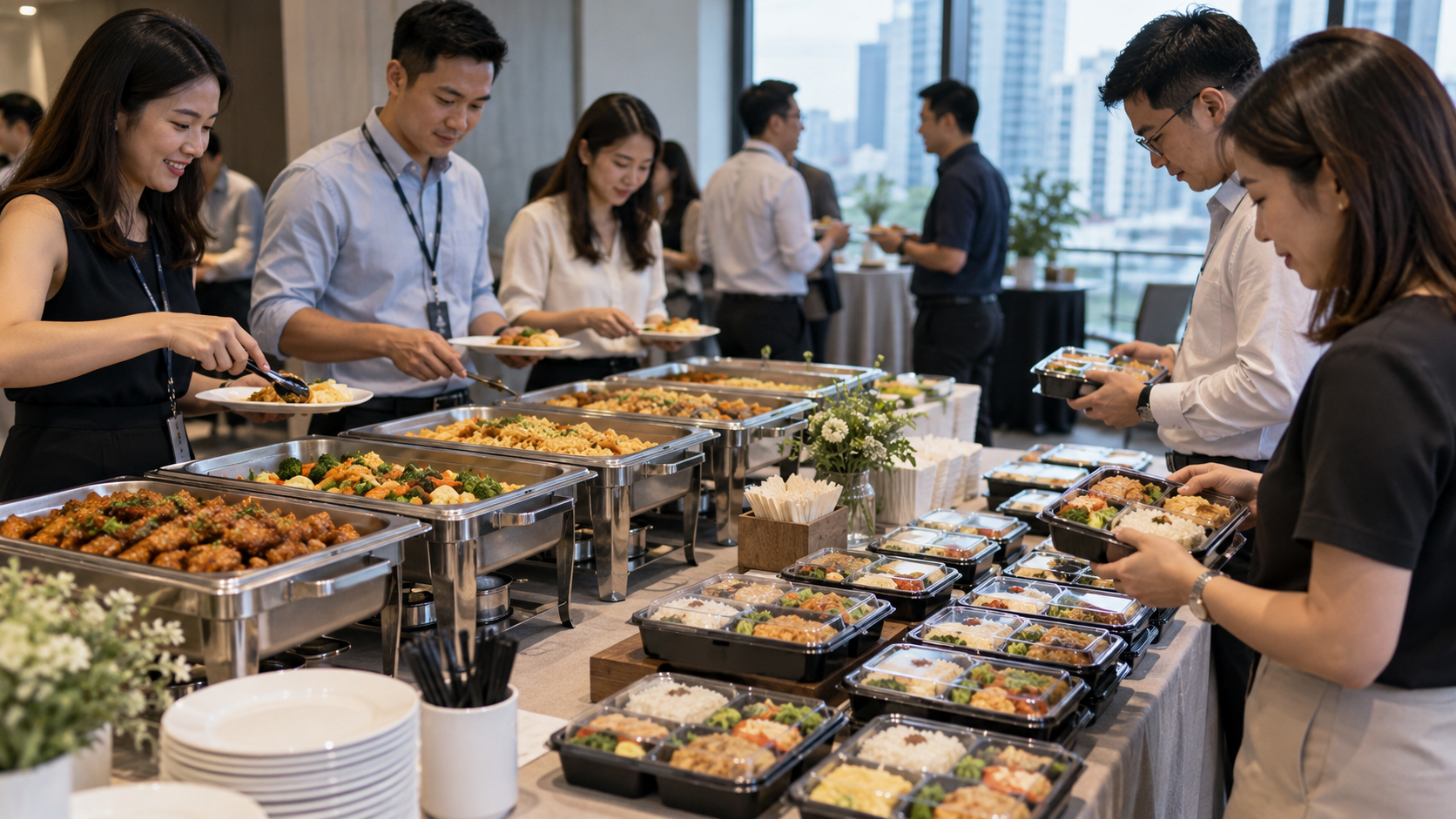
The choice is about how people eat, not just what they eat
When organising food for a Singapore office gathering, family celebration or community event, two familiar options come up: a mini buffet with shared trays, or individual bento boxes. It is tempting to compare only the menu and price per person. Yet the bigger question is how your guests will receive, eat and clear their food. A buffet invites people to help themselves. A bento gives each person a ready portion.
Both formats can work very well. The right one depends on the space available, the time guests have to eat, how much movement the event allows and whether people need specifically allocated meals. Think about the occasion first, then the dishes. That approach helps avoid ordering a format that fights the event rather than supporting it.
When a mini buffet makes sense
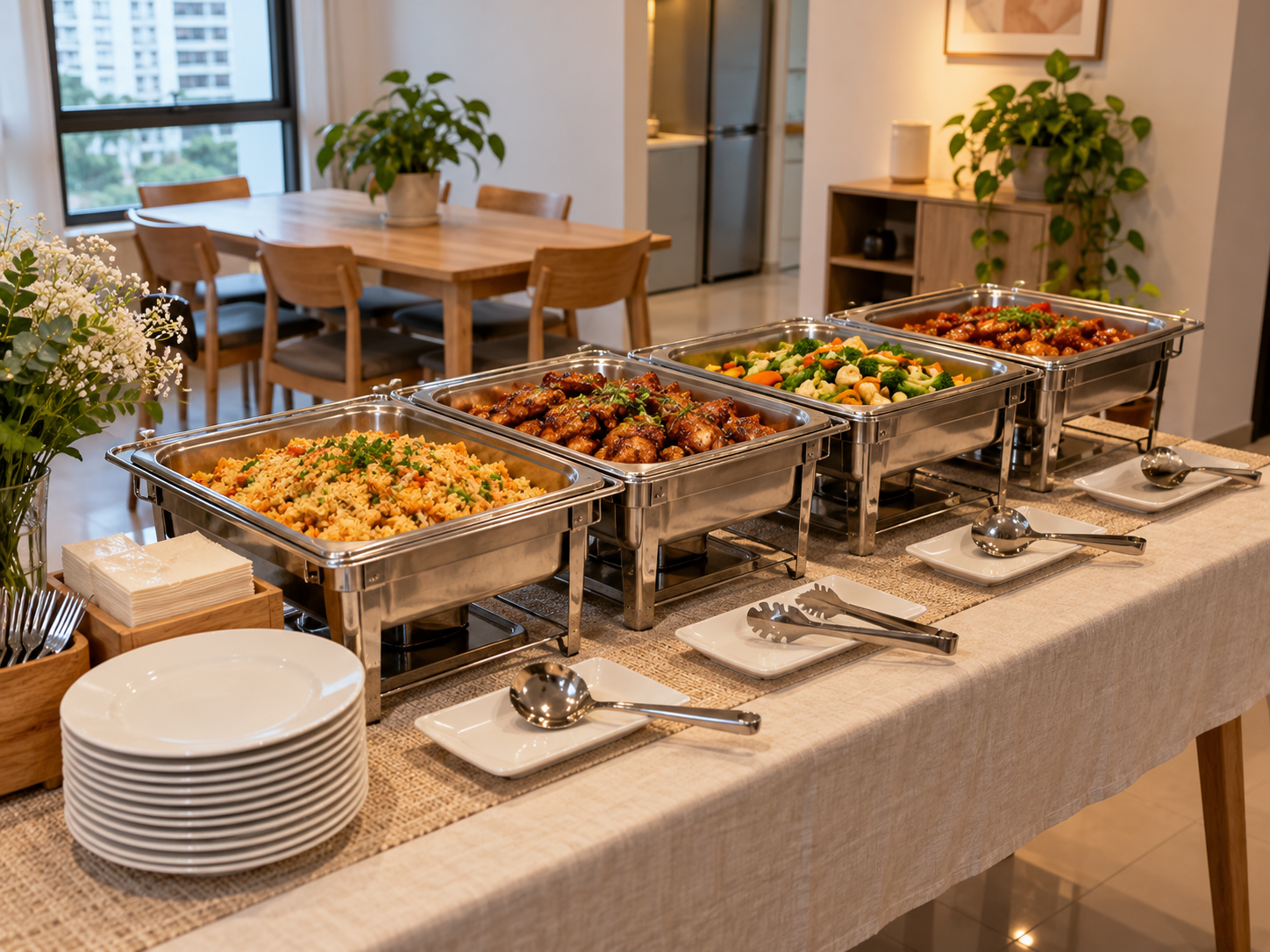
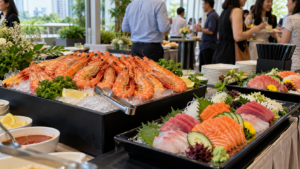
A mini buffet suits gatherings where everyone can share a serving point and eat within a reasonably relaxed window. It works particularly well for homes, small celebrations, team lunches with a common break and group meals where the food is part of the social experience. People can decide whether to take a little more rice, try a second dish or skip something they do not enjoy.
Unlike a formal staffed buffet, a mini buffet may be delivered in trays with a simpler setup. Do not assume tables, warmers, serving staff or disposables are included: confirm the arrangement. The practical advantage is variety and communal dining; the trade-off is that guests need space to move and somewhere to put their plates while selecting food.
When bentos are the better tool
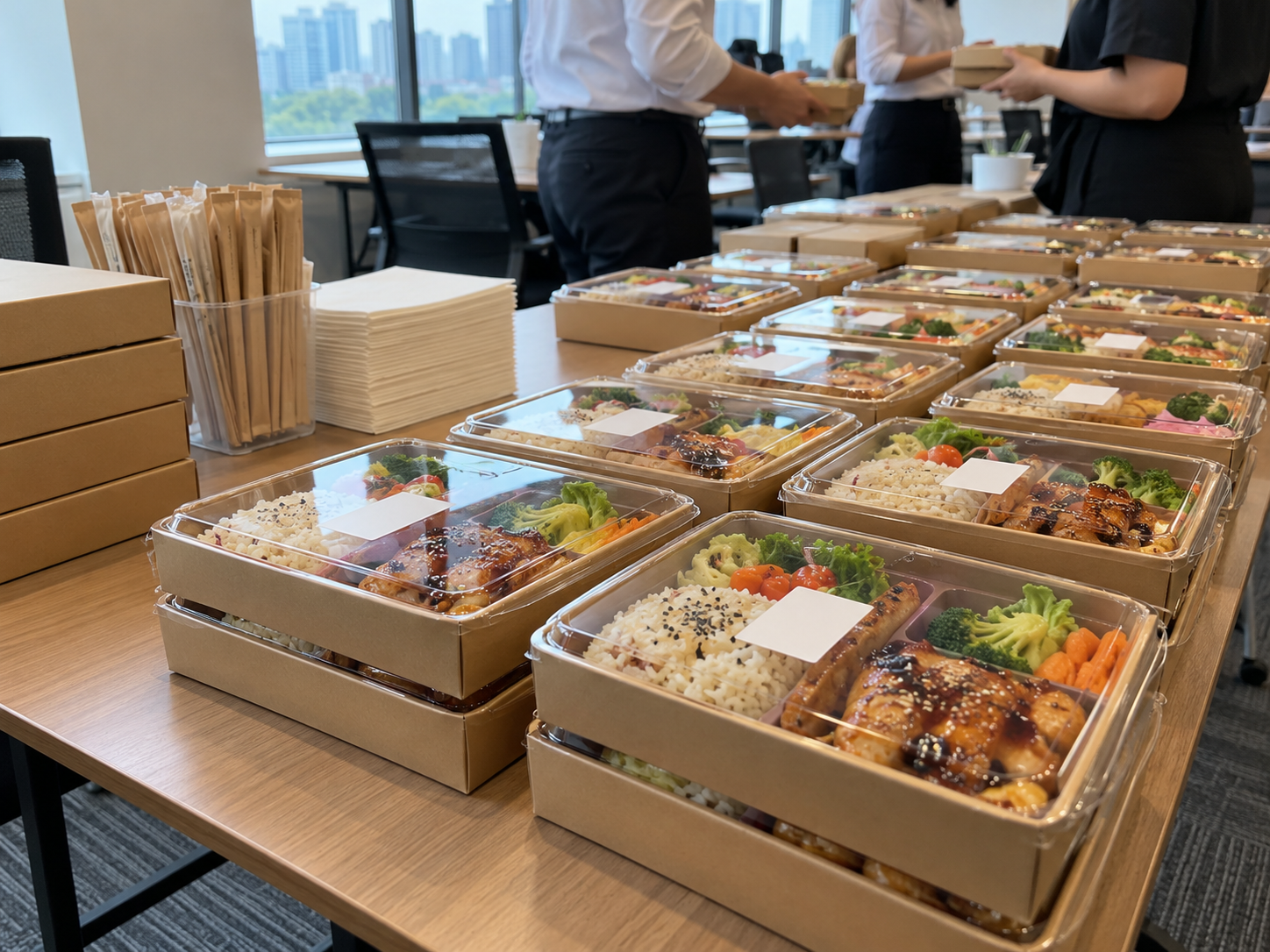
Individual bento boxes make sense when portions must be ready immediately and people cannot spend time queuing. Training sessions, conference programmes, field teams, shift-based lunches and events in rooms without buffet space are good examples. A box can be distributed to each participant with less disruption to a scheduled programme.
Bentos also make it easier to identify a pre-ordered vegetarian or seafood-free choice, provided the meals are clearly labelled and properly managed. They reduce shared serving utensils, although the organiser still needs a sensible distribution table, waste bins and a process for anyone collecting a specific dietary meal.
Space matters more than planners expect
A buffet is not just the width of the food trays. Guests need an approach path, space to pick up a plate, access to serving utensils and room to step away without blocking the next person. In a compact office pantry or HDB living room, placing the food in the wrong corner can create a queue through a doorway.
Bentos require less serving frontage but still need storage and orderly collection. If forty boxes arrive and there is no clear table for sorting them, the organiser ends up searching through stacks while people wait. Walk through the actual room: where will food arrive, where will guests approach, and where can they sit or stand to eat?
Think in service windows instead of just guest counts
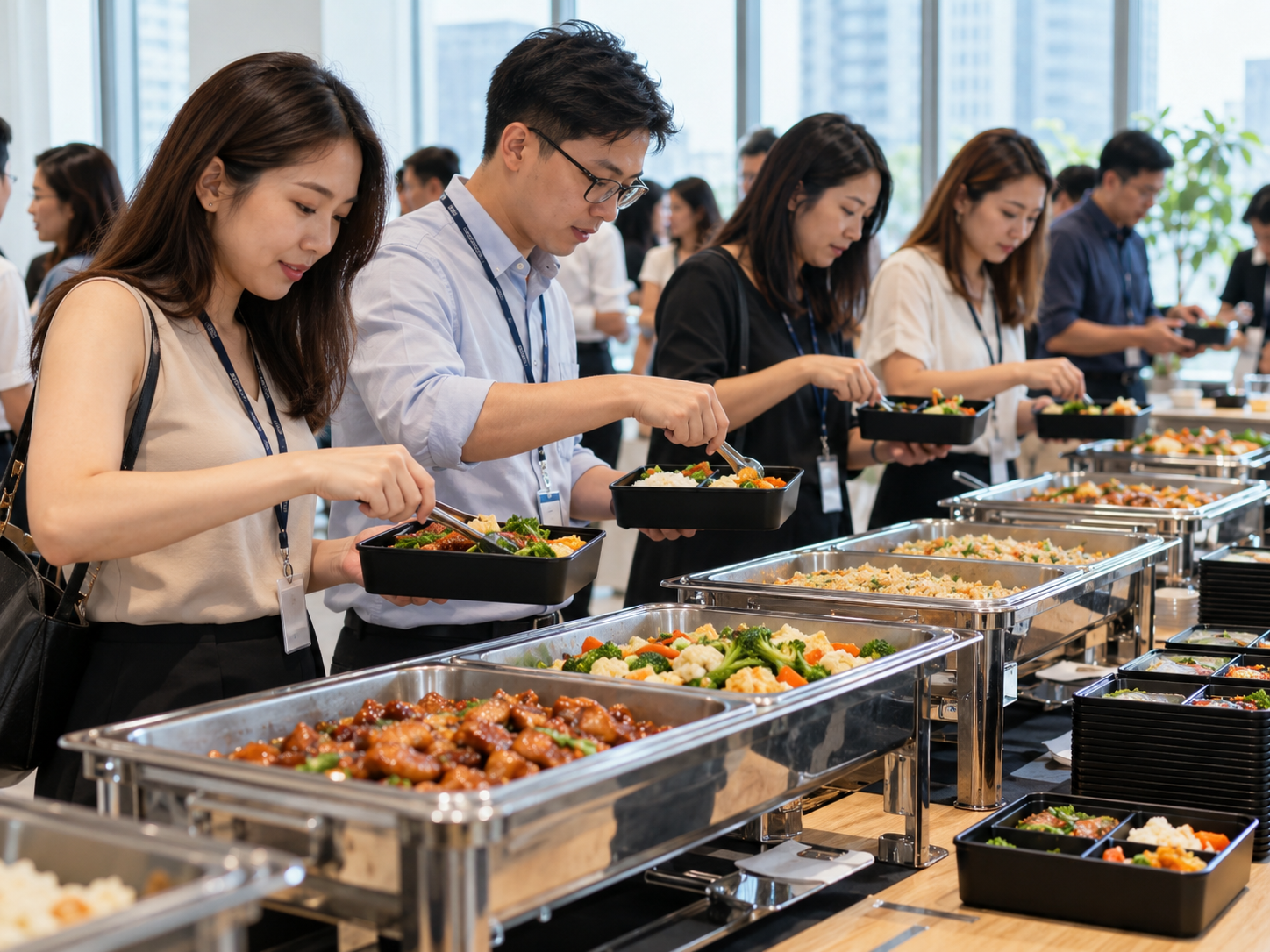
Forty people arriving within five minutes create a different problem from forty people eating across an hour. Mini buffets are most comfortable when guests can move through the serving point in small groups. If your programme has a single short break, a bottleneck can consume a surprising amount of it.
Bentos have an advantage when meals must be handed out at a fixed moment, but box distribution still needs planning. Arrange collections by team, table or dietary group if useful. If guests are arriving in waves, decide whether food can be held safely and appropriately rather than simply leaving all the portions out for the full duration.
Menu variety and portions work differently
A shared mini buffet allows people to make their own combination of dishes. Someone may prefer more vegetables; another may focus on the protein. That flexibility is part of the appeal, but ordering quantities requires judgement. A crowd with many big eaters, children or mixed appetites may not portion itself evenly.
A bento provides a more predictable allocation of each component. That helps purchasing and distribution but offers less flexibility for people who dislike one element. Avoid ordering a box solely because it photographs well; check whether the balance of protein, rice or noodles, vegetables and sides will actually satisfy the intended guests.
Dietary requests are not an afterthought
Ask about dietary restrictions before the final order rather than relying on guests to work around a buffet. A shared spread can offer multiple options, but allergens and cross-contact must still be considered. Separate serving utensils and clearly identified dishes are important; do not describe a meal as suitable for a restriction unless the caterer confirms it.
Bentos allow specifically ordered meals to be allocated, but labelling and distribution are crucial. Keep a straightforward count of the different meal types and who should receive them without exposing personal health information unnecessarily. For groups with several distinct requirements, a hybrid approach—main menu plus selected individually packed alternatives—may be more effective than forcing one format to serve everyone.
Delivery and handover deserve their own plan
Ask what time the caterer can deliver, who will be present to receive the order and where it can be unloaded. A large order is difficult to manage if the building requires registration, there is no trolley route or the lift is far from the dining room. Provide useful access details when ordering.
For a mini buffet, allow time to arrange trays, utensils and serving labels. For bentos, count the boxes by type before distribution and keep the allocated meals identifiable. Do not assume delivery time equals ready-to-eat time. Event planners should schedule a handover window that reflects the physical work needed after the food arrives.
Keeping food in good condition is operational
Singapore’s ambient heat means meals should not be left at room temperature while the organiser finishes unrelated tasks. Follow the caterer’s storage, service and consumption instructions and safe holding guidance. For temperature-sensitive foods, clarify whether hot holding, cold storage or immediate service is required.
The format does not make food safety automatic. A buffet tray that sits too long can be problematic; so can a stack of bentos distributed well after delivery. Keep the eating window realistic, arrange food-handling responsibilities and avoid casually saving leftover portions without appropriate chilling and storage.
What about the amount of packaging?
Mini buffets typically use shared food containers and individual plates, utensils or serving ware. Bento meals place each portion into its own package. The waste profile therefore differs, although the actual environmental impact depends on materials, transport, portions and whether leftovers are eaten.
If reducing waste matters, request only the disposables you need and give guests an obvious way to separate rubbish where the venue supports it. Avoid ordering extra containers by default. For buffets, confirm whether serving spoons are supplied; for bentos, check that the appropriate utensils are included or deliberately omitted if everyone already has access to them.
A small office lunch versus a family celebration
Imagine a team meeting that runs until noon and resumes at 12:45 pm. If there is only a short break and limited pantry space, individually packed meals may make the schedule much easier. The organiser can assign boxes and allow people to eat at their desks or in small groups, provided the workplace permits it.
Now imagine a Sunday family gathering where guests arrive gradually and linger. A mini buffet gives people freedom to assemble their own meal and return for another serving when appropriate. The same dish might be suitable for both settings, but the method of serving changes how relaxed the gathering feels.
A third option: buffet with packed alternatives
The choice need not be all-or-nothing. For some Singapore events, a shared buffet is the simplest main service, while a handful of individual meals accommodate particular dietary needs or guests who cannot queue. It may also be practical to pack a separately arranged portion for someone with an unavoidable timing conflict.
Discuss such combinations with the caterer before ordering. The provider needs enough information to prepare and label everything properly. Never assume a buffet’s leftovers can be divided later into special-diet boxes; specific requirements should be planned during ordering, not improvised at the event.
Questions to settle before placing the order
Clarify the final headcount, serving time, venue access, amount of tabletop space and whether guests have seating. Ask if the service includes setup, chafing equipment, serving utensils, individual cutlery or collection of equipment. Confirm what happens if numbers change and how much notice is needed for dietary alternatives.
Finally, decide who will receive delivery and manage the first ten minutes of service. That one named contact prevents the familiar problem of a courier arriving while everyone is still in a meeting. Keep instructions concise and operational; the food should arrive at a place where it can be used immediately.
Make the serving format work for your guests
At De’Vour, the ideal food arrangement starts with the people and the space. Mini buffets are useful for relaxed communal meals, while individually packed portions often fit fast-moving schedules. Both need realistic quantities, clear delivery information and attention to safe serving practices.
If you are organising a more intimate gathering, see our guide to catering in an HDB flat. For a different angle on accommodating menu alternatives, read how one bento menu can handle a seafood alternative. The most memorable event food is often not the fanciest: it is the meal that reaches guests comfortably, at the right time, without fuss.