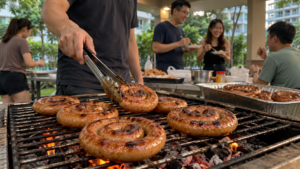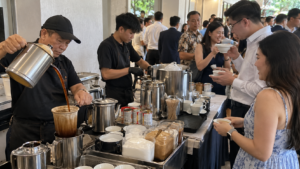
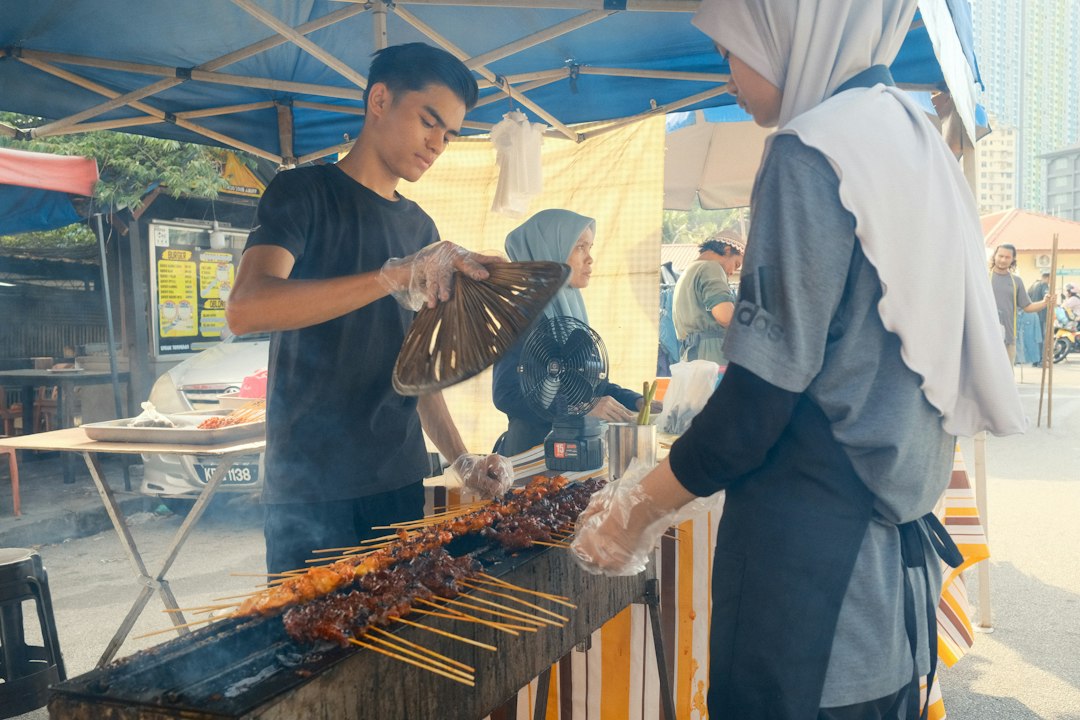
There is a moment at a good Singapore gathering when guests stop talking about the menu and start following the smell. It is usually the charcoal: a warm, smoky invitation drifting from the satay grill. The first skewers come off the fire, someone asks where the peanut sauce is, and suddenly the food station has become a small gathering of its own.
That atmosphere is the appeal of a live satay station. It is not simply a tray of cooked skewers placed on a buffet. It is food prepared and served in view of the guests, with the pace of cooking becoming part of the occasion. Yet the same feature that makes it memorable can also create problems: smoke in the wrong direction, queues across a walkway, meat waiting too long before cooking, or guests arriving faster than a single grill can serve them.
For De’Vour, live satay is an outdoor-only service. This guide explains how to think through the venue, menu, staffing, service timing and food handling before confirming a station. It is general planning advice, not a report of a particular customer event or a promise that every location permits charcoal grilling.
Start with permission to grill, not the guest count
Before asking how many sticks to order, establish whether the venue actually allows a live charcoal station. A private landed-home outdoor area, a condominium function space, a clubhouse and a public park can have very different rules. A space that permits delivered food does not necessarily permit open-flame cooking. Ask the venue management about cooking, smoke, floor protection, waste removal, access for equipment and any required approvals.
For a park gathering, do not assume a portable grill may be placed anywhere. NParks’ park guidance directs visitors to designated barbecue facilities and booking arrangements. For an event with structures or larger attendance, separate venue-booking requirements may apply. Verify the rules for the exact location and date, rather than relying on what another organiser did last year.
At home, a balcony, corridor, sheltered common area or narrow entrance should never be treated as a substitute for an approved outdoor cooking zone. The station must not obstruct an escape route or expose nearby residents to unsafe heat and smoke. If there is no suitable outdoor location, choose ready-cooked satay or another serving format instead of forcing the live-station idea.
Think of the station as three working zones
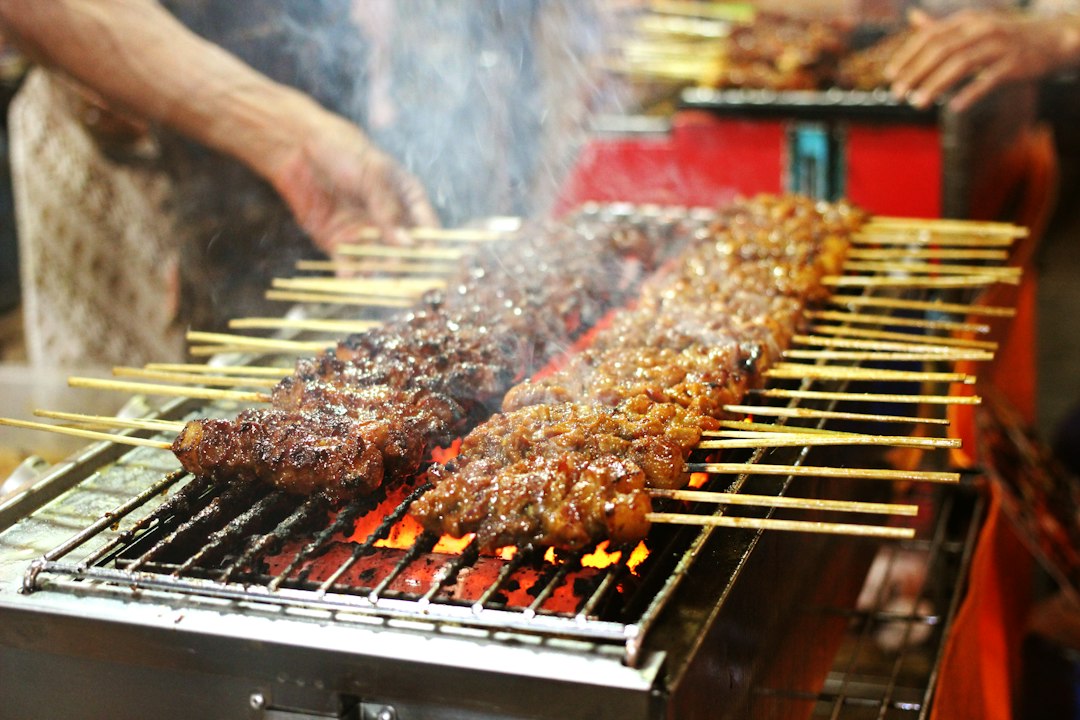
A practical satay setup needs more than the visible grill. First comes a protected preparation and cold-storage area for uncooked skewers. Second is the cooking zone, with heat-safe equipment, tools and enough room for the cook to work without being bumped. Third is the guest-facing collection point, where cooked skewers, sauce and accompaniments can be handed over without people reaching across the grill.
These zones do not need to be enormous, but they must be distinct. Guests should not have to walk through the raw-food area to reach their plates. The cook should not have to step through the queue to retrieve another tray. A clear separation also makes it easier to use different utensils for raw and cooked food, rather than accidentally returning a finished skewer to a surface used for uncooked meat.
Position the collection table beside the grill, not directly in front of its hottest edge. Keep sauces and napkins far enough from the flame to avoid crowding. Place a bin where guests naturally finish eating, but not next to exposed food. The best layout feels effortless because all the small movements have been considered beforehand.
Design the queue before the first guest arrives
At a wedding reception, corporate gathering or family celebration, the arrival pattern matters more than the headline number of attendees. Fifty people who wander over across two hours create a different workload from fifty people who leave a presentation and head for satay at once. Ask when guests will arrive, whether speeches interrupt the meal and whether the station is a snack, a main attraction or one of several food experiences.
A queue should run along a safe open edge, not across a doorway, toilet route or the path to other stations. Put the menu where people can read it before they reach the cook. If a host wants several flavours, simple signposting and separate serving points for clearly different dietary requirements can reduce the number of questions asked at the grill.
For larger events, consider service in smaller batches, a roaming helper who directs guests, or a second collection point if the site supports it. Do not promise that adding a second grill automatically doubles output: preparation, cooking, handover and replenishment must all keep pace. A smooth line is a coordinated service, not merely a hotter fire.
Choose flavours that give variety without complicating service
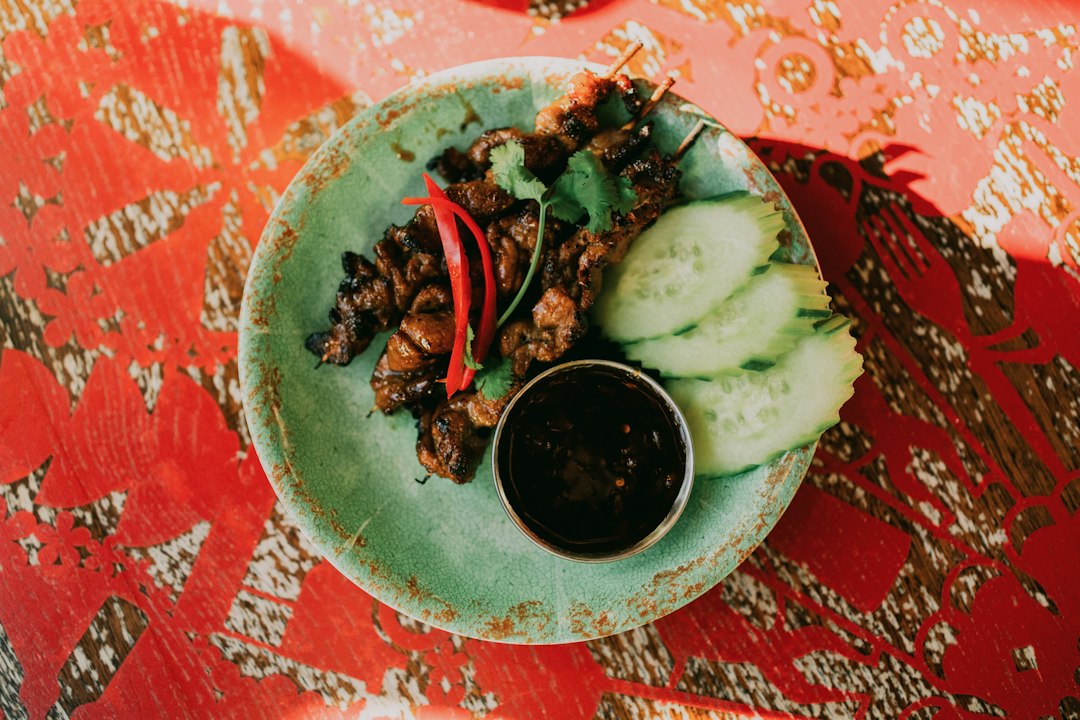
Chicken and beef satay can provide a familiar contrast in flavour and texture; pork satay may be appropriate for a non-halal menu where the guest list and venue allow it. The important point is to agree on the actual meat selection before designing the station. Different proteins can have different cooking needs, and adding too many varieties can slow the cook while increasing the chance of mixed-up orders.
The accompaniments matter just as much. Peanut sauce should be easy to reach but managed carefully as an allergen. Cucumber, onion and ketupat or rice cakes can make the station feel like a complete satay experience, provided their preparation and holding conditions are planned. A second sauce is only helpful if it adds something meaningful; it should not turn a quick collection point into a complicated condiment counter.
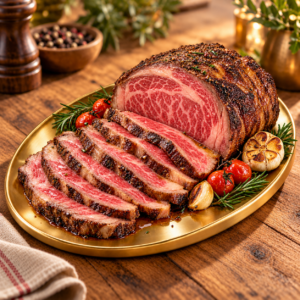
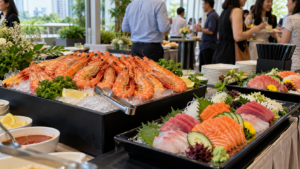
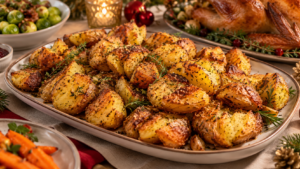
For a broader spread, let the satay complement rather than compete with the other dishes. A roast carving station, cold seafood counter or buffet of sides can absorb some of the guest demand while the skewers are cooked. De’Vour’s guide to live food stations explains how different experiences can sit alongside one another without every guest queuing for the same thing.
Estimate sticks by eating behaviour, not a magic formula
There is no universal sticks-per-person figure that works for every event. A guest tasting satay before dinner may take only a few; someone treating it as a substantial part of the meal may return for more. Children, late arrivals, long cocktail periods and the presence of other proteins all change the calculation. Start with the event format, service duration and the role satay plays on the menu.
As a planning exercise—not a guaranteed consumption rate—consider what would happen if each of 40 guests took four sticks. That is 160 sticks before accounting for second helpings, dietary preferences, wastage or a longer service window. A 100-person event could produce a much larger peak even if the average intake is modest. Share the guest profile and the rest of the menu with the caterer so the quantity can be adjusted intelligently.
It is also worth deciding how many skewers should be cooked ahead of the first wave and how frequently fresh batches will be released. A huge pile of finished satay undermines the point of a live station, while cooking every single order from scratch can create a frustrating wait. The right balance is a short, steady cycle of cooking and serving.
Protect the cold chain and the cooked-food handover
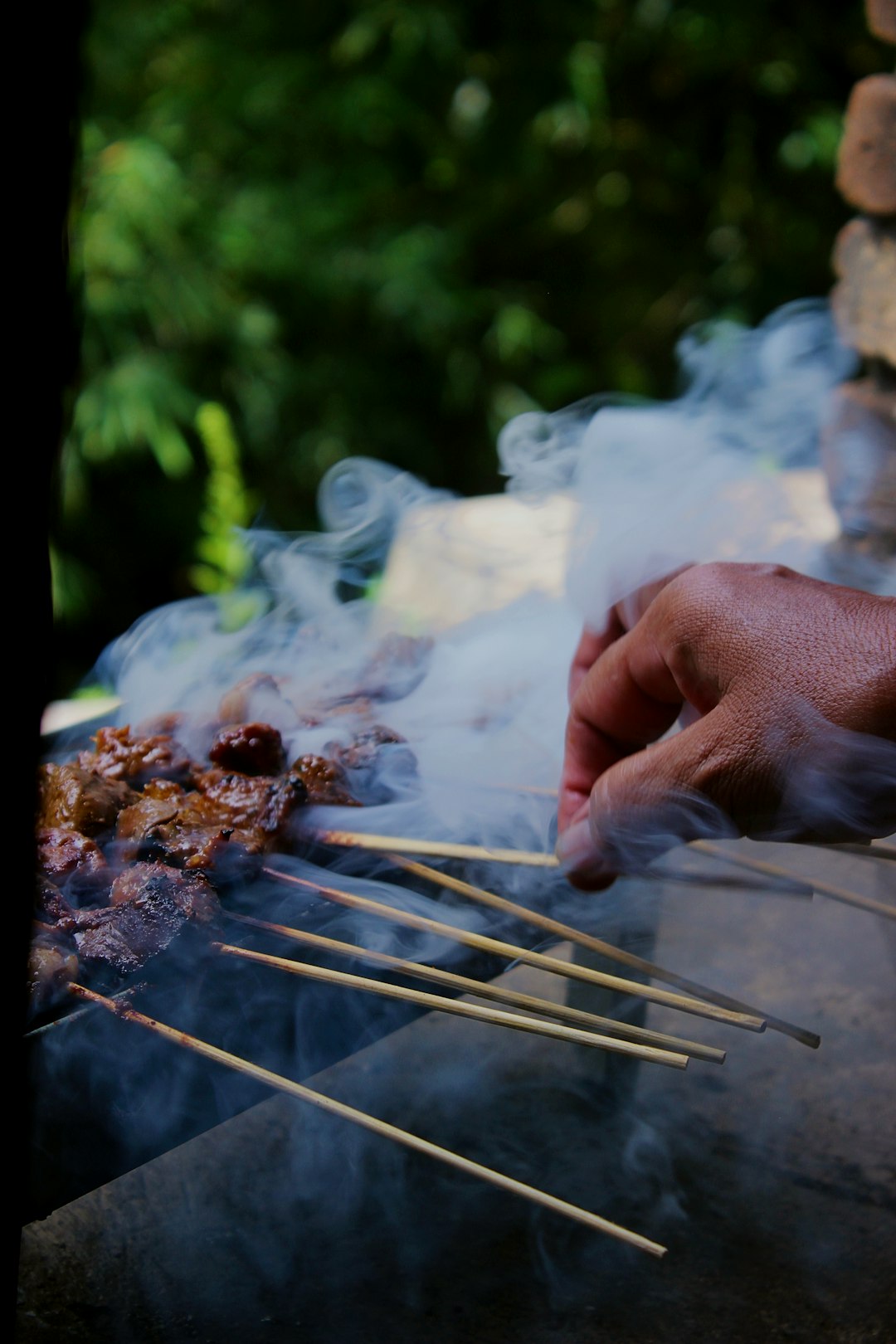
A live grill is theatre, but food safety remains the non-negotiable part of the performance. Uncooked skewers need suitable chilled storage until they are ready for cooking, with raw products protected from cooked food, sauces and guest contact. Staff need access to hand hygiene and separate utensils for raw and ready-to-eat items. Do not let meat sit beside the grill simply because it will eventually be cooked.
The Singapore Food Agency’s food-safety guidance recommends thorough cooking, keeping hot cooked food above 60°C when held, and chilling perishable food at 4°C or below. Its guidance also emphasises separating raw and cooked items. The cook should use appropriate temperature checks rather than relying on charcoal colour or a browned surface alone, particularly for chicken.
Serving utensils, skewers and plates should have a clean route from the cooking side to the guest side. Peanut sauce needs its own clean service utensils and clear allergen communication. If a dish is intended for a guest with a dietary restriction, discuss ingredients, preparation and cross-contact with the caterer in advance. A menu without pork is not automatically halal-certified.
Plan the smoke, weather and end-of-service cleanup
Singapore weather can turn a pleasant outdoor grill into an uncomfortable station quickly. Check where smoke is likely to drift in relation to doors, windows, air intakes and guest seating. Make sure the cook has a safe, permitted position and that charcoal, hot surfaces and tools are protected from children. Have a rain contingency that does not involve shifting a live charcoal grill indoors or under an unsuitable enclosure.
If bad weather prevents safe cooking, the organiser and caterer should agree in advance whether service pauses, moves to an approved alternative outdoor spot, or changes to a different food format. A written contingency is better than improvising while guests wait. For a large outdoor event, consider how equipment and staff will reach the location in heavy rain and how cooked food will remain protected during handover.
Cleanup is part of the service, not an afterthought. Confirm who removes charcoal and ash once safely cooled, who collects used skewers and sauce containers, and whether the venue requires its own waste-handling procedure. Leave enough time after the advertised serving window for the station to be dismantled without rushing hot equipment through guest traffic.
What to confirm with your caterer
A useful enquiry includes the date, location, guest count, outdoor cooking permissions, service window, expected peak time, chosen satay flavours, accompanying dishes and dietary restrictions. Ask whether the quotation includes the grill, charcoal, staff, setup, sauce, condiments, tableware, transport and cleanup. Confirm whether additional time or a second cook is possible, and how changes to the final guest count are handled.
Ask the caterer to explain the flow of raw skewers to the grill and finished skewers to the guests. That question reveals far more than a photograph of an attractive station. It also helps distinguish a true live cooking service from a delivered satay platter presented beside decorative equipment.
Frequently asked questions
Can a live satay station be set up indoors?
De’Vour’s live satay grilling service is outdoor-only. Whether any outdoor site is suitable depends on venue permission, safe clearances, smoke management and the service plan. An indoor function room is better served by ready-cooked food or another approved format.
Is satay better as a starter or a main meal?
Either can work, but quantities and service speed need different planning. As a starter, guests may sample a few skewers before moving to other dishes. As a central feature, satay needs enough volume, accompaniments and a service plan that supports repeat visits.
How early should the satay station start?
The cook needs setup and preparation time before the advertised serving window. Coordinate the first cooked batch with the moment guests are expected to approach the station, rather than automatically starting when the venue opens.
What happens if it rains?
Agree on a safe, venue-approved wet-weather option before the event. Do not move charcoal cooking into an enclosed room or improvised shelter. If no suitable outdoor alternative exists, discuss a different serving arrangement.
The best live station feels like part of the gathering
A satay station should add warmth and energy, not pull the entire event into a single long queue. When the grill has the right outdoor location, the cook has a protected working area and guests can collect food without crossing the preparation zone, the service becomes part of the celebration rather than an interruption.
De’Vour’s approach to event food centres on BBQ, roasts and selected live stations, with sides and smaller-scale catering where they support the main experience. If you are comparing formats, start with our full-service BBQ guide and satay quantity planning article. The right setup is the one that lets guests enjoy both the food and the occasion.