A balanced bento does not need a complete second menu
Dietary variations often become complicated because every change is treated as a separate meal. A more reliable approach is to begin with a balanced base that works for the whole group, then replace only the component that creates the restriction. The result feels consistent, travels well and remains easy to identify at distribution time.
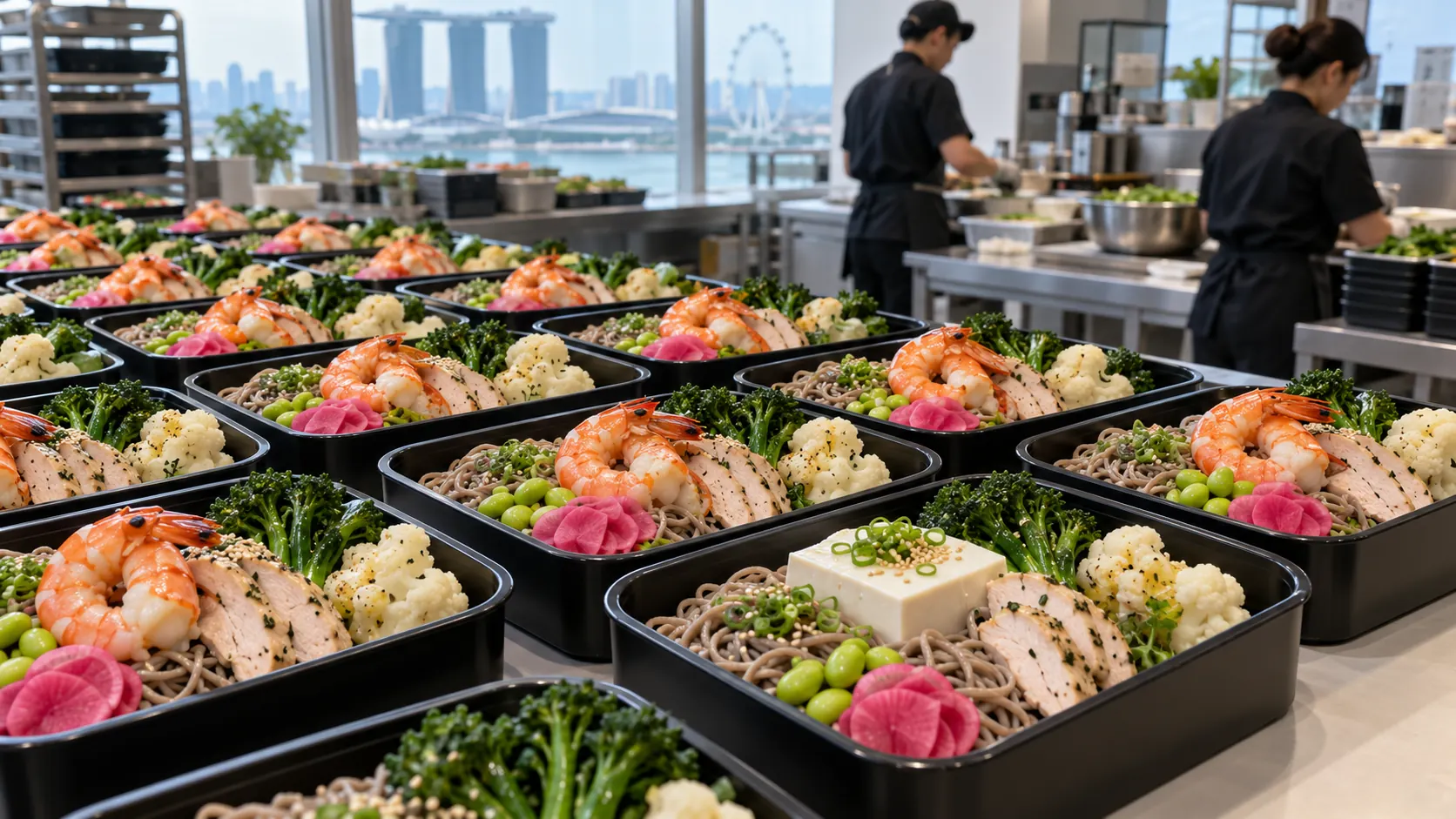
One completed De’Vour order used this principle across a healthy corporate bento. The common base was cold soba with edamame, pink pickled radish, sous vide lemon herb chicken breast, and steamed broccolini and cauliflower. Most boxes included poached tiger prawns. A smaller group received cold silken tofu with sesame ginger dressing instead.
Keep the shared components genuinely shared
The common parts of the meal should do most of the nutritional and sensory work. Cold soba provides a light carbohydrate base. Edamame adds colour, texture and plant protein. Pickled radish introduces acidity, while broccolini and cauliflower bring freshness and bite. The chicken breast gives the meal a familiar, satisfying centre without making it heavy.
Because those components remain identical, the alternative box still looks and eats like the same menu. It is not a reduced version assembled from leftovers. That matters at company lunches, where guests notice when one dietary meal appears less considered than the rest.
Replace by function rather than by appearance
A useful substitution should take over the role of the original ingredient. Prawns contribute protein, moisture and a clean flavour. Silken tofu can perform a similar function without trying to imitate seafood. Its soft texture contrasts with the vegetables and noodles, while sesame ginger dressing gives it enough character to stand beside the other components.
This is more effective than simply removing the prawns and leaving an empty compartment. It preserves the portion balance and gives the alternative meal its own finished identity. The aim is not to make both boxes visually identical; it is to make both feel equally complete.
Cold and warm elements need deliberate handling
A multi-component bento succeeds when every item is prepared for the way it will actually be served. Cold soba should stay springy rather than clumping. Pickles must be drained so their liquid does not spread. Steamed vegetables need to retain structure, and sous vide chicken should be cooled and sliced safely before packing when the menu is intended to be served chilled.
Tofu requires its own care. It should be portioned cleanly, drained and dressed close enough to packing that it remains delicate rather than watery. Prawns likewise need controlled cooking and cooling so they stay firm. Good bento production is less about elaborate garnish than disciplined moisture and temperature control.
Clear packing prevents last-minute confusion
When only a few boxes differ, the alternative can be easy to lose among dozens of similar packs. A practical packing line separates the variations physically, completes one type at a time and uses an external identifier that does not expose personal information. The count should be checked before the boxes leave the kitchen and again before handover.
This small operational step protects the guest experience. A thoughtful substitution only works if the correct meal reaches the correct group without delaying everyone else.
Plan variations around one strong menu architecture
The lesson is simple: dietary flexibility does not always require parallel menus. Start with a base that has enough colour, texture and substance to stand on its own. Identify the restricted component, then replace it with something that performs the same job in the meal.
For Singapore offices ordering mixed-group lunches, this method makes healthy catering easier to produce and easier to distribute. More importantly, every guest receives a bento that feels intentional rather than improvised.