A BBQ that runs on two consecutive days is not one long service with an overnight pause. Each day needs its own food-safety clock, equipment check, staffing rhythm and opening sequence.
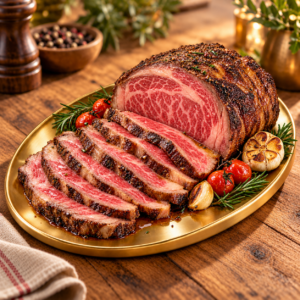
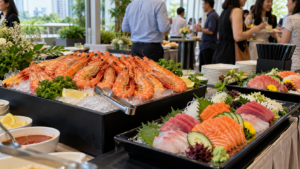
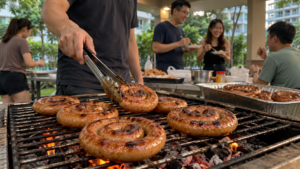
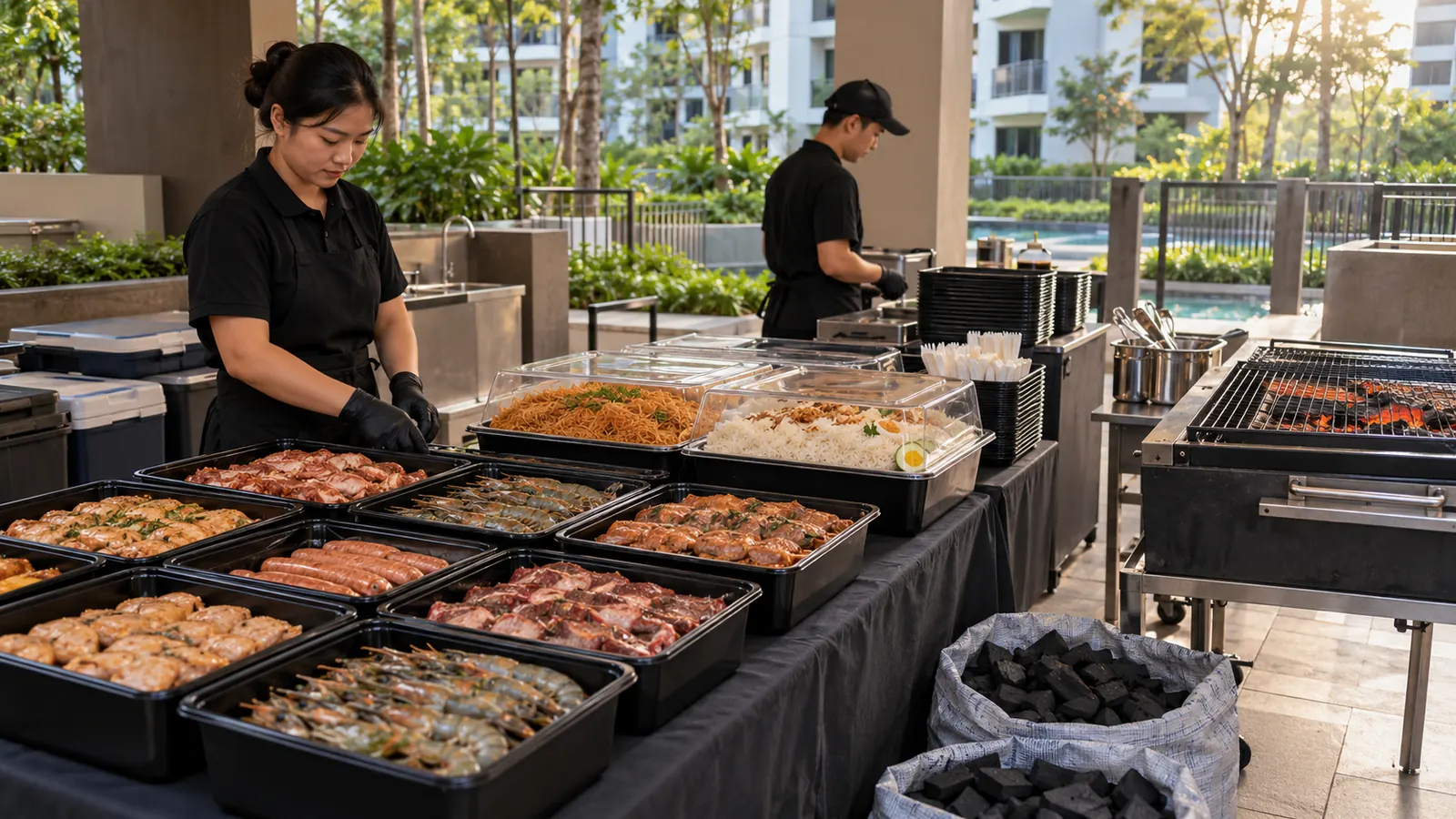
A completed De’Vour order covered two days of BBQ service with beef cuts, lamb rack, sotong, Argentinian prawn skewers, several chicken skewers, sambal stingray, satay, corn, potatoes, otah, dry mee siam, nasi lemak, charcoal, ice and chef service. The menu was extensive, but the defining operational detail was repetition: the entire service had to be ready again the next day.
Split the Order Into Day One and Day Two
Food should be allocated by service day before transport. Clearly separated batches prevent the first event from consuming items reserved for the second and reduce unnecessary handling of tomorrow’s food.
The allocation should include mains, sides, condiments, ice, fuel and disposable supplies. A second-day shortage often begins with a small item that was never divided in the first place.
Do Not Reuse the First Day Food Clock
Uncooked proteins for the second day need uninterrupted refrigeration and should not travel through the full first-day setup if that can be avoided. Food that has been displayed, thawed or held for service cannot simply be treated as fresh stock the next morning.
Pack second-day ingredients as a protected batch with its own temperature checks. The calendar changes, but food safety depends on elapsed time and handling conditions.
Reset Tools and Contact Surfaces
Tongs, knives, trays, brushes, thermometers and grill surfaces need a proper clean and sanitising cycle after the first event. Wiping away visible residue is not a full reset.
Count tools again before the second departure. Missing tongs or a misplaced probe can slow the opening even when all the food has arrived.
Rebuild the Fire Plan
Charcoal must be allocated for each day, kept dry and matched to the expected cooking duration. Leftover charcoal from the first night may be useful only if it remains clean, dry and suitable; it should not be the sole plan for the next service.
Check the grill, wire mesh and fire starters as a fresh setup. A two-day job needs two reliable ignition windows, not one large guess made at the beginning.
Use the Menu to Sequence the Grill
Beef and lamb benefit from controlled heat and resting time. Chicken skewers need thorough cooking, while prawns, sotong and stingray have shorter or more delicate windows. Satay and otah introduce another fast-moving stream.
The team should decide what opens the buffet, what cooks to order and what can rest safely. Repeating that sequence on the second day creates consistency without requiring every tray to appear at once.
Prepare Sides for Each Service Window
Dry mee siam and nasi lemak were planned across both days. These cooked carbohydrates need separate production and holding plans rather than one oversized batch stretched over two services.
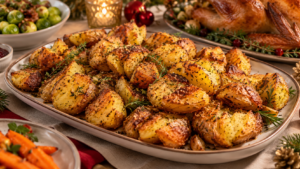
Corn and potatoes can be portioned by day before transport. Condiments and garnishes should follow the same split so the second table looks complete rather than like the remainder of the first.
Fresh Ice Is a Daily Supply
Ice supports chilled food, drinks and transport temperatures. It melts, absorbs handling and cannot be counted as an overnight asset in the same way as a clean piece of equipment.
Allocate fresh ice for both days and confirm storage at the venue. A reliable cold chain should not depend on whatever survives in a cooler after the first night.
Record What Happened on Day One
The first service provides useful information: which item moved fastest, whether the fire ran hotter than expected and where the queue formed. Capture those observations while they are fresh.
Adjust the second-day release order or tray size when appropriate, but do not improvise away the quantities already committed to guests. The aim is smoother execution, not an entirely different event.
Give the Team a Real Turnaround
The reset includes cleaning, stock reconciliation, repacking, refrigeration and a new loading check. Staff need enough time and a clear handover; otherwise fatigue appears as missed items and rushed safety decisions.
A short written checklist can cover fuel, tools, chilled food, cooked sides, service ware and venue access. It becomes the bridge between two events that may look identical to guests but are separate operations behind the scenes.
Consistency Comes From Starting Again Properly
The completed order combined a broad grill selection with two days of sides, ice, charcoal and chef service. Its lesson is that consistency does not come from keeping the first event running indefinitely. It comes from closing it properly and opening the next one with fresh controls.
De’Vour can plan multi-day BBQ catering in Singapore with day-specific food batches, equipment resets and service sequencing that protect both quality and the guest experience.