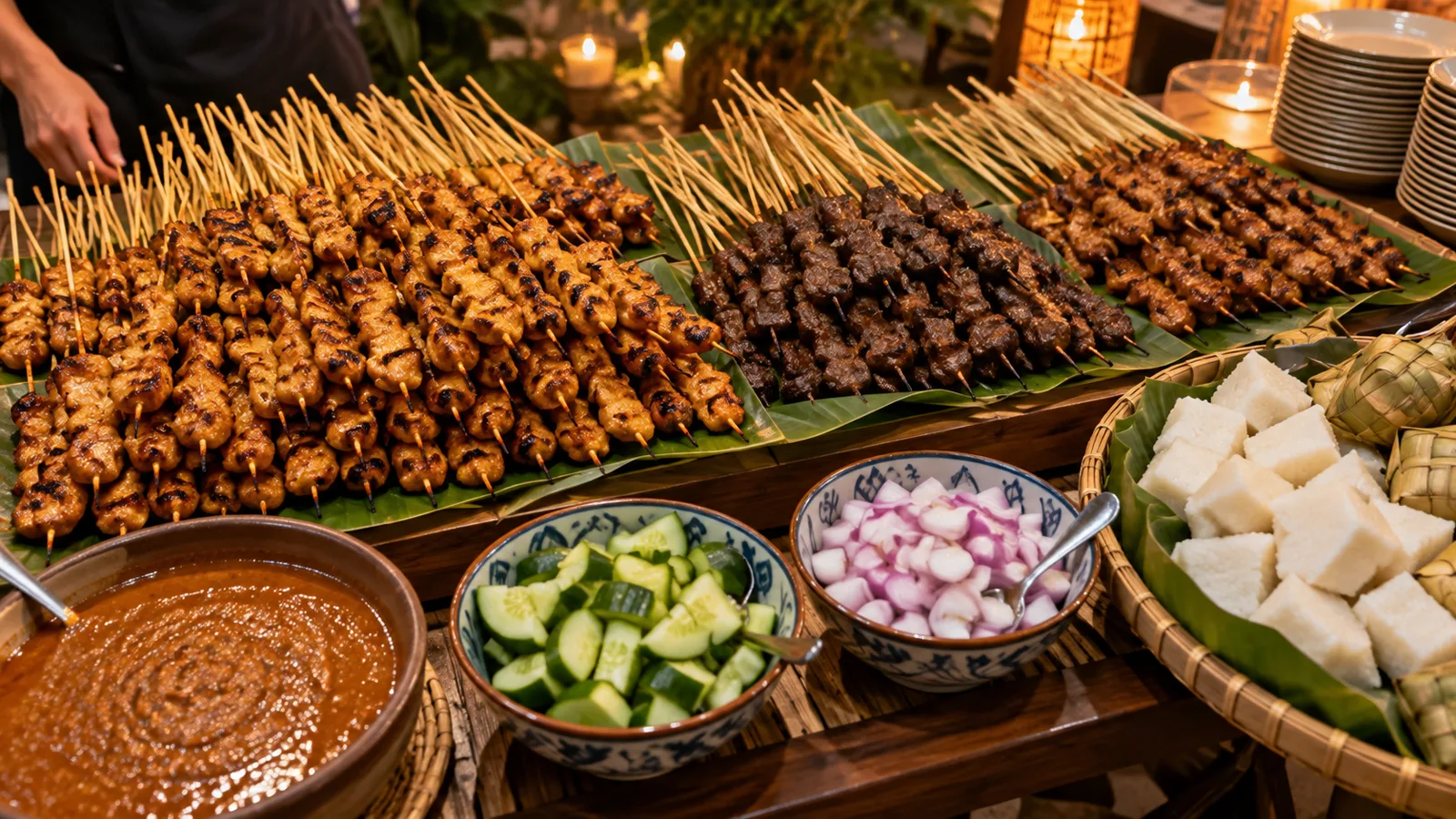
One De’Vour event order contained 250 cooked sticks: 150 chicken, 50 mutton and 50 beef. The numbers reveal more than the total. They show how a familiar option can form the base of the order while smaller batches provide variety.
Start With the Role Satay Plays
Before calculating sticks per person, decide what satay is supposed to do.
If it is a light appetiser, guests may take only a few sticks. If it is part of a buffet with rice, noodles and other proteins, the requirement changes. If satay is the centre of a casual gathering, each guest may eat considerably more.
There is no responsible single number that fits every event. The rest of the menu, serving duration and guest profile all matter.
Why Chicken Made Up 150 of the 250 Sticks
Chicken satay is usually the broadest crowd-pleaser. Its familiar flavour makes it a practical base when the organiser does not know every guest’s preference.
Mutton has a stronger flavour, while beef is richer and can feel more substantial. Ordering 150 chicken sticks and 50 each of mutton and beef gave the event variety without splitting the quantities equally and risking leftovers of the less universally preferred options.
This 60-20-20 mix is not a fixed formula, but it demonstrates a useful principle: order more of the safest choice and use the others to provide contrast.
Convert the Total Into Guest Portions
The same 250 sticks can serve very different numbers of people:
- At three sticks each, it provides about 83 portions.
- At five sticks each, it provides 50 portions.
- At eight sticks each, it provides about 31 portions.
- At ten sticks each, it provides 25 substantial portions.
These are planning examples, not promises. Some guests will eat one or two sticks while others return several times. Children and adults will also consume different amounts.
Cooked Satay Changes the Service Plan
Ordering satay fully cooked removes the need to grill hundreds of sticks at the venue. That can be valuable when space is limited, the event has no BBQ pit or guests need food ready at a specific time.
The organiser still needs to consider warmth and timing. Satay is best when it does not sit exposed for too long. Serving it in smaller replenished batches can preserve the experience better than placing all 250 sticks on the table at once.
Peanut Sauce Is Not an Afterthought
The sauce, cucumber and onion are part of the dish. A large satay order needs enough sauce for the actual number of sticks, suitable bowls and a plan for replenishment.
Ketupat can make the satay more filling and helps turn it from finger food into a more complete serving. It is particularly useful when satay is expected to carry more of the meal.
Organisers should also flag peanut allergies clearly. Satay sauce normally contains peanuts, and guests need accurate information before serving themselves.
Think About the Queue
Two hundred and fifty sticks can disappear quickly if everyone reaches the table at once. Use more than one serving tray where possible and place sauce where it will not block access to the satay.
For a larger event, separating chicken from beef and mutton also helps guests choose quickly. Do not rely only on appearance because different meats and marinades can look similar after grilling.
How to Estimate Your Own Order
Ask these questions before confirming the quantity:
- How many adults and children are attending?
- Is satay an appetiser, buffet item or main feature?
- What other proteins and carbohydrates are being served?
- How long will the food be available?
- Which meat is most popular with this group?
- Does anyone have a peanut allergy or dietary restriction?
The answers are more useful than applying one sticks-per-person rule without context.
A Familiar Food Still Needs Planning
Satay is easy for guests to enjoy, but a large order involves decisions about quantity, meat mix, sauce, labelling, warmth and table flow.
For this event, 250 cooked sticks were divided deliberately: chicken formed the dependable base while mutton and beef added variety. That is the difference between simply ordering a large number and building an order around how people are likely to eat.
For cooked satay, BBQ food and event catering in Singapore, De’Vour can help estimate quantities based on your guest count and the rest of your menu.