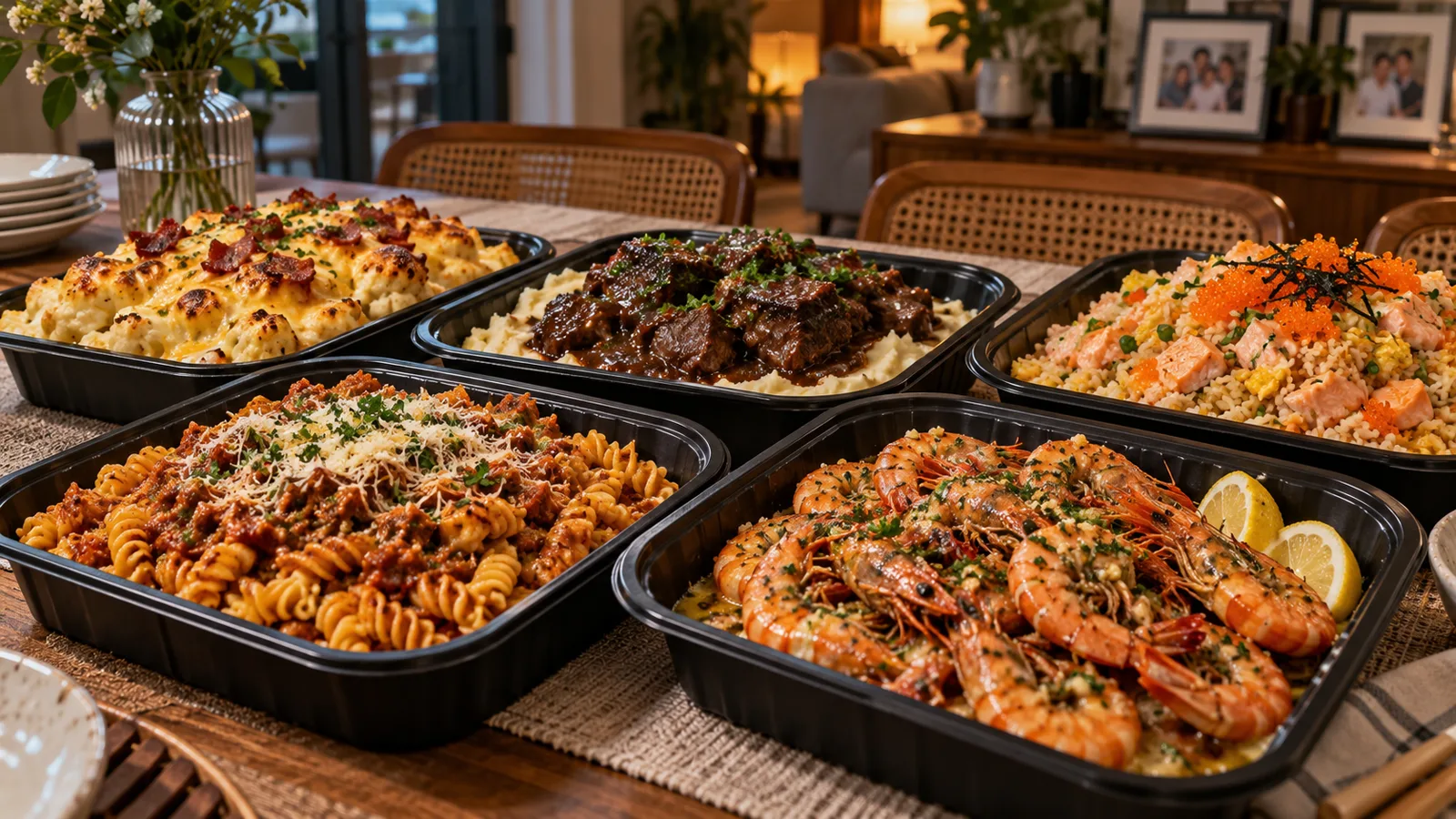
One Singapore home-dining order brought together five dishes: cheesy baked cauliflower with bacon, braised beef with mashed potatoes, chicken bolognese fusilli, garlic butter prawns and salmon fried rice with tobiko. It crossed pasta, seafood, rice, vegetables and slow-cooked meat without becoming a formal buffet.
The reason it worked was simple: every dish had a clear role.
Begin With the Cravings, Not a Cuisine Label
This was not an Italian menu, a seafood menu or an Asian menu. Trying to force one label onto it would miss the point.
The dinner was built around the kinds of food people actually ask for when sharing at home: something cheesy, something saucy, something rich, something with prawns and something based on rice.
For informal gatherings, that can be more useful than following one cuisine perfectly. The menu only needs enough common ground to feel like one meal.
Five Dishes, Five Different Jobs
The cheesy baked cauliflower brought vegetables, but in a comforting form. Bacon and melted cheese made it satisfying enough to compete with the mains.
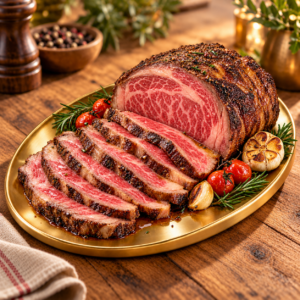
Braised beef with mashed potatoes was the slow, rich dish. It provided depth and a soft texture that worked well for guests who wanted a substantial plate.
Chicken bolognese fusilli was the familiar option. Pasta is easy to portion, friendly for different ages and dependable when feeding a mixed group.
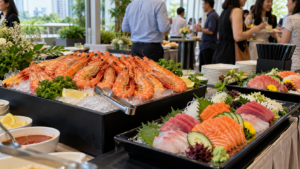
Garlic butter prawns added a more celebratory seafood element. Their flavour was bold, so guests could enjoy a few without needing a huge serving.
Salmon fried rice with tobiko tied the meal together. It supplied the main carbohydrate while adding seafood, colour and texture.
Avoid Making Every Dish Equally Heavy
Comfort food does not have to mean five heavy dishes competing on one plate. The better approach is to vary texture and intensity.
In this menu, mashed potatoes were creamy, fusilli was saucy, prawns were buttery, fried rice was savoury and cauliflower had a baked top. Even though the dishes were indulgent, they did not all eat in the same way.
That contrast helps guests build their own plates instead of feeling overwhelmed after the first serving.
Why Smaller Trays Can Be Smarter
When a group wants variety, ordering a full-size tray of every dish can create too much food. Smaller portions across several dishes allow everyone to sample more while keeping the spread appropriate for the actual headcount.
This works particularly well for home dinners where the aim is relaxed sharing rather than feeding a queue. Guests can return to the table, try a different combination and decide which dish deserves a second helping.
Keep One or Two Familiar Anchors
A mixed menu needs anchors. In this case, pasta and fried rice were immediately familiar. They gave the more distinctive dishes—such as cheesy cauliflower and tobiko-topped salmon rice—a comfortable place on the same table.
When planning your own menu, choose one dependable starch and one broadly liked protein first. Add the more adventurous dishes around them. This reduces the risk of creating an exciting spread that nobody knows how to eat together.
Think About How the Food Travels
Home catering is not only about how a dish tastes in the kitchen. It must also travel and arrive in good condition.
Braised beef and bolognese hold moisture well. Fried rice portions cleanly. Baked cauliflower can retain its structure when packed correctly, while prawns need careful timing so they remain tender.
Practical black-base catering trays make the spread easy to carry, arrange and serve. Once the lids come off, the dishes can go directly onto the table without turning the host’s kitchen into a washing-up station.
A Mixed Menu Still Needs a Plan
The easiest way to build a varied comfort-food dinner is:
- Choose one rice or pasta anchor.
- Add one slow-cooked or roasted main.
- Include one seafood dish for contrast.
- Give the vegetable dish enough flavour to stand on its own.
- Check that textures and sauces are not all identical.
- Size the trays for sharing rather than treating every dish as a full portion for every guest.
The Point Is a Table People Want to Explore
Not every gathering needs a perfectly matched menu. Sometimes the better dinner is the one where every guest spots at least one dish they are excited to try.
Cheesy cauliflower, braised beef, chicken bolognese, garlic prawns and salmon fried rice sound like separate cravings. With sensible portions and complementary textures, they become one generous, relaxed home dinner.
For family meals, mini buffets and small-event catering in Singapore, De’Vour can help turn a mixed wish list into a spread that is practical to serve and enjoyable to share.