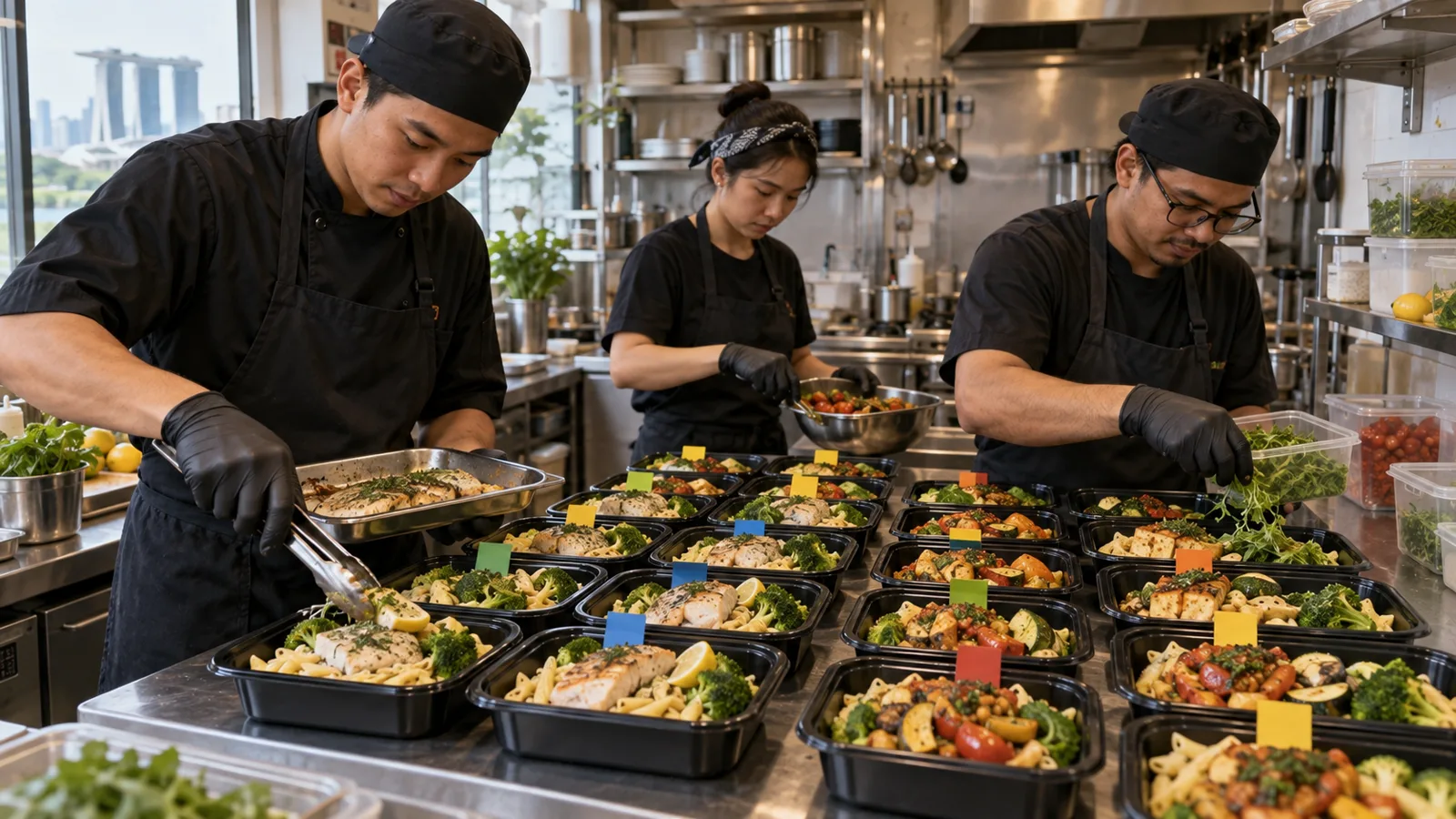
For one multi-day Singapore catering run, the daily totals moved between roughly 111 and 130 meals. Alongside the standard meals were vegetarian portions and individual restrictions involving pork, beef, walnuts, cashews, pistachios, peanuts, egg and cheese. The food still had to arrive together, look consistent and be easy to distribute.
That turns an ordinary packed-meal order into a planning exercise.
Start With a Menu That Can Branch Cleanly
The easiest way to manage dietary requirements is not to create a completely different menu for every person. It is to begin with a main meal that can be adapted without losing its identity.
Across this order, examples included aglio olio with pollock and broccoli, BBQ chicken with roasted potatoes and vegetables, chicken bolognese with broccoli, braised beef with mashed potatoes, and mac and cheese with nuggets. Vegetarian versions used alternatives such as spring rolls, vegetarian patties, mushroom bolognese and braised tau kwa.
The standard and alternative meals still felt related. This matters because nobody wants the dietary meal to look like an afterthought.
Dietary Labels Are Part of the Food
Once several restrictions enter the same order, memory is not a safe system. Every variation needs a clear count, a clear container marker and a clear place in the packing sequence.
A useful process is:
- Confirm the final dietary list before production.
- Separate allergies from preferences and religious restrictions.
- Prepare the most sensitive meals in a controlled batch.
- Mark every special meal before it joins the main packing line.
- Count the special meals twice before dispatch.
- Give the organiser a simple handover list.
The label is not decoration. It is the final link between the kitchen’s preparation and the correct guest.
Similar Words Can Mean Different Things
“No nuts” is not always specific enough. A guest may avoid peanuts but be able to eat other nuts, while another may need to avoid walnuts, cashews and pistachios. “Vegetarian” can also mean different things depending on whether egg or dairy is acceptable.
The safest approach is to ask precise questions early. What ingredient must be excluded? Is cross-contact a concern? Is the restriction an allergy, a religious requirement or a preference? Clear answers help the kitchen decide what can realistically be accommodated.
Why Individual Packing Helps
For a large group with several dietary needs, individual meal boxes create control. Portions stay consistent, distribution becomes faster and special meals are less likely to be mixed up at a buffet table.
Black-base catering containers also stack neatly and make visual checking easier. Before the lids go on, the team can compare each row, confirm the components and isolate any variation that does not match the packing plan.
Individual packing does not remove complexity. It makes the complexity visible and manageable.
Variety Still Matters Across Several Days
When the same group is being fed repeatedly, solving dietary restrictions is only half the job. Repetition can make even a well-prepared lunch feel routine.
Changing the format from pasta to roasted potatoes, bolognese, mashed potatoes and mac and cheese gave the week a different rhythm each day. Desserts and fruit also changed. The menu remained practical for production, but the guests did not receive the same experience five times.
This is especially important for camps, training programmes, schools and corporate events where lunch becomes part of the daily routine.
What Organisers Should Prepare
If you are arranging catering for a mixed group, send the caterer one consolidated list rather than dietary updates spread across several messages. Include the total headcount, each restriction, the required delivery time and the person responsible for distribution.
Try to avoid last-minute changes. A new dietary request may affect ingredients, preparation space, labelling and delivery counts—not just one box.
The Real Goal Is Confidence
Good dietary catering should not draw attention to itself. The organiser should be able to hand out the meals confidently, and each guest should know which box belongs to them.
That outcome depends on menu design, careful labelling and disciplined packing. When those systems are in place, even 120 to 130 lunches with multiple variations can leave the kitchen as one organised order.
For packed meals, mini buffets and event catering in Singapore, De’Vour can help plan a menu around your group size, service format and confirmed dietary needs.